
Table of Contents
ToggleThe Art of Goal Setting and the Power of SMART Goals

There’s something magical about setting a goal. It’s like casting a stone into a still pond—what starts as a small action creates ripples that spread far beyond the initial splash. Goals have the power to shape our lives, steer our direction, and transform our dreams into reality. Yet, without structure, they can also lead us astray, leaving us lost in a sea of unfinished plans. That’s where the beauty of SMART goals comes in—a framework that takes the abstract concept of goal setting and turns it into something actionable, measurable, and achievable.
The Desire to Achieve: Why Goal Setting Matters
At the heart of every great achievement lies a goal. Whether it’s the Olympic athlete training for years to reach the podium, the entrepreneur striving to launch a successful business, or the student working toward their degree, each success story begins with a clear goal. Goal setting is the process of defining what we want to accomplish and mapping out a path to get there. It gives us direction, purpose, and motivation. Without goals, we’re like sailors lost at sea, adrift with no destination in sight.
But here’s the challenge: not all goals are created equal. Some are too vague, some too ambitious, and others lack a clear timeline. This is where SMART goals come into play. They offer a structured approach to goal setting that increases the likelihood of success.
Goal Setting: Starting Young
There’s something magical about youth—the boundless energy, the fresh curiosity, and the sense that the world is wide open with possibilities. It’s the perfect time to plant the seeds of success through one powerful habit: goal setting. Starting young can shape a person’s journey, providing direction, focus, and the determination to chase their dreams with intention.
When you’re young, it feels like the world is yours to explore, and that’s the beauty of it. But without a clear roadmap, it’s easy to get lost along the way. That’s why goal setting isn’t just for adults—it’s a skill young people can develop early, guiding them as they navigate through the complexities of life.
Why Start Young?
Youth is a time of self-discovery, where passions are uncovered, and ambitions begin to take shape. However, without structure, these dreams can easily drift into the realm of wishful thinking. By introducing the concept of goal setting early, young people can take control of their future, learning to turn their ambitions into actionable steps.
Imagine you’re standing at the start of a long journey. You have a destination in mind, but without a map, every turn feels uncertain. Goal setting is that map—it lays out the route, the milestones, and the steps required to reach the destination. The earlier you learn to use this map, the more confident and purposeful your journey becomes.
The Power of SMART Goals
One of the most effective ways to approach goal setting is through the use of SMART goals. This method teaches young people to break down their aspirations into manageable, achievable steps, making their goals feel less overwhelming and more within reach.
A SMART goal is Specific, Measurable, Achievable, Relevant, and Time-bound. Take a young student who wants to improve their grades, for example. Rather than simply saying, “I want to do better in school,” a SMART goal would be, “I want to increase my math grade from a B to an A by the end of the semester by studying for an hour each day.” The clarity and structure of a SMART goal make success not only possible but probable.
Building Confidence and Resilience
When young people achieve even small goals, they experience a boost in confidence. It’s the sense of pride that comes from setting a target and reaching it, knowing that their efforts paid off. It teaches them that they have the power to shape their own future—one goal at a time.
But it’s not just about the wins. Learning to deal with setbacks is another crucial lesson that goal setting imparts. Sometimes, things don’t go according to plan. Maybe the timeline needs adjusting, or maybe the goal was too ambitious. Either way, SMART goals offer flexibility, teaching young people to adapt without losing sight of their ultimate destination.
Creating Lifelong Habits
Starting the practice of goal setting young helps build habits that last a lifetime. The ability to set and achieve goals doesn’t just apply to school or early life decisions—it becomes a foundational skill for navigating adulthood. Whether it’s landing a dream job, saving for a house, or pursuing personal passions, the principles of SMART goals will continue to guide them.
By learning to set SMART goals early on, young people develop a growth mindset. They understand that success isn’t a matter of luck but of thoughtful planning and consistent effort. And with every goal they achieve, they reinforce the belief that they are capable of reaching even greater heights.
Goal setting isn’t just about achieving specific outcomes—it’s about cultivating a mindset of growth, focus, and determination. By starting young, individuals can learn to set SMART goals that not only bring their dreams within reach but also lay the groundwork for a life of purpose and fulfillment.
Just as a gardener tends to their seeds, ensuring they have the sunlight and water to grow, young people who embrace goal setting are nurturing their potential. The dreams they plant today will blossom into the achievements of tomorrow.
Understanding SMART Goals
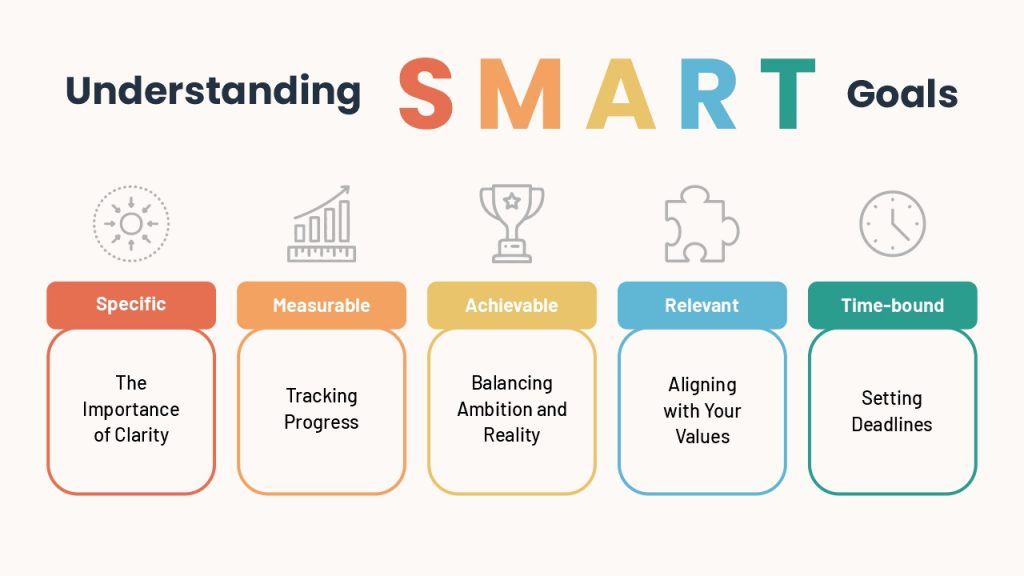
SMART is an acronym that stands for Specific, Measurable, Achievable, Relevant, and Time-bound. This simple yet powerful framework was designed to transform vague ambitions into concrete, actionable plans. Let’s dive into each component:
Specific: The Importance of Clarity
The first step in setting a SMART goal is to be specific. A goal like “I want to be successful” is too broad and abstract. What does success look like? How will you know when you’ve achieved it? Instead, a specific goal might be, “I want to increase my sales by 15% within the next six months.” This gives you a clear target to aim for.
Being specific means you’re giving your brain a clear set of instructions. When you know exactly what you’re working toward, your mind can focus on the task at hand. It’s like switching on a GPS for your life—the clearer the destination, the easier it is to navigate.
Measurable: Tracking Progress
Next, your goal should be measurable. This means that you need to establish criteria for tracking progress. If your goal is to “get fit,” how will you measure success? Is it by losing weight, building muscle, or improving endurance? A measurable goal might be, “I want to lose 10 pounds in the next three months.”
Measurement gives you feedback, and feedback is crucial for staying motivated. When you can see progress, even if it’s incremental, it fuels your drive to keep going. It also provides a benchmark to assess whether you’re on track or need to adjust your approach.
Achievable: Balancing Ambition and Reality
While it’s important to challenge yourself, your goals should also be realistic. Setting a goal that’s impossible to achieve will only lead to frustration and disappointment. For instance, if you’re new to running, setting a goal to complete a marathon in two weeks isn’t realistic. An achievable goal might be, “I want to run a 5K in two months.”
Achievable doesn’t mean settling for less; it means striking a balance between ambition and reality. When your goals are within reach, you’re more likely to stay committed and motivated. But they should still stretch you just enough to push your limits.
Relevant: Aligning with Your Values
Relevance is all about ensuring that your goals align with your broader life vision and values. A goal that isn’t relevant to your long-term aspirations will feel like a chore rather than a meaningful pursuit. If your long-term vision is to build a career in marketing, setting a goal to become a software engineer may not be relevant. A more fitting goal would be, “I want to complete a digital marketing course in the next six months.”
When your goals are aligned with your values, they carry more significance. You’re not just ticking off boxes; you’re working toward something that matters deeply to you.
Time-bound: Setting Deadlines
Finally, every SMART goal should have a time frame. Deadlines create a sense of urgency and prevent procrastination. Without a deadline, there’s no accountability, and your goals risk being put on the back burner indefinitely. A time-bound goal might be, “I want to write a book within the next year.”
Deadlines help you break down larger goals into smaller, manageable tasks. They give you milestones to celebrate along the way and keep you focused on the end game.
SMART goals are more than just a buzzword—they’re a tool for success. By breaking down the process of goal setting into specific, measurable, achievable, relevant, and time-bound steps, they provide a clear path from where you are now to where you want to be.
Clarity and Focus
One of the greatest benefits of SMART goals is the clarity they bring. When you have a specific target, you know exactly what you’re working toward. This focus allows you to prioritise your time, energy, and resources on the actions that will bring you closer to your goal. It eliminates the distractions that come from chasing vague, undefined objectives.
Motivation and Accountability
SMART goals keep you motivated by providing measurable milestones. Each time you reach a small goal, it reinforces your progress and gives you the momentum to keep going. The structure of SMART goals also creates accountability—you’ve set a deadline, and now you’re responsible for meeting it. This accountability helps you stay on track, even when motivation wanes.
Adaptability
Life is unpredictable, and sometimes our goals need to change. The beauty of SMART goals is that they’re flexible enough to adapt. If you’re halfway to your goal and realise that your initial target was too ambitious, you can adjust it to make it more achievable. Or, if new opportunities arise, you can modify your goals to align with your evolving priorities.
The Emotional Side of Goal Setting
There’s a certain poetry to goal setting. It’s not just about achieving tangible results—it’s about the journey you embark on. Every goal represents a dream, a desire to become something more than you are today. And like any journey, the road to success is filled with ups and downs, triumphs and challenges.
The Joy of Progress
One of the most rewarding aspects of goal setting is the feeling of progress. Each step forward, no matter how small, is a victory. It’s the joy of learning, growing, and becoming a better version of yourself. Even when the ultimate goal is still far away, the progress you make along the way is a reminder that you’re moving in the right direction.
Overcoming Obstacles
No journey is without obstacles, and the same is true for goal setting. There will be moments of doubt, setbacks, and failures. But it’s through these challenges that we grow the most. Each obstacle is an opportunity to learn, adapt, and strengthen your resolve. The key is not to give up when the road gets tough but to keep pushing forward, knowing that every challenge brings you closer to your goal.
Applying SMART Goals in Different Areas of Life
Career Development
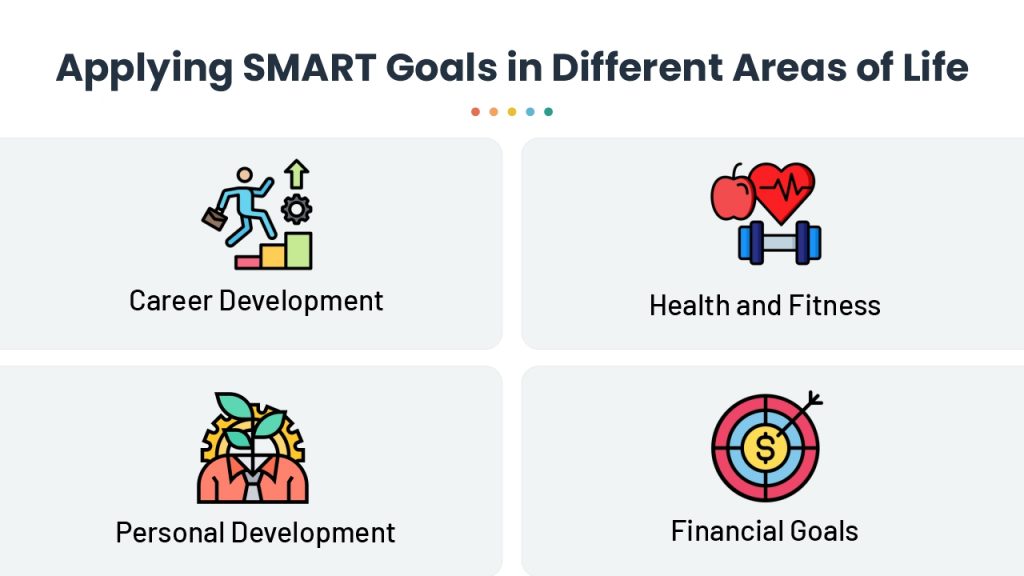
In your professional life, SMART goals can help you advance your career by providing a clear path to success. Whether you’re aiming for a promotion, learning a new skill, or changing industries, SMART goals give you the structure to make those aspirations a reality. For example, instead of saying, “I want to get promoted,” a SMART goal would be, “I want to complete a leadership training program and take on more responsibility within the next six months to qualify for a promotion.”
Health and Fitness
When it comes to health and fitness, goal setting is crucial for staying motivated and on track. Instead of vague goals like “get healthier,” SMART goals can provide specific targets. A SMART goal might be, “I want to run three miles without stopping by the end of this month by running four times a week.”
Personal Development
Personal growth is a lifelong journey, and SMART goals can help you focus your efforts. Whether you’re working on improving a skill, building better habits, or expanding your knowledge, SMART goals give you a roadmap to follow. For instance, instead of saying, “I want to read more,” a SMART goal would be, “I want to read two books per month for the next six months.”
Financial Goals
Financial stability doesn’t happen by accident—it requires careful planning and goal setting. A SMART financial goal might be, “I want to save 50000 rupees for an emergency fund in the next year by setting aside 2000 rupees from each paycheck.”
FAQs
Conclusion
Setting goals is an act of hope, a declaration that the future can be better than the present. But hope alone isn’t enough. Without a plan, goals can quickly become dreams deferred. SMART goals provide the structure and clarity needed to turn your dreams into reality. They give you a roadmap to follow, keeping you focused, motivated, and accountable.
Whether you’re looking to advance your career, improve your health, or simply become the best version of yourself, SMART goals can help you get there. They turn the abstract into the concrete, the impossible into the achievable. By setting specific, measurable, achievable, relevant, and time-bound goals, you’re not just dreaming—you’re building a pathway to success.
