
Table of Contents
ToggleThe Power of Creative Thinking: Unlocking Possibilities and Breaking Boundaries By Adding Skills

Creative thinking is the spark that lights up the human mind, allowing us to transcend conventional boundaries and explore new horizons. It is more than just a skill—it’s a way of perceiving the world, solving problems, and expressing oneself in ways that are fresh, imaginative, and transformative. Whether you’re an artist creating a masterpiece or an entrepreneur developing a novel business solution, creative thinking skills are at the heart of innovation. In this blog, we will delve into the meaning of creative thinking, explore different creative thinking examples, and offer insights into how these skills can be developed and applied in everyday life.
A Modern Twist to Creative Thinking at the Workplace
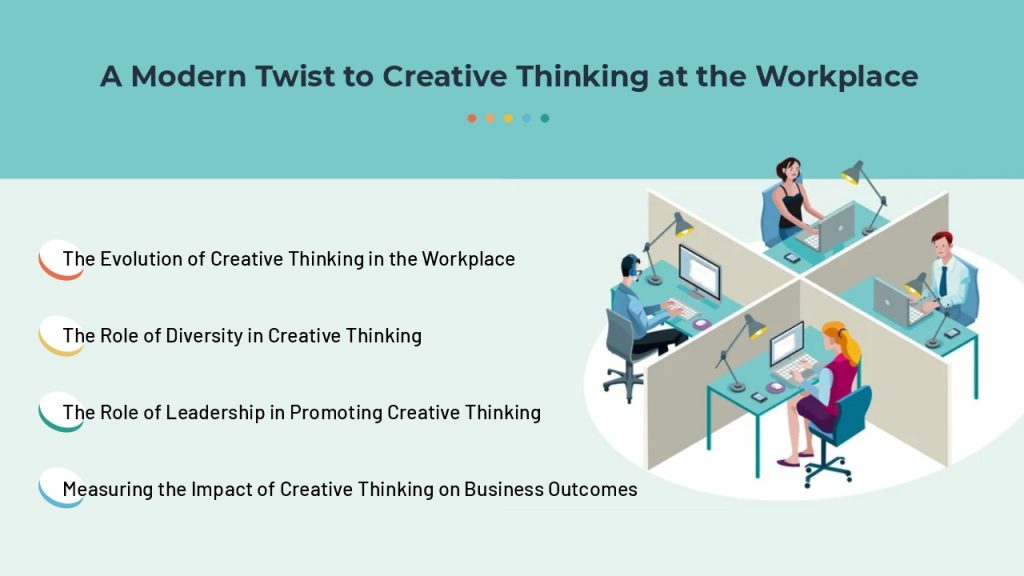
The Evolution of Creative Thinking in the Workplace
Creative thinking has traditionally been associated with artistic endeavours, brainstorming sessions, and imaginative solutions to problems. In modern workplaces, however, this concept has expanded. It now encompasses not just out-of-the-box thinking but also the ability to integrate technology, collaborate with diverse teams, and approach problems with an open mind.
In an era defined by rapid technological advancements and fierce competition, creative thinking is more crucial than ever. Companies no longer rely solely on tried-and-true methods. Instead, they seek innovative solutions to remain competitive. Creative thinking skills enable employees to look beyond the obvious and explore possibilities that might otherwise be overlooked. These skills are essential for businesses to navigate complex market demands and adapt to new trends.
One of the most significant changes in modern creative thinking is the role of technology. AI-powered tools, data analytics, and collaborative software are no longer reserved for technical fields. They are being used across industries to fuel creativity. For instance, design teams now use AI to generate initial drafts of product ideas, which they can later refine using human intuition and expertise. The fusion of human creativity and machine efficiency provides a dynamic approach to problem-solving.
A company culture that encourages innovation is essential for cultivating creative thinking skills. Employees are more likely to explore unconventional ideas when they feel supported and know that their contributions are valued. This shift is evident in companies like Google, where “20% time” allows employees to spend a portion of their work hours on passion projects. This practice fosters creativity and helps employees develop innovative solutions that benefit the organisation.
The Role of Diversity in Creative Thinking
Another crucial aspect of modern creative thinking is the emphasis on diversity. When teams consist of individuals with different backgrounds, experiences, and perspectives, they are better equipped to generate unique ideas. Diverse teams challenge one another’s assumptions, leading to more robust problem-solving and innovative outcomes. A workplace that prioritises inclusivity enhances its creative capacity.
While individual creativity is valuable, collaborative creative thinking can take innovation to new heights. Cross-functional teams that include members from various departments bring a wealth of knowledge and expertise. These teams can tackle complex problems from multiple angles, ensuring that the solutions are comprehensive and well-rounded. This modern approach emphasises the importance of blending individual contributions with collective effort.
Creative thinking can take many forms in the workplace. For instance, in the advertising industry, a team may come up with a unique marketing campaign by combining data analytics with customer feedback to create personalised experiences. In the technology sector, engineers might brainstorm ways to optimise product features based on user behaviour data. These examples highlight the importance of blending traditional creative thinking with modern tools.
Flexibility is a powerful driver of creativity. When employees are given the freedom to experiment, fail, and try again, they are more likely to think creatively. Modern companies are embracing this by offering flexible work arrangements, such as remote work or flex hours, which can reduce stress and increase the likelihood of creative breakthroughs.
The Role of Leadership in Promoting Creative Thinking
Leaders play a vital role in fostering an environment that encourages creative thinking. By promoting open communication, celebrating diverse ideas, and offering constructive feedback, leaders can help their teams unlock new levels of creativity. Moreover, leaders who lead by example—by taking risks and thinking creatively themselves—set a precedent for the rest of the organisation.
Despite its benefits, fostering creative thinking skills at the workplace can face several obstacles. Common challenges include rigid hierarchies, a fear of failure, and a lack of time dedicated to innovation. To overcome these barriers, organisations must prioritise open communication, offer ample opportunities for experimentation, and encourage employees to take calculated risks.
Measuring the Impact of Creative Thinking on Business Outcomes
Quantifying the impact of creative thinking can be challenging, but it is not impossible. Metrics such as the number of new product ideas, employee engagement levels, and customer satisfaction can offer insights into how well creative thinking is integrated into a company’s operations. Businesses that successfully foster creativity often see improvements in innovation, employee retention, and overall competitiveness.
Looking forward, businesses need to continue investing in the development of creative thinking skills among their employees. This can be achieved through targeted training programs, mentorship, and opportunities for personal and professional growth. By doing so, companies ensure that their workforce remains agile and capable of tackling future challenges with fresh perspectives.
The modern workplace requires a fresh approach to creative thinking. By integrating technology, fostering diversity, promoting collaboration, and encouraging flexibility, businesses can unlock new levels of innovation. Creative thinking is no longer just about coming up with unique ideas—it is about harnessing diverse perspectives and using modern tools to solve complex problems. As organisations continue to evolve, the emphasis on creative thinking will only grow, making it an essential skill for future success.
Why Are Creative Thinking Skills Important?
In today’s fast-paced world, where change is constant and challenges are ever-present, creative thinking skills are more valuable than ever. Whether you’re trying to solve a problem at work, navigate complex social dynamics, or find personal fulfilment, creativity provides the tools to approach situations with a fresh perspective.
When we engage in creative thinking, we activate parts of the brain that allow us to problem-solve in novel ways. This doesn’t just mean brainstorming for the sake of creativity itself—it means thinking differently in order to overcome obstacles, innovate, and find solutions that may not have been immediately apparent.
Moreover, creative thinking helps to foster resilience. When one path doesn’t work out, creative thinkers are more likely to adapt and pivot toward another solution, embracing challenges as opportunities to explore new avenues.
Creative thinking isn’t just for artists, inventors, or business leaders—it plays a role in all of our lives, whether we recognise it or not. Whether in everyday life or professional environments, the ability to think creatively can unlock solutions that might otherwise remain hidden. Here are some everyday examples of creative thinking:
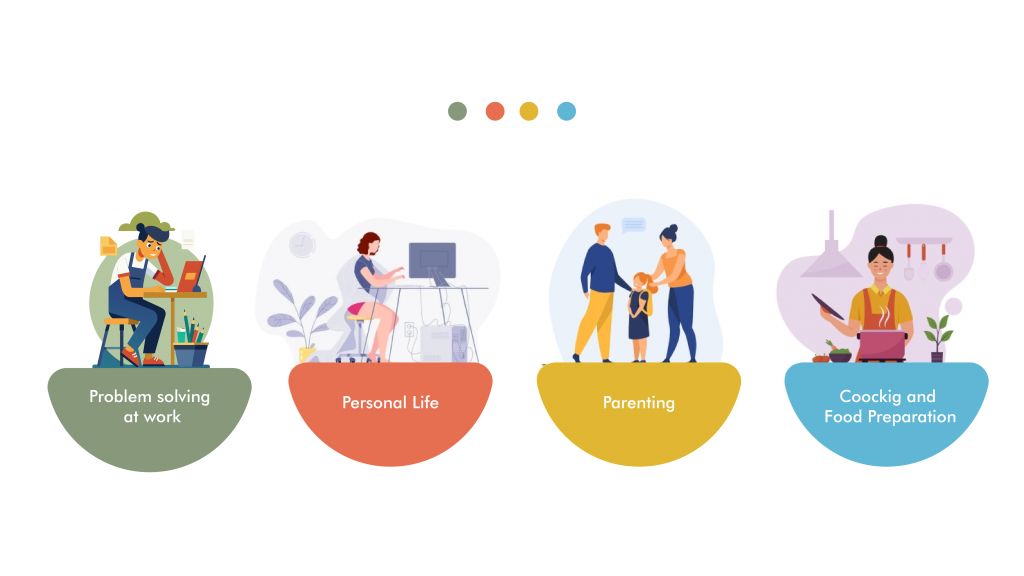
- Problem-Solving at Work:
Imagine you’re part of a team tasked with reducing costs in your company without sacrificing quality. Rather than simply cutting corners, a creative thinker might look at new technologies, different workflows, or even alternative business models to come up with a solution that reduces expenses while maintaining (or even improving) standards. - Personal Life:
Creative thinking also applies to how we navigate our personal lives. Suppose you have a tight budget but want to take a memorable vacation. Instead of seeing the limited funds as an obstacle, a creative approach might be to explore off-season travel options, home exchanges, or even volunteering abroad to make the trip both affordable and enriching. - Parenting:
Parents constantly use creative thinking when engaging with their children. From inventing games that stimulate learning to finding new ways to instil discipline or solve sibling conflicts, parenting requires a near-constant application of creative problem-solving skills. - Cooking and Food Preparation:
Even in the kitchen, creative thinking is at play. Think about the last time you opened your fridge and had to put together a meal with random ingredients. Maybe you combined flavours you had never thought of before or substituted one ingredient for another. This kind of on-the-fly innovation is a small but significant example of creative thinking in daily life.
Let us dig a little deeper into the real world examples of creative thinking.
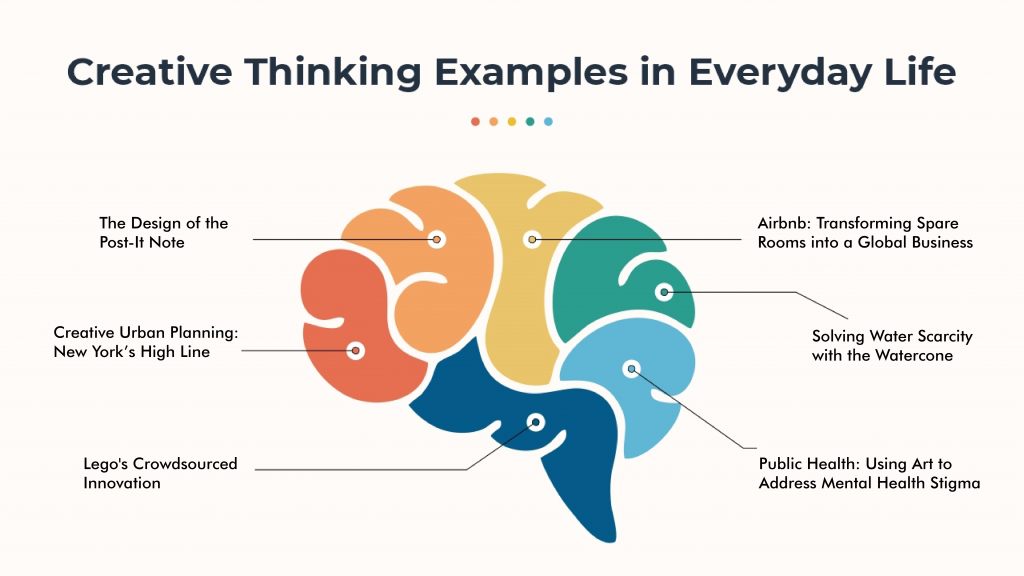
1. The Design of the Post-It Note
One of the most famous examples of creative thinking is the creation of the Post-It Note. In the 1970s, a 3M scientist, Spencer Silver, was trying to develop a super-strong adhesive but ended up with a low-tack glue that didn’t meet his expectations. Instead of discarding the “failed” experiment, Silver and his colleague Art Fry thought outside the box. Fry realised that this weak adhesive could be useful for temporarily sticking paper to surfaces without leaving a residue, leading to the invention of Post-It Notes.
This creative solution turned a “failure” into one of the most ubiquitous office supplies in the world. The key here was reimagining the potential of an unexpected outcome and applying it in a novel way. Silver and Fry’s willingness to pivot and see value where others saw failure highlights the power of creative thinking in product development.
2. Airbnb: Transforming Spare Rooms into a Global Business
Airbnb is a prime example of creative thinking in the business world. When the founders, Brian Chesky and Joe Gebbia, were struggling to pay rent, they saw an opportunity in the thousands of spare rooms available across the country. Instead of focusing on traditional hospitality models, they leveraged the idea of “sharing economy” and invited people to rent out their extra spaces to travellers.
What started as a short-term fix for their own financial issues turned into a multi-billion-dollar global enterprise. Airbnb revolutionised the way people travel by offering a cheaper and more personal alternative to hotels. Their ability to rethink traditional travel accommodations and see the potential in everyday resources transformed the hospitality industry.
3. Creative Urban Planning: New York’s High Line
In New York City, an elevated freight rail line was abandoned for decades and left to decay. Rather than letting it become an eyesore or demolishing it, a group of creative urban planners envisioned the space as a public park. In 2009, the High Line opened as an elevated greenway, blending nature with urban infrastructure.
This project is a testament to how creative thinking can reshape the use of space in urban environments. The High Line transformed an industrial relic into one of New York’s most beloved public spaces, drawing tourists and locals alike. The idea of turning something obsolete into a vibrant community hub shows how creativity can revitalise cities and improve quality of life.
4. Solving Water Scarcity with the Watercone
In regions suffering from water scarcity, creative thinking can provide life-saving solutions. The Watercone is a simple yet innovative device that helps turn saltwater into potable water through solar desalination. The cone-shaped device is placed over saltwater, and as the sun evaporates the water, condensation collects in the cone and drains into a trough, leaving salt and impurities behind.
This inexpensive and easy-to-use device is a brilliant example of creative thinking in engineering, providing a practical solution to a critical global issue. It’s a reminder that creative ideas don’t have to be complex to be impactful—they just need to solve real problems in effective ways.
5. Lego’s Crowdsourced Innovation
Lego has always been known for fostering creativity through its iconic building blocks, but its shift towards crowdsourcing ideas from its customers is a prime example of creative thinking in business strategy. Through their platform, Lego Ideas, fans can submit their own designs for potential new Lego sets. If a design gets enough support, Lego produces and sells the set, giving a portion of the profits to the creator.
This approach is a creative way of engaging with their community while also tapping into a wellspring of new ideas. It allows Lego to stay relevant by listening to their fan base and encourages innovation from unexpected sources. The strategy is a win-win: customers feel heard, and Lego gets a continuous flow of fresh, creative ideas.
6. Public Health: Using Art to Address Mental Health Stigma
Creative thinking isn’t limited to products or business models—it also plays a significant role in social causes. Take, for example, the use of art in public health campaigns to reduce the stigma around mental illness. Various organisations around the world have used street art, murals, and public installations to spark conversations about mental health.
In Mexico City, a campaign used life-sized sculptures and paintings of people with mental illnesses in public spaces. Each installation included personal stories and facts about mental health, encouraging passersby to engage with the topic and reflect on their own views. This creative approach bypasses traditional educational methods, instead reaching people on an emotional level through art, thereby reducing stigma and encouraging empathy.
Creative thinking is all around us, influencing the products we use, the spaces we inhabit, and even the social issues we tackle. From the birth of the Post-It Note to the transformation of an abandoned railway into a public park, these examples demonstrate the vast potential of creativity when applied to real-world problems. By challenging the status quo, reimagining possibilities, and staying open to unconventional ideas, creative thinking can lead to groundbreaking solutions that improve both our everyday lives and the world at large.
The Connection Between Creativity and Innovation
Creative thinking and innovation are two sides of the same coin. Innovation is the process of turning creative ideas into tangible solutions, products, or processes that have real-world impact. Without creative thinking, innovation would stagnate.
Let’s take the example of technology companies. Apple’s rise to prominence was driven by creative thinking—the desire to design products that not only functioned well but also provided a unique and elegant user experience. It wasn’t just about making a better computer or phone; it was about reimagining what those products could be and how they could fit into people’s lives.
Creative thinking drives innovation by pushing individuals and organisations to ask, “What if?” and “Why not?” It’s about dreaming up new possibilities and then working to make those dreams a reality.
How to Develop Creative Thinking Skills
While some people seem to be naturally more creative, creative thinking is a skill that can be developed and strengthened over time. Like any muscle, the more you use it, the stronger it becomes. Here are some strategies to cultivate your creative thinking skills:
- Embrace Curiosity:
Start by asking more questions. Instead of accepting things as they are, question why they are the way they are. Curiosity is the fuel for creative thinking. When you begin to question established norms, you open the door to new possibilities and solutions. - Engage in Brainstorming Sessions:
Whether you’re working alone or in a group, brainstorming is a powerful way to generate new ideas. The key here is to suspend judgement and let ideas flow freely. Even if an idea seems far-fetched or impractical at first, it could lead to something great down the line. - Change Your Environment:
Often, creativity thrives in new settings. If you’re stuck in a rut, try changing your environment. Go for a walk, visit a museum, or rearrange your workspace. These changes can stimulate new thoughts and perspectives. - Practise Mindfulness and Meditation:
Sometimes, creativity is blocked by mental clutter. Practising mindfulness or meditation can help clear your mind, allowing for more clarity and creative thinking. When your mind is calm, you’re more likely to see connections between ideas and come up with innovative solutions. - Learn from Different Disciplines:
Cross-disciplinary learning is a fantastic way to enhance creativity. By exploring subjects outside of your expertise, you gain new insights that can be applied to your own work. For example, an engineer might take inspiration from art, while a writer might learn valuable lessons from science.
Barriers to Creative Thinking
Despite its importance, many people struggle to tap into their creative potential due to various barriers. Some of these barriers include:
- Fear of Failure:
Creativity often involves risk-taking. If you’re too afraid to make mistakes or fail, you’re less likely to try new things or think outside the box. Creative thinkers embrace failure as part of the learning process. - Rigid Thinking Patterns:
Some people get stuck in conventional thinking, which can stifle creativity. To counter this, try to challenge your own assumptions and beliefs. Think about alternative ways to approach problems and allow yourself the freedom to experiment. - Overemphasis on Productivity:
In a world that values productivity, the time spent on creative thinking can sometimes feel “wasted.” However, it’s important to recognise that creativity doesn’t always yield immediate results—it’s an investment in long-term innovation.
Creative Thinking in Education
Creative thinking is an essential skill in education, as it equips students with the tools they need to thrive in a rapidly changing world. Traditional education models often emphasise memorization and rote learning, but modern approaches are increasingly focusing on creativity, problem-solving, and critical thinking.
Incorporating creative thinking into the classroom allows students to explore subjects in deeper and more meaningful ways. For example, instead of simply learning historical facts, students might be asked to imagine themselves as historical figures making decisions based on the knowledge of their time. This kind of active learning fosters both creativity and a more profound understanding of the subject matter.
Creative Thinking in the Workplace
Employers across industries are seeking out individuals with strong creative thinking skills because they know that creativity drives innovation, adaptability, and problem-solving. In a workplace setting, creative thinking helps teams come up with novel approaches to challenges, whether it’s improving workflows, launching new products, or enhancing customer experience.
Companies like Google, for example, are known for fostering creative thinking by allowing employees to dedicate time to passion projects. This creative freedom has led to some of their most successful products, like Gmail and Google Maps.
FAQs
Conclusion
Creative thinking is not just a talent possessed by a select few—it’s a skill that everyone can cultivate. By embracing curiosity, challenging norms, and allowing yourself the freedom to experiment, you can unlock the potential to think creatively in all areas of life. From the boardroom to the classroom, and even in your personal life, creative thinking opens up new possibilities and paves the way for innovation and growth.
When we allow ourselves to break free from routine, we discover that the world is full of opportunities waiting to be explored. So, the next time you face a challenge or opportunity, tap into your creative thinking skills. Who knows where it might take you?
