
Table of Contents
ToggleStrategic Thinking and Innovative Ideas for Project Success: A Journey of Insight
Strategic thinking is like the guiding star in a vast, often turbulent, ocean. It illuminates the path forward, helping us navigate not only through the challenges we see but also those hidden just beneath the surface. In the world of projects, where the landscape is ever-changing, strategic thinking becomes the bedrock upon which success is built. Without it, even the most innovative ideas can falter, lost in a sea of uncertainty.
But what does it truly mean to think strategically? And how do we weave creativity and innovation into the tapestry of projects in a way that feels both organic and structured? This blog will explore these questions, diving into the depths of strategic thinking while also exploring how innovative ideas can bring life and excitement to project development.
The Foundation of Strategic Thinking
Strategic thinking is often perceived as a skill reserved for the highest levels of leadership. However, it’s much more than just a business buzzword. It’s a mindset—a way of viewing the world, a framework for making decisions that consider the long-term impact of each step. At its core, strategic thinking is about seeing the big picture while understanding the intricacies of the small details that make up the whole.
Think of it as a chess game. Each move is calculated, each piece plays a role, and the ultimate goal is not just to win, but to sustain a strategy that allows for adaptability, foresight, and resilience.
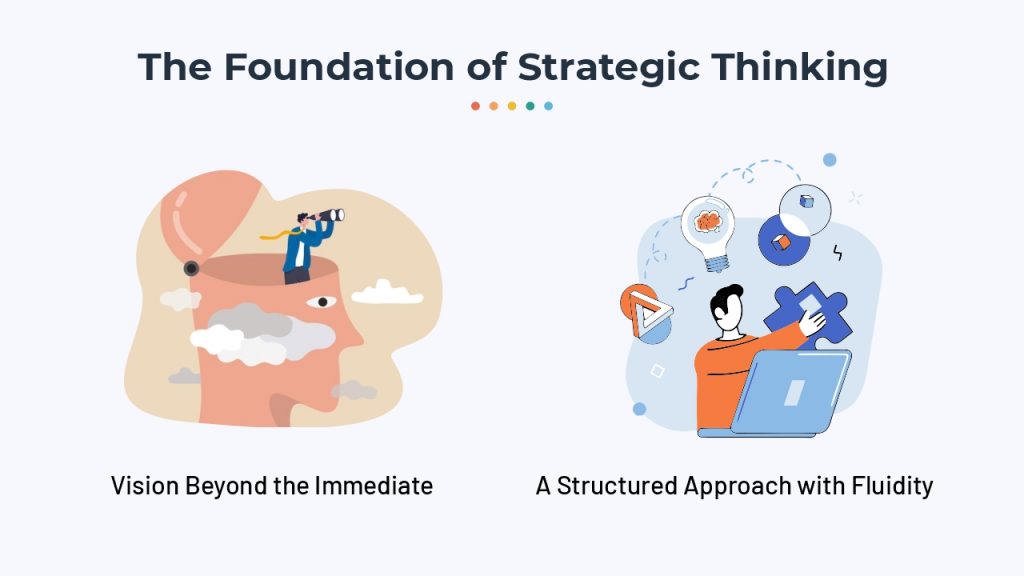
Vision Beyond the Immediate
Strategic thinkers have the unique ability to look beyond the immediate and consider the future consequences of their actions. In a project context, this means not only completing tasks but also anticipating how each decision affects the next phase of the project. The ripple effect of each action must be carefully examined.
This broader vision is essential for staying ahead of potential challenges and for leveraging opportunities that others may miss. It’s the difference between someone who simply executes and someone who leads a project with precision and purpose.
A Structured Approach with Fluidity
While strategic thinking provides a structured framework, it must also allow for fluidity. Projects rarely go exactly as planned, and the ability to pivot is a key element of success. This dual nature—structure with flexibility—gives projects the agility they need to respond to unforeseen challenges while staying aligned with their larger goals.
The Marriage of Strategy and Innovation
Innovation is the heartbeat of progress. It is what breathes life into ideas and turns possibilities into reality. But how does one infuse a project with innovation without sacrificing the structure and foresight that strategic thinking demands?
The answer lies in balance. Innovative ideas for projects must be rooted in strategic thinking in order to succeed. While innovation pushes boundaries and introduces new ways of solving problems, strategic thinking ensures that these ideas are not only creative but also viable and sustainable.
The Role of Creative Problem Solving
One of the most exciting aspects of innovation within project management is its capacity for creative problem-solving. When teams are faced with challenges, innovative ideas can offer solutions that are outside the box. Strategic thinking, however, ensures that these creative solutions are aligned with the project’s overall objectives.
Consider a project where a team is tasked with developing a new product. An innovative idea might be to use a novel technology that has never been implemented in this way before. Strategic thinking steps in to ensure that the use of this technology is sustainable, cost-effective, and aligned with the market’s needs.
Breaking Down Silos with Cross-Disciplinary Innovation
Innovation often flourishes when different disciplines come together to collaborate. In a project setting, strategic thinkers recognise the value of breaking down silos and fostering cross-disciplinary innovation. Engineers working with marketers, designers collaborating with data analysts—these collaborations often produce the most groundbreaking ideas.
Strategic thinking ensures that the innovation doesn’t become fragmented. Instead, it becomes an integrated part of the project’s overall strategy, ensuring that each innovative idea contributes to the project’s success rather than diverting it from its goals.
Innovative Ideas for Projects: Unlocking Creativity
Incorporating innovative ideas into projects isn’t just about coming up with something new—it’s about finding ways to improve processes, enhance efficiency, and deliver value in ways that haven’t been considered before. Let’s explore some ways in which innovative thinking can transform a project.
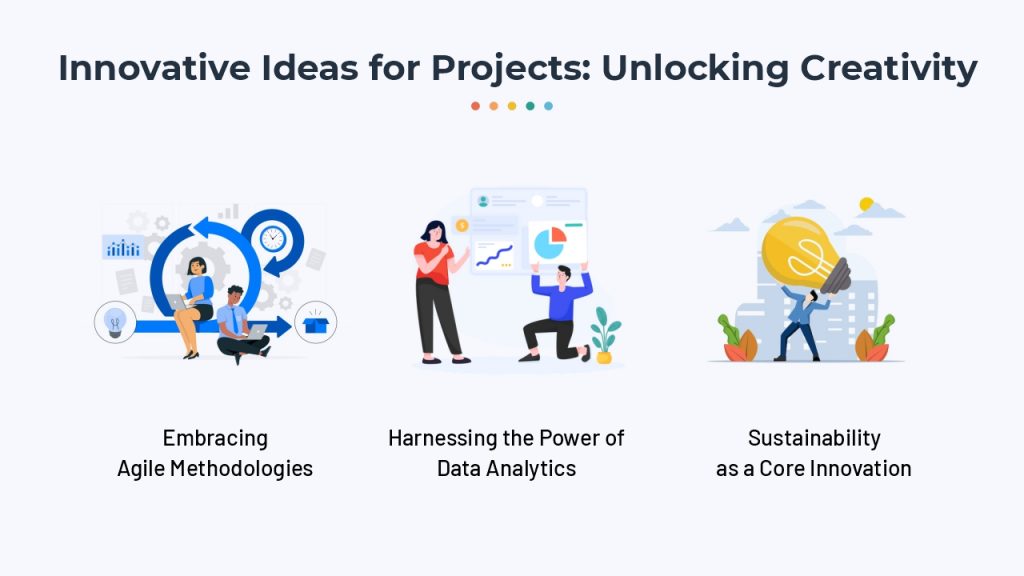
1. Embracing Agile Methodologies
One of the most powerful innovations in project management has been the introduction of Agile methodologies. This approach focuses on iterative development, constant feedback, and the ability to adapt quickly to changes. It’s a framework that encourages innovation because it allows for continuous improvement throughout the project lifecycle.
In an Agile environment, teams are encouraged to experiment, learn from mistakes, and pivot when necessary—all without losing sight of the project’s overall strategic goals.
2. Harnessing the Power of Data Analytics
Data is the goldmine of the modern age. Projects that harness the power of data analytics can uncover insights that lead to innovative solutions. Whether it’s predicting market trends, optimising resources, or improving customer experience, data-driven decision-making is becoming an essential part of innovative project management.
Strategic thinkers know how to use data not only to solve immediate problems but to forecast future challenges and opportunities, allowing projects to stay one step ahead.
3. Sustainability as a Core Innovation
In today’s world, sustainability is more than just a trend—it’s a necessity. Projects that incorporate sustainability as a core component of their strategy are not only innovative but also forward-thinking. Whether it’s using eco-friendly materials, reducing waste, or implementing renewable energy solutions, sustainability is a powerful source of innovation.
Strategic thinking ensures that sustainability initiatives are not just greenwashing but are embedded into the project’s long-term success.
The Human Element in Strategic Thinking and Innovation
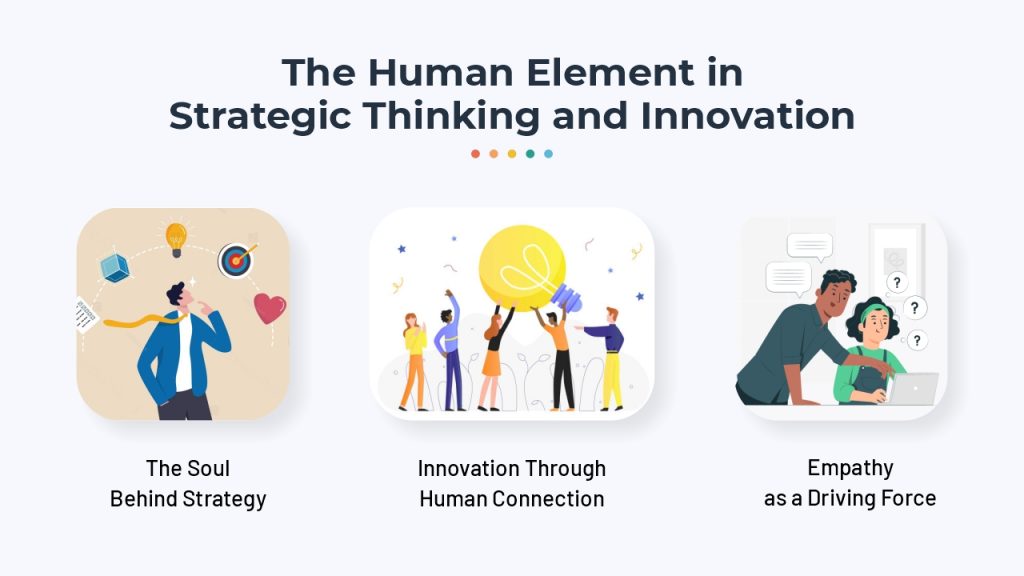
The Soul Behind Strategy
Strategic thinking, when stripped to its core, is about making informed, forward-thinking decisions. But these decisions are made by individuals, each with their own experiences, intuition, and insight. It’s easy to view strategy as a mechanical process, but it’s much more fluid. The nuances of human judgement, empathy, and adaptability transform a basic plan into a powerful vision.
Consider a strategist who not only focuses on numbers but also understands the people behind those numbers—their motivations, struggles, and dreams. That’s where the real power of strategic thinking unfolds. It’s not just about reaching a destination; it’s about guiding people toward it in a way that resonates with them deeply.
Innovation Through Human Connection
Innovation, too, is often portrayed as a product of technology or creative genius, but it’s ultimately the human mind that conceives and nurtures it. Every great idea begins with someone daring to think differently, driven by the desire to improve life, solve problems, or simply inspire. Innovation is born from curiosity, collaboration, and the willingness to question the status quo.
What happens when teams come together, not just as professionals but as individuals? Ideas flourish. When diverse minds collaborate, tapping into each other’s unique perspectives and strengths, innovation naturally follows. It’s a testament to the creative energy that humans possess when they work together in an environment of trust and shared purpose.
Empathy as a Driving Force
Empathy is a critical yet often overlooked aspect of both strategy and innovation. When leaders take the time to understand the needs, desires, and challenges of their team members, clients, and stakeholders, they create strategies and innovations that are not just functional but also meaningful. They listen, they adapt, and they design solutions that resonate on a personal level.
In the end, the human element is the glue that binds strategic thinking and innovation together. Without people—without their emotions, insights, and connections—both would be empty concepts, lacking the depth and dynamism that make them powerful forces for change.
Strategic Thinking in Action: Case Studies
To truly understand the power of strategic thinking paired with innovation, let’s look at some real-world examples where this combination has led to project success.
The Rise of Tesla: A Case of Strategic Innovation
Tesla’s rise to prominence in the electric vehicle market is a textbook example of how strategic thinking and innovation can work hand in hand. Tesla didn’t just create electric cars—it revolutionised the way people think about driving. The innovation behind their products, from battery technology to autonomous driving, was rooted in a strategic vision that looked far beyond the immediate challenges of the market.
By anticipating future demand for sustainable transportation and investing heavily in research and development, Tesla positioned itself as a leader in the industry, well before the rest of the world caught up.
The Agile Revolution at Spotify
Spotify’s adoption of Agile methodologies transformed its project management approach and allowed the company to stay innovative in an incredibly competitive market. By breaking teams into smaller, cross-functional groups (called squads), Spotify was able to foster creativity and adaptability while ensuring that strategic goals were always aligned across the company.
This strategic thinking allowed Spotify to innovate quickly, release new features at a rapid pace, and stay ahead of competitors in a constantly evolving industry.
Challenges in Balancing Strategy and Innovation
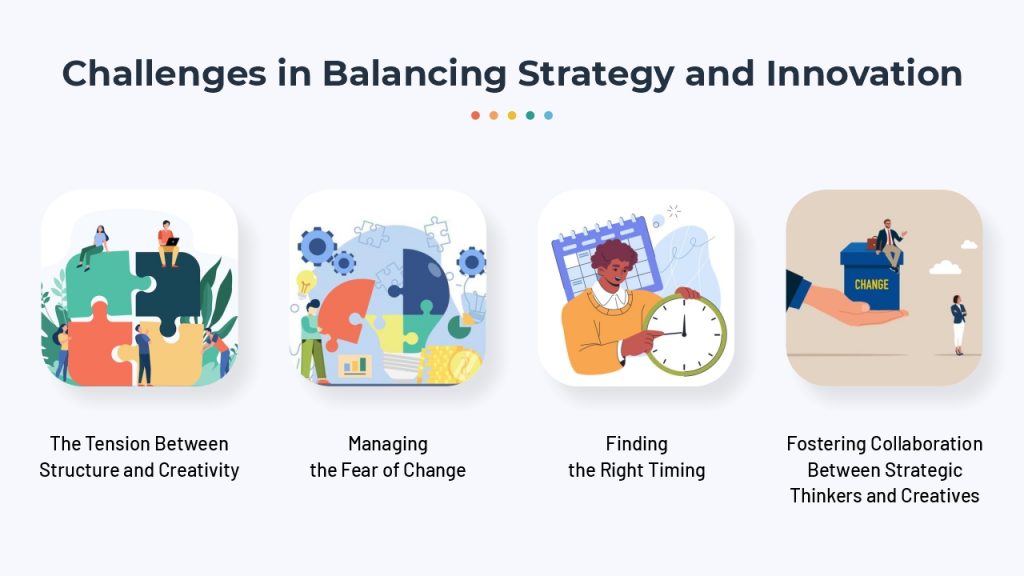
While the marriage of strategic thinking and innovation is a powerful one, it’s not without its challenges. At first glance, strategy and innovation may seem like opposing forces. Strategy is often viewed as structured, methodical, and long-term, while innovation is spontaneous, disruptive, and ever-changing. Yet, in practice, these two are not enemies but allies—if balanced correctly. However, striking that balance can be one of the most intricate challenges faced by businesses and leaders alike.
The Tension Between Structure and Creativity
One of the biggest challenges in balancing strategy and innovation is navigating the inherent tension between structure and creativity. Strategic thinking requires clarity, direction, and a disciplined approach to achieving goals. Innovation, on the other hand, thrives on flexibility, risk-taking, and pushing the boundaries of what’s possible.
When a leader focuses too much on strategy, innovation can be stifled. People may feel confined to rigid processes, hesitant to explore new ideas or question the status quo. On the flip side, if innovation dominates, the organisation may lack the focus needed to steer its ideas in a clear and sustainable direction. Projects may scatter, resources could be wasted, and long-term goals might become lost in the noise of creativity.
Managing the Fear of Change
Another challenge lies in managing the fear of change. Strategy often involves sticking to proven methods, while innovation demands the courage to break away from those same methods. Change is unsettling for many people, especially when it involves abandoning the familiar in favour of the unknown. This fear can create resistance, both at an individual and organisational level.
Leaders must navigate this delicate balance by fostering a culture that encourages experimentation while still maintaining a clear sense of purpose. It’s not about jumping into every new idea that comes along, but rather integrating innovation into the strategy in a way that feels safe yet exciting.
Finding the Right Timing
Timing is everything in balancing strategy and innovation. A well-timed innovation can propel a strategy to new heights, while mistimed creativity can derail progress. Leaders must develop a sense of when to introduce innovation and when to stay the course. It’s an art, much like knowing when to introduce a new instrument into a symphony—if done too early or too late, the harmony can be lost.
Fostering Collaboration Between Strategic Thinkers and Creatives
Perhaps the most challenging yet rewarding aspect of balancing strategy and innovation is fostering collaboration between strategic thinkers and creative minds. Each group tends to approach problems differently, but when they work together, the results can be groundbreaking. It requires leaders to break down silos, encourage open communication, and ensure that both strategic and creative input are valued equally.
Ultimately, balancing strategy and innovation is about embracing both the practical and the imaginative. It’s recognising that neither exists in a vacuum, and the most successful leaders are those who can walk the fine line between the two—fostering a culture that’s both disciplined and daring.
FAQs
Conclusion
Strategic thinking and innovative ideas for projects are not opposing forces but complementary ones. Together, they create a powerful synergy that drives success, pushing projects beyond the ordinary and into the realm of extraordinary.
In the ever-evolving world of project management, it’s not enough to have a great idea—you must also have the strategic foresight to see that idea through to fruition. And as we’ve explored, the human element—the empathy, creativity, and collaboration that people bring to projects—adds depth and richness to both strategy and innovation.
So, the next time you’re faced with a challenge, ask yourself: How can I think strategically while allowing space for innovation to flourish? The answer may just lead you to a breakthrough that changes everything.
