Table of Contents
ToggleEmployee Development and Career Advancement: A Path to Growth
In the journey of professional life, two paths often converge—employee development and career advancement. Both are intertwined, like the roots of a tree, nurturing the growth of individuals and organisations alike. But what do these terms truly mean, and how do they harmoniously lead to success? This article delves into the essence of these concepts and their impact on personal and professional journeys.
What is Employee Development?
Employee development is the quiet, steady pulse of an organisation’s growth. It is the art of nurturing, guiding, and elevating employees so that they can reach their full potential. But what does this concept truly encompass?
At its core, employee development refers to the continuous process of enhancing an employee’s skills, knowledge, and abilities. It is more than just job training—it’s about fostering a culture of learning, improvement, and self-discovery. It is a holistic approach aimed at enabling employees to reach their fullest potential. Like a gardener tending to a young sapling, the goal is to help employees flourish in their roles and beyond.
Development manifests in various forms. It could be through on-the-job training, where employees learn by doing, or via structured learning like workshops, seminars, or certifications. Mentorship, too, plays a critical role in development, offering a more personal and supportive way for employees to grow.
The beauty of employee development lies in its reciprocity. As employees grow, so too does the company. By investing in the growth of individuals, organisations cultivate a workforce that is more skilled, engaged, and motivated. In essence, employee development is a symbiotic process—one where both the individual and the organisation reap the rewards.
But beyond the tangible benefits of skill-building, employee development taps into something deeper. It speaks to the human desire for growth, progression, and purpose. When employees feel supported and see opportunities for development, they are more likely to stay loyal, bringing their best selves to work each day. Just like water and sunlight to a plant, employee development is essential for growth—both personal and professional.
The Essence of Career Advancement
Career advancement is the upward trajectory an individual takes in their professional life. This doesn’t always equate to promotions or new titles but encompasses broadening skills, gaining expertise, and stepping into roles that offer greater challenges. Advancement is the horizon employees strive towards, where personal ambition meets opportunity. So, in a gist- career advancement is the pursuit of growth, the aspiration to move beyond the present and ascend into new heights of professional life. It is a journey driven by ambition, skill, and the desire for fulfilment. But its essence goes far beyond titles and promotions.
At its heart, career advancement is about personal evolution. It’s not just about climbing the corporate ladder; it’s about stretching oneself, continuously learning, and evolving into a more capable, confident, and complete professional. Much like the way a river carves its way through valleys, shaping the landscape over time, career advancement shapes our professional identities through experiences and challenges.
While many may equate career advancement with salary increases or higher positions, the truth is far more profound. Advancement is not always vertical—it can take the form of lateral moves, where new challenges and skills are gained. It’s about deepening your expertise, broadening your horizons, and finding new ways to contribute.
The path of career advancement is rarely linear. There are moments of triumph, yes, but there are also obstacles and detours. However, it is in these very moments that we grow the most. These challenges build resilience, and with every step forward, we draw closer to our professional goals.
Ultimately, the essence of career advancement is about more than just professional success—it’s about crafting a fulfilling career that aligns with one’s personal values and aspirations. It is about recognising potential and relentlessly pursuing it, knowing that every step taken brings you closer to your highest self.
Why Employee Development is Key to Career Advancement
Just as a plant needs sunlight to grow, an individual requires development to achieve career advancement. Without fostering the skills necessary to excel in evolving roles, career stagnation sets in. Employee development is the nurturing force that ensures continuous progress.
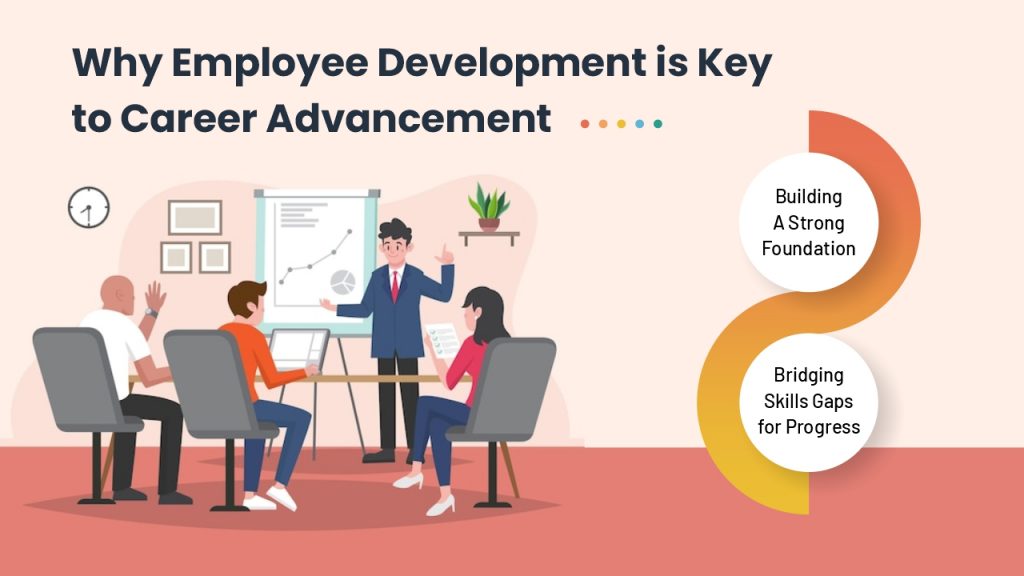
Building a Strong Foundation
Development is like laying the bricks of a career foundation. From learning basic skills to mastering complex ones, it forms the basis upon which career advancement is built. It equips employees with the tools needed to climb the professional ladder with confidence.
Bridging Skills Gaps for Progress
In today’s fast-evolving world, skills become obsolete rapidly. Employee development addresses this challenge by offering ways to bridge the gaps that could hinder career growth. The more skilled an employee becomes, the better poised they are to seize advancement opportunities.
The Role of Continuous Learning in Employee Development
Learning doesn’t end with a degree or certification. In fact, learning is a lifelong journey, and for employees, it’s the key to staying relevant. In the context of employee development, continuous learning opens doors that lead to career advancement.
Embracing a Learning Culture
Organisations that embrace a culture of learning foster environments where employee development thrives. These workplaces encourage employees to stay curious and engaged in self-improvement, knowing that every step of learning is a step toward career growth.
Upskilling and Reskilling as Tools of Advancement
In a rapidly changing market, upskilling—learning new skills—and reskilling—updating existing skills—are critical for employees seeking career progression. Both approaches help professionals stay adaptable, positioning them as indispensable assets to their companies.
The Symbiotic Relationship Between Development and Career Growth
Employee development and career advancement are two sides of the same coin. One cannot exist without the other. As employees develop new skills and competencies, they naturally position themselves for upward mobility within their organisations.
How Personal Growth Influences Career Trajectories
Personal growth feeds directly into professional growth. Employees who focus on enhancing their leadership, communication, or technical skills often find themselves better equipped for roles that require a broader scope of responsibilities.
The Importance of Feedback in Employee Development
Constructive feedback is the catalyst for development. When employees receive feedback, they gain insight into their strengths and areas for improvement. This creates a roadmap for their development and advancement, making the process more focused and effective.
Strategies for Effective Employee Development
Employee development is not just a process—it’s a strategy for cultivating talent, enhancing performance, and fueling both personal and organisational growth. When approached with care and thoughtfulness, the benefits are profound. For employee development to truly drive career advancement, it needs to be structured and intentional. Here are some key strategies that help fuel growth –
One of the most effective strategies for employee development is the creation of personalised development plans. Just as no two employees are the same, their paths for growth should be uniquely tailored. This involves identifying their strengths, areas for improvement, and long-term career goals, and then crafting a roadmap to guide their development. Personalised plans show employees that their growth is a priority, helping them feel more engaged and motivated.
Another critical strategy is the emphasis on continuous learning. The world of work is ever-changing, and employees must be encouraged to keep their skills sharp. Offering opportunities for learning—whether through formal education programs, online courses, or hands-on training—ensures that employees remain adaptable and ready for new challenges. This culture of continuous learning also signals to employees that growth is not a destination, but a journey.
Mentorship and coaching are invaluable tools in the development process. By pairing less experienced employees with seasoned professionals, organisations provide guidance, support, and the wisdom of experience. Mentors offer not just technical skills, but insights into leadership, communication, and career navigation.
Cross-functional training, which allows employees to gain experience in different departments or roles, is another powerful strategy. It broadens their understanding of the business and equips them with a versatile skill set that can lead to further opportunities for growth.
Ultimately, the key to effective employee development lies in balance. Employees need a blend of structured opportunities and the freedom to explore their own potential. When companies invest in well-rounded development programs, they create a workforce that is resilient, innovative, and driven to succeed.
Career Advancement: More Than Just Promotions
The idea of career advancement often evokes images of moving up the corporate ladder. However, growth doesn’t always have to be vertical. When we think of career advancement, the mind often conjures images of promotions—of corner offices and shiny new job titles. But the truth is, career advancement is far more nuanced than that. It’s about more than just moving up the ladder; it’s about expanding your horizons and deepening your impact in ways that transcend titles.
In many cases, lateral moves—taking on roles in different departments or sectors of a business—can provide just as much, if not more, growth than traditional promotions. These transitions allow employees to gain a breadth of experience, learning new skills and insights that make them more versatile professionals. Think of it like a tree expanding its branches—not growing taller, but spreading wider, becoming stronger and more resilient.
Another key aspect of career advancement is personal development. Sometimes, the most significant steps in a career happen not in the boardroom but in the quiet moments of self-improvement. Whether it’s honing leadership skills, improving emotional intelligence, or developing expertise in a particular area, personal growth is an essential, though often overlooked, facet of career advancement.
Moreover, advancement can also mean finding new ways to contribute meaningfully to your organisation. It might involve spearheading innovative projects, mentoring junior colleagues, or developing new strategies that drive the company forward. In this sense, career advancement is less about the destination and more about the impact you make along the way.
Ultimately, career advancement is about aligning your work with your values, finding fulfilment in what you do, and growing into a role that allows you to contribute your unique strengths. Whether that means a promotion or a lateral move, what truly matters is the growth and satisfaction you experience on your journey.
Challenges in Employee Development and Career Advancement
Like any journey, the path to career advancement through employee development has its challenges. The paths of employee development and career advancement are rich with opportunity, but they are not without challenges. Like any worthwhile journey, the road to growth is often winding, and obstacles can arise along the way.
One of the primary challenges in employee development is organisational support. Not all companies prioritize development, and in such environments, employees may struggle to find the resources they need to grow. Without access to training, mentorship, or feedback, development can stall, leaving employees feeling stagnant.
Similarly, the pace of change in today’s workplace can create hurdles. As industries evolve and new technologies emerge, employees must constantly adapt to stay relevant. The challenge lies in ensuring that development programs keep pace with these changes, equipping employees with the skills they need for the future, not just the present.
Resistance to change is another common obstacle. Employees may feel comfortable in their current roles and resist development opportunities, fearing the discomfort that comes with learning new things or taking on additional responsibilities. Overcoming this resistance requires a culture of encouragement, where growth is seen not as a burden, but as an opportunity.
From a broader perspective, the uncertainties of career advancement can pose challenges as well. The path is rarely straightforward, and there may be detours, setbacks, or missed opportunities. Navigating these requires patience, resilience, and a willingness to embrace change, even when it feels daunting.
Despite these challenges, the rewards of development and advancement are worth pursuing. With the right mindset and organisational support, employees can overcome these obstacles and unlock their full potential, achieving both personal growth and professional success.
How Companies Can Foster Career Growth and Development
Organisations play a pivotal role in the development of their employees. By creating supportive environments, they enable their workforce to thrive. For organisations, fostering career growth and employee development is not just a moral obligation—it’s a strategic advantage. When employees feel supported in their development, they are more engaged, productive, and loyal. But how can companies create an environment that nurtures growth?
The first step is to invest in development programs. This could take the form of formal training courses, leadership development workshops, or even online learning platforms that employees can access at their own pace. These programs show a commitment to employee growth and ensure that the workforce is equipped with the skills needed for the future.
Another key initiative is creating opportunities for mentorship and coaching. Pairing employees with more experienced colleagues fosters a culture of support and learning. Mentors can provide invaluable guidance, helping employees navigate their career paths and avoid common pitfalls.
Companies can also encourage cross-functional opportunities. By allowing employees to explore different departments or roles, organisations help them build a broader skill set. This not only benefits the employee but also strengthens the company by creating a more versatile and adaptable workforce.
A critical element in fostering career growth is creating a culture that values feedback. Regular, constructive feedback helps employees understand where they stand and what areas they need to improve. It also ensures that development is aligned with both personal and organisational goals.
Lastly, companies should prioritise work-life balance as part of their growth initiatives. Overworked employees are less likely to engage in development activities, and burnout can stifle career advancement. By promoting balance, companies create a more sustainable and fulfilling work environment where growth can flourish.
In the end, fostering career growth and development is about creating a workplace where every employee feels empowered to reach their full potential. It’s a win-win scenario where both individuals and organisations thrive together.
Real-Life Success Stories of Employee Development and Career Growth
The success of employee development is best illustrated through real-life stories. Let’s look at some examples of how development initiatives led to remarkable career growth.
How Employee Training Propelled Career Paths
Numerous professionals have credited their career advancement to well-designed training programs that sharpened their skills and expanded their knowledge base. These individuals rose through the ranks by staying committed to learning.
Case Studies of Career Transformations
From entry-level positions to executive roles, employees who embraced development opportunities often experienced life-changing career transformations. Their stories serve as inspiration to those who wish to follow in their footsteps.
The Future of Employee Development and Career Advancement
As technology continues to evolve, so do the opportunities for employee development and career advancement. The future holds exciting possibilities. The landscape of work is shifting rapidly, and with it, the concepts of employee development and career advancement are evolving in profound ways. As we look toward the future, it’s clear that the old models of rigid hierarchies and linear career paths are being replaced by more fluid, dynamic approaches. Technology, remote work, changing employee expectations, and a renewed focus on lifelong learning are driving this transformation. But what does the future hold for employee development and career advancement? Let’s take a glimpse at the trends shaping this new world.
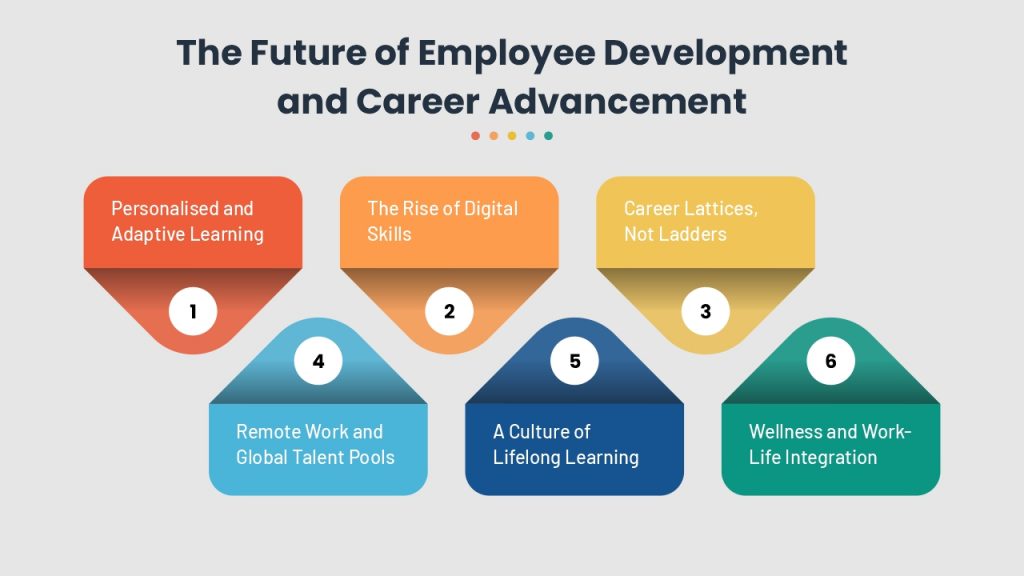
Personalised and Adaptive Learning
In the future, employee development will no longer be a one-size-fits-all approach. Companies are increasingly recognising that employees have different learning styles, career goals, and paces of development. The future will see a rise in personalised development plans, where each employee’s growth is tailored to their unique needs and aspirations. Adaptive learning platforms powered by artificial intelligence will track an employee’s progress and suggest learning modules that align with their goals, offering a more customised and efficient path to skill acquisition.
This approach not only benefits employees but also helps companies cultivate talent more effectively. As skills gaps evolve and new competencies emerge, personalised learning will be key in ensuring that organisations stay competitive while offering employees the tools to succeed.
The Rise of Digital Skills
With the rapid pace of technological advancement, digital skills will be at the heart of employee development in the future. Automation, artificial intelligence, and data analytics are becoming integral to almost every industry, and employees will need to adapt to this new digital-first environment. Companies that provide opportunities for their workforce to upskill in these areas will have a distinct advantage.
However, the emphasis on digital skills won’t mean a complete shift away from soft skills. In fact, emotional intelligence, communication, and leadership will become even more critical in a world where technology plays a larger role. Employees who can combine technical expertise with strong interpersonal abilities will be the leaders of tomorrow.
Career Lattices, Not Ladders
In the future, career advancement will look less like a ladder and more like a lattice. Gone are the days of strictly vertical progression, where employees move up step by step in a rigid hierarchy. Instead, employees will be encouraged to make lateral moves across departments, functions, or even industries. This approach allows individuals to gain a wider array of skills and experiences, making them more versatile and adaptable in an ever-changing job market.
This shift towards career lattices will also foster internal mobility, enabling employees to explore different roles within the same organisation. Rather than looking outside for opportunities, employees will find more pathways for growth within their current workplace, leading to better retention and more engagement.
Remote Work and Global Talent Pools
The rise of remote work is here to stay, and it will fundamentally change how employee development and career advancement are structured. With the ability to work from anywhere, employees are no longer limited by geographical barriers. This opens up global talent pools, giving companies access to diverse skills and perspectives from around the world.
However, with this freedom comes the challenge of ensuring that employees continue to grow and advance their careers even when they are not physically present in an office. Companies will need to invest in digital mentorship programs, virtual leadership training, and online development resources to ensure that remote employees don’t miss out on growth opportunities.
A Culture of Lifelong Learning
The future of work demands a commitment to lifelong learning. The days of acquiring a degree and expecting that knowledge to sustain an entire career are long gone. In the new world of work, employees will need to continuously update their skills to keep pace with the rapid changes in technology and industry trends.
Forward-thinking companies will create a culture that encourages and rewards ongoing learning. From offering access to online courses and certifications to providing time and space for employees to pursue their educational goals, organisations that embrace lifelong learning will be the ones that thrive.
Wellness and Work-Life Integration
Employee development and career advancement in the future will also place a strong emphasis on well-being and work-life integration. The pandemic has highlighted the importance of mental health and work-life balance, and these considerations will remain central to how employees choose to grow their careers.
Companies that prioritise their employees’ well-being and create flexible, supportive environments will attract and retain top talent. This approach will not only enhance employee satisfaction but also fuel long-term development by ensuring that individuals have the energy and motivation to pursue their career goals.
The future of employee development and career advancement is full of promise. With personalised learning, digital upskilling, and a more flexible approach to career paths, employees will have more opportunities to grow than ever before. As organisations embrace remote work, global talent, and lifelong learning, the workplace will become a dynamic environment where growth and innovation thrive.
For both employees and employers, the key to success in this evolving landscape will be adaptability, resilience, and a commitment to continuous growth. The future is not just about moving up—it’s about expanding, evolving, and creating a career journey as unique as the individual.
FAQs
Conclusion
Employee development and career advancement go hand in hand, creating a dynamic that fosters growth for both the individual and the organisation. As employees invest in their development, they lay the groundwork for a successful and fulfilling career.