
Table of Contents
ToggleFocussing on Goals: Journeying Towards Life’s Ambitions

Imagine your life as a vast ocean, with waves crashing and currents pulling you in all directions. Without a guiding compass, it’s easy to drift aimlessly. But when you focus on your goals, you gain a sense of purpose—like a ship navigating toward the horizon, knowing exactly where it needs to go. The art of focusing on your goals is one of the most profound and transformative practices in life. It anchors you, providing clarity in a world often clouded by distractions.
But what exactly does it mean to focus on your goals? More than simply setting them, it’s about honing your attention and energy toward meaningful pursuits. This focus is what shapes the course of your life, helping you build a future grounded in intention and effort. In this article, we’ll explore how to channel that focus and the many facets of goals in life, offering practical insights and a touch of poetic reflection.
Understanding the Power of Focus
Why Focusing on Your Goals Matters
In today’s fast-paced world, distractions lurk around every corner, from the ping of notifications to the never-ending stream of tasks. To focus on your goals means to filter out the noise and direct your mental energy toward what truly matters. It’s like standing in the middle of a storm and finding the eye of calm—only then can you make clear, intentional decisions that propel you forward.
How Focus Helps Shape Your Journey
When you focus on your goals, you give them weight. They’re no longer vague ideas but concrete stepping stones toward a future you’ve imagined. The more you concentrate on them, the more momentum you build. As the saying goes, “Where attention goes, energy flows.” By honing in on your goals, you’re essentially planting seeds for growth and success.
Types of Goals in Life
Short-term vs. Long-term Goals in Life
Not all goals are created equal. Some are short-term, like learning a new skill or finishing a project at work. Others are long-term, like building a career or fostering personal growth. Both types are essential, and focusing on them in tandem helps maintain balance. While short-term goals provide immediate wins, long-term goals keep you striving for something bigger.
Personal vs. Professional Goals
In life, we juggle both personal and professional goals. Whether it’s nurturing relationships or excelling in your career, these two spheres often overlap. But it’s crucial to set boundaries and allocate focus wisely. Personal goals feed your inner self, while professional goals help you grow in your career. Harmonising the two creates a balanced, fulfilled life.
Why You Should Set Goals in Life
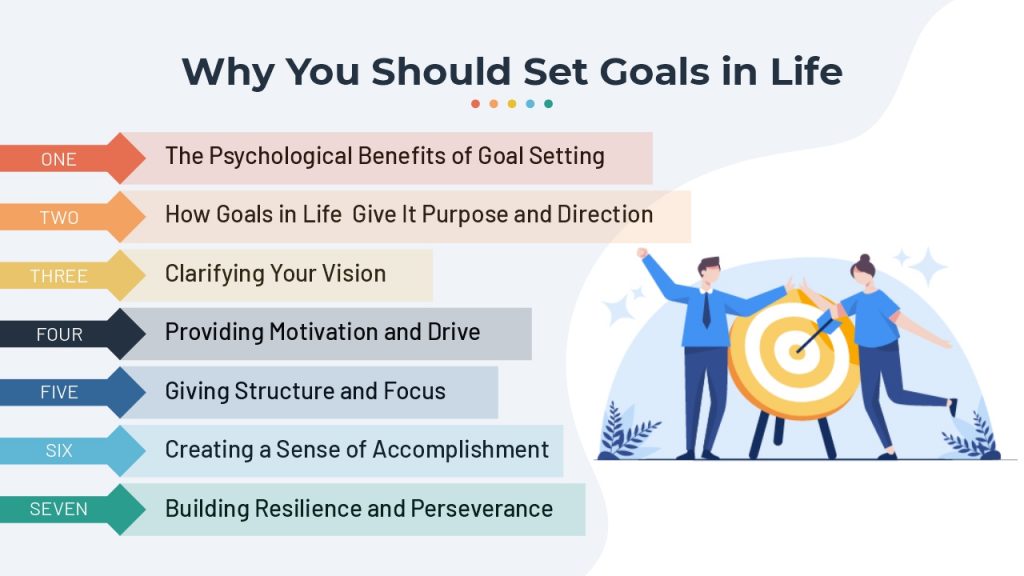
The Psychological Benefits of Goal Setting
Setting goals isn’t just a productivity hack; it’s a psychological necessity. Goals provide structure, giving your mind something to aim for. When you focus on your goals, your brain gets a dopamine boost, reinforcing motivation and helping you stay on track. It’s like creating a roadmap for your mental and emotional well-being.
How Goals in Life Give It Purpose and Direction
Goals act as guiding stars, offering direction in the vastness of life’s possibilities. Without them, it’s easy to feel lost, meandering through days without a clear sense of purpose. When you set goals in life, you’re not just aiming for achievements—you’re crafting a narrative, writing the story of who you are and where you’re headed.
Setting a focus on your goals or having a clear direction gives people a reason to wake up every day with intention, guiding them through both smooth and difficult times.
Clarifying Your Vision
One of the most significant ways goal-setting helps create purpose is by clarifying your vision of what you want in life. Often, people feel lost or uncertain because they haven’t taken the time to identify what truly matters to them. Setting specific, meaningful goals requires reflection on your values, passions, and long-term aspirations. Once you understand what drives you, it’s easier to craft goals that align with this vision, giving your actions more meaning and direction.
For example, a person passionate about helping others may set a goal to volunteer regularly or pursue a career in social work. By aligning their goals with their inner desires, they establish a clear path that leads to greater fulfilment.
Providing Motivation and Drive
Without a clear sense of purpose, it’s easy to drift through life without direction or enthusiasm. Goals in life act as motivational anchors that keep you engaged and focused. When you know what you’re working towards, your everyday actions take on more significance. Each step, no matter how small, feels like progress, driving you to continue moving forward.
Furthermore, setting goals in life introduces a sense of challenge. Achieving something meaningful often requires effort and dedication, and this challenge brings out the best in people. It pushes individuals to go beyond their comfort zones, developing new skills and gaining confidence along the way. In this process, they discover more about themselves and what they are capable of, reinforcing their sense of purpose.
Giving Structure and Focus
A life without goals can often feel chaotic or aimless. Goals provide structure and focus, helping you prioritise your time and energy on what truly matters. Instead of being overwhelmed by a sea of distractions, your goals act as a compass, pointing you toward what is most important.
This structure also helps combat feelings of uncertainty or dissatisfaction. People often feel lost because they don’t have a clear plan. When you set goals, you break down your larger aspirations into manageable steps, giving you a roadmap to follow. This clarity helps reduce anxiety and boosts confidence, as you always know the next step you need to take.
Creating a Sense of Accomplishment
There is a deep sense of satisfaction that comes from achieving goals or maintaining a focus on your goals. Whether they are small, everyday tasks or large, life-altering achievements, each accomplishment adds a layer of fulfilment to your life. This feeling of progress is essential for developing a sense of purpose because it shows that your efforts matter and are making a difference.
Achieving one goal often leads to setting new ones, creating a cycle of continuous growth and development. This ongoing process helps you stay connected to your purpose, as each new goal brings you closer to living a life aligned with your deepest values and aspirations.
Building Resilience and Perseverance
Another way goal-setting fosters a sense of purpose is by building resilience and perseverance. Life is filled with challenges and setbacks, but maintaining a focus on your goals helps you stay centred even in difficult times. When your goals in life are tied to a deeper sense of purpose, you’re more likely to push through obstacles because you believe in the importance of what you’re working towards.
This resilience not only helps you achieve your goals but also strengthens your overall character. You become more adaptable, persistent, and committed, qualities that are essential for living a purposeful life.
Having a focus on your goals is more than just a tool for achieving tangible results; it is a pathway to discovering and fulfilling your life’s purpose. By clarifying your vision, providing motivation, offering structure, fostering a sense of accomplishment, and building resilience, goal-setting helps you lead a more intentional and meaningful life. Through this process, each goal you achieve brings you closer to living in alignment with your true self, creating a life filled with purpose and fulfilment.
The Connection Between Focus and Success
How Successful People Focus on Their Goals
The secret to success often lies in one’s ability to focus. Whether you are a business mogul or an Olympic athlete, the common denominator that you share with high achievers is your unwavering focus on your goals. These guys set clear objectives, eliminate distractions, and persist, even when the going gets tough- and so do you! By studying their habits, we can learn the art of staying committed to our goals.
The Role of Discipline and Persistence in Achieving Goals in Life
Just maintaining a sharp focus on your goals alone isn’t enough; it needs to be paired with discipline and persistence. Think of it as the tripod that holds your dreams upright. Discipline keeps you on track when motivation wanes, and persistence helps you push through challenges. Together, these traits are the foundation of any goal-setting journey.
How to Focus on Your Goals in a Distracted World
Managing Distractions in the Digital Age
In a world full of distractions, having a constant focus on your goals can feel like trying to catch lightning in a bottle. Social media, constant notifications, and an overwhelming flood of information make it harder than ever. But with intentionality and mindfulness, you can train yourself to focus on your goals in a constant timeframe. Set boundaries with technology, create designated “focus” times, and cultivate habits that prioritise your goals in life over instant gratification.
The Importance of Mindfulness in Goal Achievement
Mindfulness—being fully present in the moment—can be a powerful tool in maintaining a focus on your goals. By practising mindfulness, you become aware of your distractions and are better equipped to steer your attention back to what matters. It’s like gently redirecting a wandering mind toward the path of your ambitions.
The Emotional Impact of Chasing Goals
Overcoming Fear and Doubt
Having a focus on your goals in life often brings fear and doubt to the surface. The thought of failure looms large, and self-doubt can creep in. But these emotions are part of the journey. When you acknowledge and confront them, you become stronger and more resilient in your pursuit.
Celebrating Small Wins
In the marathon of achieving life goals, it’s easy to overlook the small victories. Yet, celebrating these moments fuels your motivation. Each milestone, no matter how minor, is a testament to your focus and progress. So, take a moment to appreciate the journey, not just the destination.
Setting Realistic Goals in Life
SMART Goals: A Framework for Success
One of the most effective ways to focus on your goals is by setting SMART goals—Specific, Measurable, Achievable, Relevant, and Time-bound. This framework ensures that your goals are clear and attainable, giving you a roadmap to success. When goals are too vague or unrealistic, it’s easy to lose focus and get discouraged.
Balancing Ambition with Practicality
Ambition drives you to set bold goals, but practicality keeps you grounded. It’s important to dream big, but equally essential to be realistic about what you can achieve within a certain timeframe. Striking this balance helps you stay focused without feeling overwhelmed.
The Role of Accountability in Goal Achievement
How to Hold Yourself Accountable
When it comes to keeping a focus on your goals in life, accountability is a powerful motivator. It’s easy to set a goal, but harder to follow through without some form of accountability. One way to do this is by setting clear deadlines and tracking your progress regularly. Whether you use a journal, an app, or a simple checklist, the act of measuring your efforts keeps you on course. You’re less likely to stray when you can see your progress—or lack of it—staring back at you.
Finding Accountability Partners
Another great way to stay accountable is to involve others in your goal-setting journey. Having an accountability partner—whether a friend, mentor, or coach—can provide the external push needed to maintain that level of focus on your goals. They can remind you of your purpose during times of doubt and celebrate your successes, keeping you engaged and committed to your goals in life.
Staying Motivated When the Path Gets Tough
Handling Setbacks and Obstacles
No matter how much you focus on your goals, setbacks are inevitable. The road to success is rarely smooth, and obstacles can appear when you least expect them. These moments are when your focus on your goals is truly tested. Rather than seeing setbacks as failures, view them as learning opportunities. Ask yourself: “What can I gain from this experience?” Adopting this mindset turns challenges into stepping stones that strengthen your resolve.
The Power of Resilience
Resilience is the glue that holds focus and persistence together. When the going gets tough, it’s resilience that keeps you moving forward. Think of it as a muscle—one that grows stronger each time you face adversity. By building resilience, you’ll find it easier to stay focused on your goals in life, even when the odds seem stacked against you.
The Balance Between Focus and Flexibility
Adjusting Your Goals as Life Changes
While having a certain level of focus on your goals is essential, it’s important to remember that life is unpredictable. Sometimes, your goals may need to evolve in response to new circumstances. Flexibility is not a sign of weakness; rather, it’s a necessary adaptation. When you find that a particular goal no longer aligns with your values or life situation, don’t be afraid to adjust. Flexibility allows you to remain focused while being open to new paths.
Knowing When to Let Go of a Goal
One of the hardest decisions is knowing when to let go of a goal that no longer serves you. Sometimes, life’s detours reveal that the goal you’ve been chasing isn’t what you need anymore. Letting go requires courage and reflection, but it also frees you to focus on new, more fulfilling objectives. Remember, the ultimate goal is personal growth and happiness—not rigid adherence to outdated dreams.
The Importance of Reflection and Evaluation
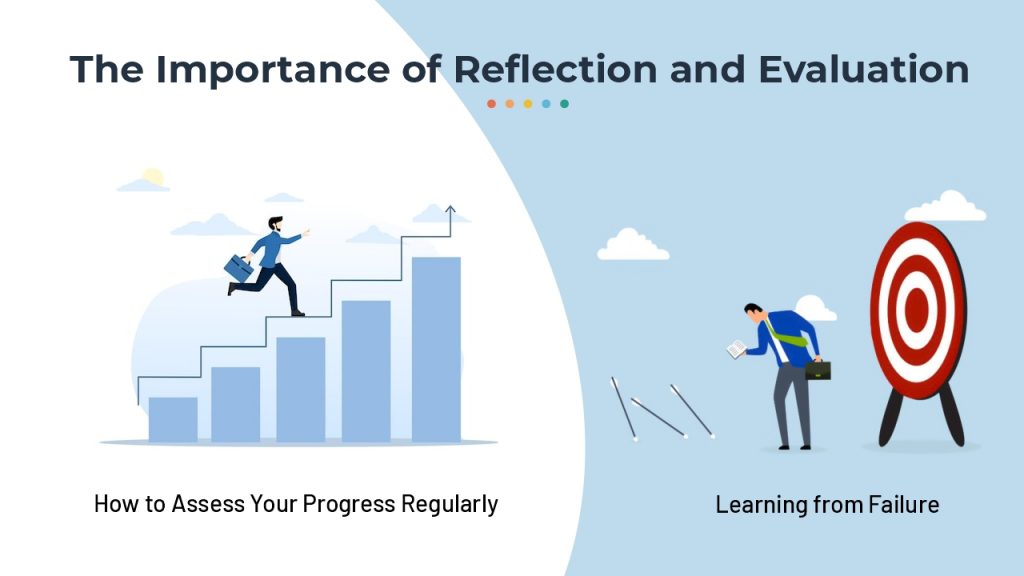
How to Assess Your Progress Regularly
Reflection is a key part of keeping that focus on your goals. It allows you to evaluate where you are, where you’re going, and what you’ve learned along the way. Set aside time for regular check-ins with yourself. Ask questions like, “Am I still passionate about this goal?” and “What adjustments do I need to make?” This process of self-evaluation keeps you aligned with your vision and helps you avoid drifting off course.
Learning from Failure
Failure is not the opposite of success—it’s part of the journey. When you fail, it’s an opportunity to reassess and refocus. What went wrong? How can you approach things differently next time? By viewing failure as feedback rather than defeat, you become more adaptable, and your focus on your goals sharpens.
The Ripple Effect of Focusing on Your Goals in Life
How Your Focus Can Inspire Others
Your dedication to your goals doesn’t just benefit you—it has a ripple effect. People around you notice when you stay focused and persistent, and your actions can inspire them to pursue their own dreams. In this way, focusing on your goals becomes a form of leadership. You become a beacon of what’s possible, showing others that with clarity, effort, and persistence, they too can achieve great things.
The Broader Impact on Your Community
When individuals focus on their goals, the impact extends beyond personal achievement. A community full of goal-oriented, focused individuals is a thriving one. Whether your goals in life are personal or professional, the pursuit of self-improvement contributes to the well-being of those around you. Your growth can inspire collective growth, leading to a more resilient, empowered community.
FAQs
Conclusion
The journey of maintaining a sharp focus on your goals is a lifelong adventure. It requires discipline, adaptability, and a deep understanding of what truly matters to you. By setting clear goals in life, nurturing the focus to pursue them, and staying resilient in the face of challenges, you create a path that leads to both personal and collective fulfilment. Every small step you take, every goal you achieve, adds a layer of meaning to your life and the lives of those around you.
So, set your sights high, focus on your goals in life, and embrace the journey. Life is not just about reaching the destination—it’s about finding purpose in the pursuit.