
Table of Contents
TogglePeople Management- The Hidden Spring to Human Potential
Imagine a symphony orchestra without a conductor. Each musician, despite their talent, might struggle to harmonise with others. In organisations, the conductor’s role is embodied by people management. This art, a blend of science and intuition, is pivotal to unlocking the true potential of individuals and teams alike. People management is not just a buzzword; it is the cornerstone of thriving workplaces and vibrant communities.
Why does it matter so much? Because humans are not mere resources—they are the heartbeat of every enterprise. To manage people is to guide their energies, aspirations, and creativity toward a shared vision. Let’s dive into the nuances of this essential skill and discover how mastering it can transform both careers and organisations.
Core Concepts in People Management
In the vast fair of organisational success, people management is the artful conductor guiding diverse talents toward a shared crescendo. At its essence, people management is about nurturing the potential within individuals and aligning it with collective goals. It transcends mere task allocation, embracing the human elements of empathy, growth, and trust. Let’s explore the philosophy of people management and its distinctions from task management to uncover the heart of this transformative skill.
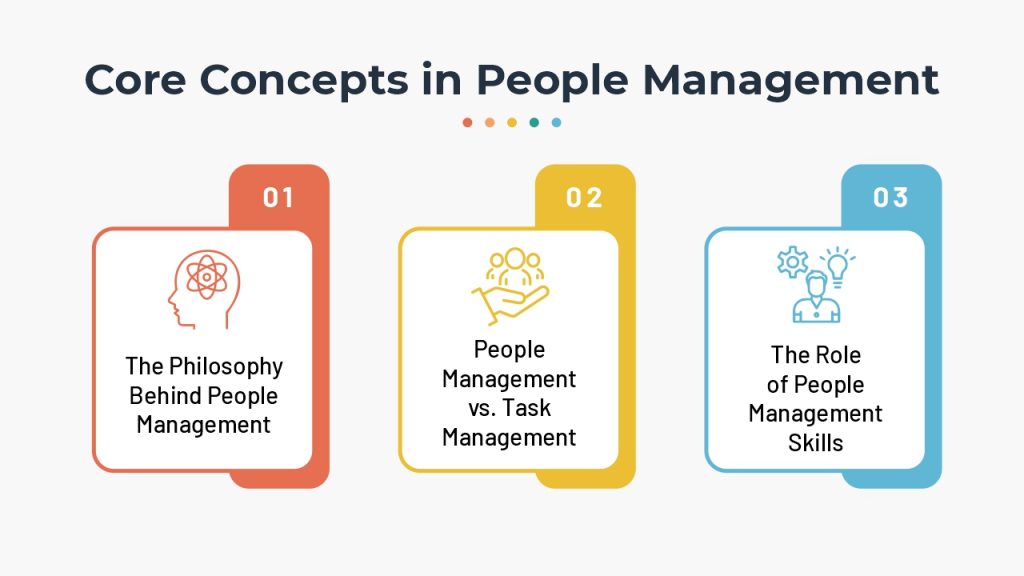
The Philosophy Behind People Management
At its core, people management is not about control but connection. It’s a practice rooted in understanding that every individual is a unique mosaic of skills, aspirations, and emotions. The true art of managing people lies in recognising these intricacies and creating an environment where they can flourish.
Unlike traditional approaches that often treat employees as cogs in a machine, people management places human values at the forefront. It’s about inspiring, not instructing. Leaders who excel in people management don’t merely drive performance; they cultivate a sense of purpose. They understand that motivation doesn’t spring from fear but from empowerment, that productivity blooms not under pressure but through engagement.
The philosophy also emphasizes adaptability. People are not static; their needs evolve, and their challenges shift. Managers who master people management skills are attuned to these changes, tailoring their strategies to meet the moment.
People Management vs. Task Management
The distinction between people management and task management is akin to the difference between nurturing a garden and assembling a puzzle. Task management focuses on efficiency and output—assigning responsibilities, setting deadlines, and tracking progress. It’s transactional, ensuring that the “what” gets done.
People management, however, is transformational. It’s not just about completing tasks but about building teams. While task management addresses immediate objectives, people management invests in long-term growth. Where task management prioritizes processes, people management centers on relationships.
For instance, a task manager might push for results by enforcing stricter timelines, whereas a people manager would seek to understand what motivates their team, providing encouragement and resources to meet goals collaboratively. Both approaches are necessary, but it’s people management that fosters loyalty, creativity, and resilience within a workforce.
The Role of People Management Skills
Mastering people management requires a repertoire of essential skills. Emotional intelligence tops the list—managers must recognise and regulate their own emotions while empathizing with others. Clear and compassionate communication is another pillar, as it builds trust and minimizes misunderstandings.
Conflict resolution, a skill rooted in active listening and fairness, transforms disagreements into opportunities for growth. Similarly, mentoring and coaching allow managers to guide their teams toward achieving both personal and professional milestones.
The power of people management lies in its ability to balance structure with humanity. It’s about driving results while valuing relationships, achieving goals while respecting individuality.
People management is the beating heart of effective leadership. It’s a philosophy that values individuals over processes, long-term development over short-term gains. By mastering people management skills, leaders cultivate workplaces where innovation thrives and teams shine. It’s more than a managerial approach; it’s a humanistic art, weaving harmony into the fabric of organisational life.
Building Effective People Management Skills
In the dynamic world of leadership, the ability to manage people effectively is both a science and an art. People management is not just about delegating tasks; it’s about cultivating an environment where individuals can thrive, innovate, and collaborate. At its heart lies a set of nuanced skills that empower leaders to connect with their teams on a deeply human level, balancing organisational goals with individual aspirations. Let’s unravel the essence of building effective people management skills and explore the practices that make a difference.
The Foundation of People Management
At its core, people management is about understanding that every individual is more than their role—they are a mosaic of experiences, emotions, and potential. The first step toward mastering people management skills is embracing this perspective. It’s about seeing employees as partners in progress rather than cogs in a machine.
Effective people management begins with self-awareness. Leaders who understand their own strengths, weaknesses, and emotional triggers are better equipped to engage with their teams authentically. This introspection fosters a leadership style rooted in empathy and integrity, creating a foundation of trust.
Key People Management Skills for Success
People management is a craft that lies at the intersection of vision and empathy. It’s the art of building bridges—connecting hearts and minds to create an environment where individuals and teams can thrive. At its core, people management is less about control and more about cultivating potential, ensuring that every individual’s unique essence contributes to a collective purpose. Let’s explore the fundamental pillars that uphold this transformative practice and uncover the skills that make it flourish.
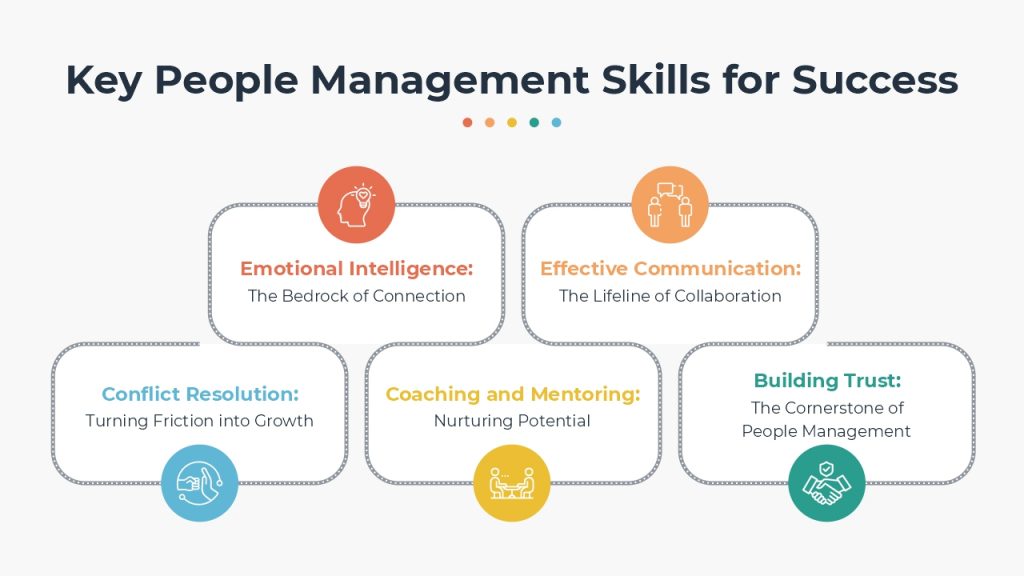
Emotional Intelligence: The Bedrock of Connection
Emotional intelligence (EI) is the cornerstone of effective people management. It is the heartbeat of people management skills. It encompasses self-awareness, self-regulation, empathy, and social skills. Leaders with high EI navigate interpersonal relationships with grace, understanding unspoken concerns and responding with care. Imagine a manager who notices an employee struggling with their workload. Instead of criticizing missed deadlines, they approach with genuine concern, offering support or redistributing tasks. This small act of empathy strengthens bonds and fosters loyalty. This human touch turns ordinary leadership into something extraordinary.
Effective Communication: The Lifeline of Collaboration
Clear, compassionate communication is essential for aligning team members toward shared goals. People management requires not only articulating expectations but also listening actively. It’s about creating a space where voices are heard, and ideas are valued. Effective communication always lays the groundwork for a motivated and engaged team.
Clear, compassionate dialogue ensures alignment and minimizes misunderstandings. In people management, communication is a two-way street—speaking is as important as listening. Whether it’s articulating expectations or providing feedback, the way messages are delivered matters. A constructive, empathetic tone fosters a culture of openness, where individuals feel safe to express their thoughts, share challenges, and celebrate wins.
Conflict Resolution: Turning Friction into Growth
Conflict is inevitable in any group, but skilled managers see it as an opportunity for growth rather than a setback. By addressing issues promptly and fairly, they transform disagreements into productive dialogues. A strong people manager fosters a culture where conflicts are handled with transparency, ensuring that resolutions strengthen relationships rather than fracture them.
Coaching and Mentoring: Nurturing Potential
Great leaders are also great teachers. Coaching and mentoring are vital people management skills that empower employees to reach their full potential. By offering guidance and encouragement, managers inspire confidence and enable their teams to overcome challenges. Great people management is not about keeping the status quo; it’s about growth. A true leader invests in the development of their team, offering mentorship, training, and opportunities to expand their horizons.
People management skills in this domain include recognising hidden potential and fostering an environment where individuals can learn, innovate, and excel. It’s not just about achieving company objectives but also about helping employees achieve their dreams. Many forms of coaching today serve this ideal.
Building Trust: The Cornerstone of People Management
Trust is the glue that holds teams together. Without it, even the most talented individuals struggle to collaborate effectively. People management involves consistently demonstrating integrity, reliability, and respect. A manager who leads by example—whether by admitting mistakes or showing appreciation for their team’s efforts—creates an atmosphere of psychological safety. This trust not only enhances productivity but also encourages innovation.
Trust is built not with grand gestures but through consistent acts of fairness, transparency, and reliability.People management demands that leaders see beyond roles and titles, acknowledging the human behind the task. Respect amplifies this connection, ensuring that every voice is heard and valued. When individuals feel respected, their potential knows no bounds.
Thus, the pillars of people management—trust, emotional intelligence, communication, adaptability, growth, and conflict resolution—stand as a testament to what leadership can achieve when it prioritizes humanity. These aren’t just skills; they’re values that create a workplace where individuals are inspired, teams are cohesive, and success is a shared journey.
This is not a story of authority but of empowerment. By mastering these people management skills, leaders can foster environments where individuals and organisations rise together, bound not just by goals but by mutual respect and purpose.
The Human Element in People Management
In an era dominated by metrics and technology, the human element of people management remains irreplaceable. Skills like empathy, adaptability, and cultural sensitivity distinguish great managers from good ones.
Empathy as a Superpower
Empathy allows leaders to step into their team members’ shoes, understanding their challenges and aspirations. This deep connection fosters loyalty and inspires individuals to go above and beyond for their team and organisation.
Adaptability: Thriving Amid Change
The modern workplace is constantly evolving, and effective people management requires adaptability. Whether it’s embracing remote work, leveraging new technologies, or navigating economic shifts, leaders must be prepared to adjust their strategies while maintaining their team’s morale. People management skills require a leader to recognise that what worked yesterday might not work tomorrow. Teams evolve, challenges shift, and strategies must follow suit.
Effective managers are those who can read the pulse of their teams, adjusting their approach to meet new demands without losing sight of long-term goals. This flexibility is not a sign of weakness but a testament to strength and foresight.
Practical Steps to Build People Management Skills
Invest in Emotional Intelligence: Practice self-awareness through reflection, mindfulness, or feedback from peers. Learn to recognise emotions in yourself and others.
Enhance Communication Skills: Focus on active listening and clarity. Avoid jargon and ensure that your message resonates with your audience.
Promote a Growth Mindset: Encourage continuous learning and celebrate progress, not just results. A growth-oriented culture motivates teams to innovate.
Provide Constructive Feedback: Offer feedback that is specific, actionable, and empathetic. Frame criticisms as opportunities for improvement.
Foster Collaboration: Break down silos within teams and encourage cross-functional projects. Collaboration drives creativity and strengthens interpersonal bonds.
Develop Conflict Resolution Strategies: Train yourself to mediate disputes objectively, ensuring fairness and a focus on solutions.
Lead by Example: Show your team that you value integrity, hard work, and respect. Leadership is most powerful when it’s lived, not preached.
People management is a journey, not a destination. It’s a continuous process of learning, adapting, and growing alongside your team. By mastering the art of managing with empathy and integrity, leaders can transform not only their organisations but also the lives of the people they work with.
In the end, effective people management isn’t about managing people—it’s about empowering them. It’s about creating a legacy of trust, growth, and collaboration that endures long after the day’s work is done.
Modern Approaches to People Management
The landscape of people management has transformed in recent years, driven by shifting workplace dynamics and the growing emphasis on individuality. Modern approaches to people management no longer rely on rigid hierarchies or one-size-fits-all solutions. Instead, they embrace flexibility, inclusivity, and the nuanced art of understanding. At the heart of these approaches lies the cultivation of people management skills designed to inspire rather than enforce.
One cornerstone of modern people management is empathy-driven leadership. Today’s managers are not just taskmasters; they are collaborators who seek to understand the diverse needs, aspirations, and challenges of their team members. This approach humanises workplaces, making employees feel valued and supported.
Another hallmark of contemporary practices is the integration of technology and data-driven insights. Tools that measure employee engagement, feedback, and performance offer managers valuable information, enabling more informed and personalised decision-making. These insights help craft work environments where productivity thrives alongside satisfaction.
Flexibility and autonomy are also pivotal. The rise of hybrid work models and remote setups has highlighted the importance of trust. Effective people management skills now include fostering accountability while allowing individuals to work in ways that suit them best.
Finally, continuous learning and development have taken center stage. Modern managers are mentors, encouraging team members to expand their skills and explore their potential. By investing in growth, they create a culture of innovation and resilience.
Modern people management is about adapting to change while staying rooted in humanity. It celebrates diversity, empowers individuals, and redefines success as a collective journey.
The Long-Term Value of People Management
People management is more than a leadership tool—it’s an investment in the future. Its long-term value lies not just in immediate results but in its ability to shape enduring relationships and sustained success. At its core, people management is about nurturing the human side of business, where individuals flourish alongside organisational growth.
One of the key long-term benefits is employee retention and loyalty. Managers who hone their people management skills create environments where employees feel valued and heard. This fosters a deep sense of belonging, reducing turnover and cultivating teams that are committed to shared goals.
Organisational culture is another area profoundly influenced by effective people management. Over time, trust, open communication, and mutual respect become embedded in the workplace ethos. This culture not only attracts top talent but also drives innovation and collaboration.
The long-term value extends beyond the confines of the workplace. By prioritizing employee well-being, managers contribute to better mental health, stronger personal relationships, and a ripple effect of positivity that reaches families and communities.
Moreover, the impact of people management skills transcends generations. Mentorship and coaching leave a legacy of leaders who perpetuate the values of empathy and integrity. This continuous cycle strengthens organisations and ensures resilience in the face of future challenges.
Ultimately, the value of people management lies in its ability to shape futures—both individual and collective. It is a quiet force, building workplaces that endure and grow through the strength of human connection and collaboration.
FAQs
Conclusion
In the grand scheme of organisational success, people management is the golden thread weaving it all together. It’s an art that transforms individuals into teams, ideas into innovation, and goals into reality. By honing people management skills, leaders not only elevate their teams but also leave an indelible mark on the future of work.
