
Table of Contents
ToggleThe Higher Essence of Leadership- Who Is A Leader?
In today’s world, leadership transcends the confines of traditional power structures. It is no longer solely defined by titles, positions, or authority over others. Leadership, in its higher essence, is about the capacity to inspire, transform, and foster positive change in various facets of life. A true leader, whether in politics, corporate environments, or social movements, is not defined by their control over followers but by their ability to create an environment that encourages growth, collaboration, and purpose. But that has always been the definition of leadership! What changed in the present? Why are people clamouring for renewed leadership? Because too many leaders don’t live the idea of leadership to the fullest. It is a captivating idea, but once you begin to look at the responsibility required, it begins to look not as glamorous as before!
What is Leadership- A Modern Definition
At its core, modern leadership is about influence, service, and responsibility. While conventional views of leadership emphasise hierarchical control and decision-making, today’s leaders embody a more nuanced approach. They are visionaries who guide with empathy, emotional intelligence, and inclusivity. They understand that leadership is not about dictating the path but enabling others to find their own way, supporting their teams, organisations, or communities to thrive.
Leadership in the modern context is a balance between personal mastery and collective empowerment. A leader’s journey is deeply personal, rooted in self-awareness, while at the same time outward-looking, shaping the world around them.
Political Leadership: Visionary Stewards of Change
In the political arena, the essence of leadership has evolved beyond mere governance and policy enforcement. Modern political leaders are expected to be visionary stewards of change, guiding their nations through complex global challenges. These leaders must navigate the delicate balance between national interest and global responsibility, personal conviction, and the collective will of the people.
Figures like Nelson Mandela and Mahatma Gandhi serve as exemplars of this higher form of political leadership. Their influence went beyond the realm of politics, becoming symbols of resilience, unity, and justice. They led by example, not by dictating but by embodying the values of freedom and equality, showing the world that leadership can be a force for profound societal transformation.
Modern political leaders are also challenged by the pressures of media scrutiny, public opinion, and the immediacy of global crises. They must learn to lead with transparency and accountability, fostering trust among their constituents while making difficult decisions for the greater good. Leadership in this context is not just about wielding power but about mobilising and uplifting others for a shared vision of progress.
Corporate Leadership: Navigating Complexity with Purpose
In the corporate world, leadership has shifted from simply managing resources and people to nurturing a sense of purpose within organisations. Modern corporate leaders are not just business executives; they are architects of culture and values. Their role is to inspire innovation, drive sustainable growth, and create environments where people feel valued and empowered to contribute their best.
Companies today thrive under leaders who practise servant leadership, placing the needs of their employees and customers above their own. CEOs like Satya Nadella of Microsoft and Indra Nooyi, former CEO of PepsiCo, are known for their emphasis on empathy, inclusion, and long-term vision. They understand that true success is not only measured by profits but by the impact they have on the lives of their employees, customers, and the broader society.
Corporate leaders must now navigate an increasingly complex business environment, dealing with global competition, technological disruptions, and shifting consumer expectations. The ability to lead through these challenges requires adaptability, foresight, and a commitment to ethical business practices. Leaders who embrace the higher essence of leadership understand that their role is not just about delivering short-term results but about building lasting value for all stakeholders.
The New Leader at The Workplace
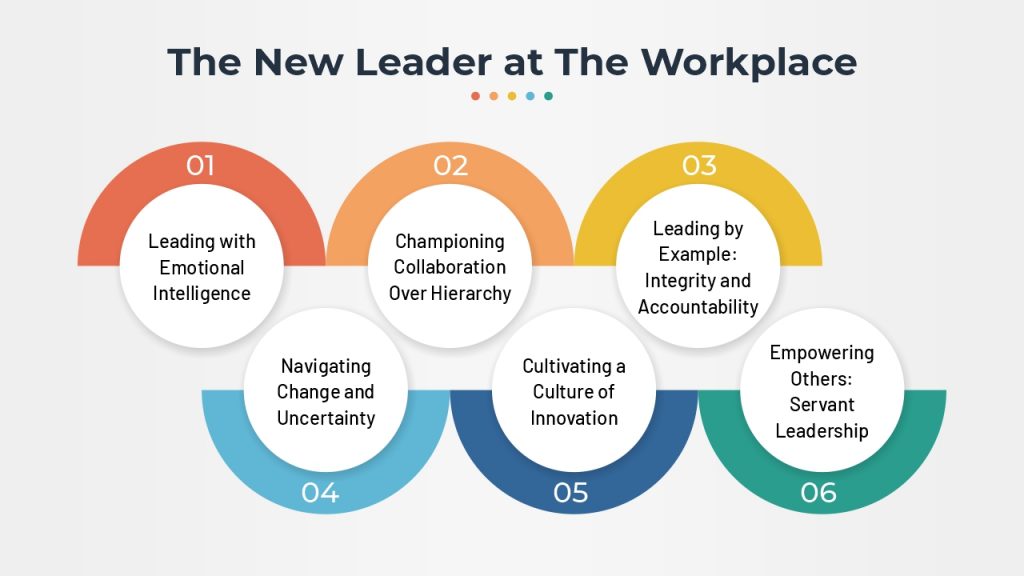
The modern workplace is undergoing a profound transformation, and with it, the role of the leader is being redefined. No longer can leadership be confined to hierarchical authority or top-down decision-making. The new leader at the workplace embodies adaptability, collaboration, and emotional intelligence. They are not just managers of tasks, but stewards of culture, guides of innovation, and champions of their teams’ well-being.
In this new era, leadership is about creating spaces where people can thrive—where they feel valued, supported, and empowered to contribute their best selves to the collective mission. Let’s explore the qualities and expectations of the new leader in today’s ever-evolving workplace.
Leading with Emotional Intelligence
At the heart of modern leadership is emotional intelligence—the ability to understand, empathise with, and respond to the emotions of others. The new leader is not a distant figure barking orders from above; they are a connector, someone who listens and understands the unique challenges and aspirations of their team members.
This emotional intelligence allows leaders to build trust, foster open communication, and create an environment where employees feel safe to express their ideas and concerns. The modern leader must be attuned to the mental and emotional well-being of their teams, especially in times of crisis or change. They are not afraid to show vulnerability and encourage authenticity in the workplace.
Championing Collaboration Over Hierarchy
The traditional, top-down leadership model is being replaced by a more collaborative approach. The new leader values input from all levels of the organisation and recognises that innovation often comes from the collective wisdom of the team, rather than from a single leader.
Collaboration is key in today’s complex and fast-paced work environments. The new leader fosters a culture of teamwork, encouraging cross-functional collaboration and breaking down silos that stifle creativity and communication. They are facilitators, ensuring that everyone’s voice is heard and that decisions are made with the collective good in mind.
In this environment, leadership is distributed. Rather than one person holding all the authority, leadership roles may rotate or shift based on the expertise needed for a particular project or challenge. This approach not only empowers individuals but also leads to more innovative and effective solutions.
Leading by Example: Integrity and Accountability
The new leader at the workplace understands that actions speak louder than words. They lead by example, demonstrating integrity, accountability, and a commitment to their values. This authenticity is crucial in building trust, which is the foundation of effective leadership.
In an era of transparency and social responsibility, employees and stakeholders expect leaders to act ethically and responsibly. The new leader understands that their actions, both big and small, set the tone for the organisation. Whether it’s standing up for what’s right, taking responsibility for mistakes, or leading with kindness, the new leader leads with integrity.
Navigating Change and Uncertainty
The modern workplace is characterised by rapid change—whether it’s technological advancements, shifts in market dynamics, or global crises. The new leader must be comfortable navigating uncertainty, adapting quickly, and leading their team through times of transformation.
Flexibility is key. The new leader embraces change as an opportunity for growth, rather than something to be feared. They encourage their teams to be agile, open to learning, and ready to pivot when necessary. This ability to remain calm and strategic in the face of uncertainty is one of the most valuable traits of the modern leader.
Cultivating a Culture of Innovation
Innovation is the lifeblood of today’s organisations. The new leader fosters a culture where creativity and experimentation are encouraged. They understand that innovation does not happen in isolation but is the result of diverse perspectives coming together to solve complex problems.
The new leader creates an environment where employees feel safe to take risks, share bold ideas, and experiment with new solutions. They remove barriers to innovation, providing the resources, support, and freedom necessary for creativity to flourish. In this culture, failure is not feared but viewed as a learning opportunity on the path to success.
Empowering Others: Servant Leadership
Perhaps the most defining characteristic of the new leader is their focus on empowerment. They understand that leadership is not about wielding power over others but about serving their team. This approach, known as servant leadership, puts the needs of the employees first and helps them develop and perform at their best.
The new leader creates opportunities for growth and development, offering mentorship, feedback, and encouragement. They are invested in the personal and professional success of their team members, recognising that when individuals succeed, the organisation as a whole prospers.
The new leader at the workplace is a reflection of the changing nature of work itself. In a world where flexibility, innovation, and emotional intelligence are paramount, leadership has become less about control and more about empowerment. Today’s leaders are collaborators, guides, and mentors, creating environments
Social Leadership: Catalysts for Change
Social leadership refers to the capacity to lead movements, organisations, or initiatives that drive social change and address societal issues. These leaders are often found outside traditional power structures, working at the grassroots level or within NGOs, community organisations, and advocacy groups. Their influence comes from their passion for a cause and their ability to galvanise others toward a shared goal.
Social leaders like Malala Yousafzai, Greta Thunberg, and Wangari Maathai have demonstrated the power of individuals to create large-scale social change. They lead not by enforcing authority but by embodying the change they seek to inspire. Their leadership is characterised by resilience, moral courage, and a relentless pursuit of justice and equality.
In a world facing challenges such as climate change, human rights violations, and economic inequality, social leaders play a critical role in pushing the boundaries of what is possible. Their leadership style is often informal but no less impactful, as they mobilise communities, advocate for policy changes, and raise awareness on global issues. The higher essence of social leadership lies in its capacity to unite people across borders and differences, working toward a common vision of a more just and equitable world.
Leadership in Development: Building Bridges of Opportunity
Leadership in the field of development takes on a unique dimension, as it involves improving the lives of those in vulnerable situations. Development leaders often work in international organisations, government agencies, or non-profits, focusing on issues such as poverty alleviation, education, health, and infrastructure.
These leaders must possess a deep understanding of the communities they serve, as well as the ability to navigate complex political and cultural landscapes. Their leadership is about building bridges between different sectors—public, private, and civil society—to create sustainable solutions to global challenges. Leaders like Muhammad Yunus, the founder of Grameen Bank, have redefined development leadership by pioneering innovative approaches such as microfinance, which empowers individuals to lift themselves out of poverty.
Development leaders must also balance the immediate needs of communities with long-term planning for sustainable growth. Their leadership is rooted in empathy, collaboration, and a commitment to social justice. They understand that true development is not about handouts but about empowering individuals and communities to create their own paths to prosperity.
The Essence of Leadership: A Reflection
What truly defines leadership in all its forms—political, corporate, social, and developmental—is the ability to inspire others to reach their fullest potential. Leaders are not just decision-makers or authority figures; they are guides, mentors, and catalysts for transformation. They embody the values they wish to see in the world and inspire others to do the same.
Leadership, in its higher essence, is about service. It is about placing the needs of others above one’s own ambitions and working for the greater good. A true leader is someone who listens, who empowers, and who helps others discover their own potential. They do not seek recognition for themselves but for the success and growth of those they lead.
The Future of Leadership: Adaptability and Innovation
As we look to the future, the role of leadership will continue to evolve. The challenges of tomorrow will require leaders who can think creatively, adapt quickly, and lead with compassion and empathy. The digital age has already transformed the way we work, communicate, and lead, and this trend will only continue. Leaders will need to embrace new technologies, foster a culture of innovation, and remain open to new ideas and perspectives.
At the same time, the future of leadership will be deeply rooted in timeless principles such as integrity, humility, and the ability to connect with others on a human level. In a world that is becoming increasingly complex and interconnected, the essence of leadership will remain the same: the ability to inspire, uplift, and lead others toward a better future.
Challenges to Modern Leadership
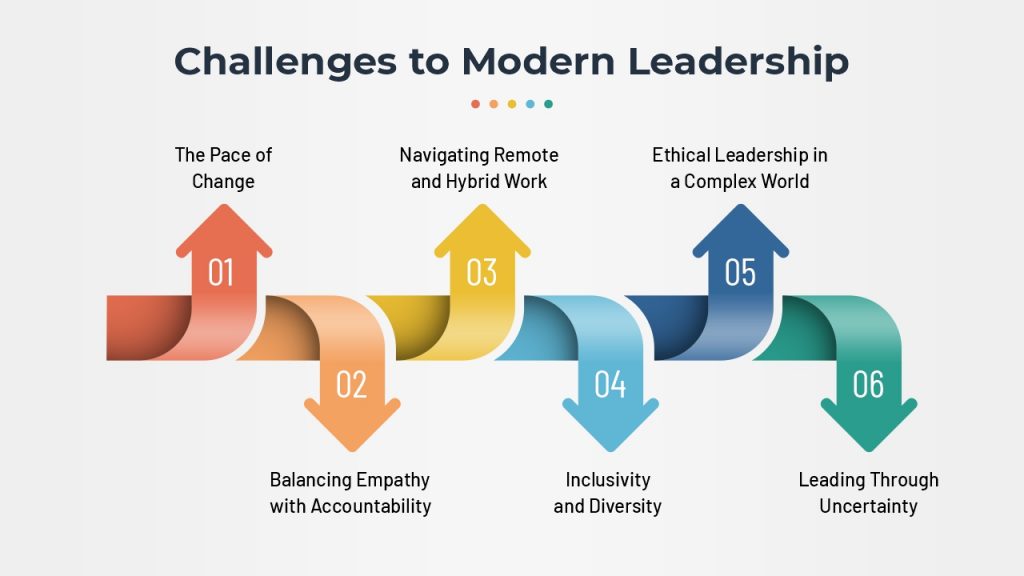
Leadership, once defined by command and authority, has undergone a profound transformation in the modern world. In an age where rapid technological advancements and shifting societal expectations prevail, leaders face an increasingly complex landscape. The challenges of modern leadership are many, weaving together the intricacies of human connection, adaptability, and innovation. As we explore these challenges, it becomes clear that leadership today requires more than vision—it demands flexibility, empathy, and the courage to embrace change.
The Pace of Change
The world of leadership today is defined by the speed at which change occurs. Technological innovations such as artificial intelligence, automation, and data analytics have reshaped industries overnight, demanding that leaders not only keep up but also anticipate and navigate these shifts. The rapid evolution of business landscapes leaves little room for stagnation. Leaders must be agile, constantly learning, and adapting to new realities.
The challenge lies not only in mastering the tools of change but in leading people through it. Employees often fear change, viewing it as a threat to their jobs, routines, and stability. Leaders must act as guides, helping teams navigate the uncertainty of transformation while fostering a culture of resilience and continuous improvement. The true mark of modern leadership is the ability to instil confidence in the face of unknown futures.
Balancing Empathy with Accountability
One of the defining characteristics of modern leadership is the need to balance empathy with accountability. In previous generations, leadership often revolved around directives, with little consideration for the emotional well-being of employees. However, as workplaces evolve into more inclusive and human-centred environments, leaders are expected to be more attuned to the mental health, emotional well-being, and personal needs of their teams.
This new emphasis on empathy presents a challenge: how does a leader maintain accountability and ensure results while still prioritising the well-being of their employees? Leaders must cultivate the ability to listen, offer support, and create a sense of belonging, all while ensuring that goals are met and standards upheld. This delicate balance requires emotional intelligence, patience, and a willingness to engage in difficult conversations when necessary.
Navigating Remote and Hybrid Work
The COVID-19 pandemic has permanently altered the way many organisations operate, with remote and hybrid work models becoming more common. While this shift offers flexibility, it also presents unique challenges for leadership. Leaders must now manage teams across different geographies, time zones, and cultures, all while ensuring communication, collaboration, and cohesion remain intact.
In this new reality, the challenge for leaders is to foster a sense of connection and unity among teams that may rarely meet in person. Digital fatigue, feelings of isolation, and miscommunication are all risks in remote work environments. Leaders must be intentional in creating virtual spaces that encourage teamwork, creativity, and trust. They must also adapt their leadership styles to accommodate the diverse needs of employees who may prefer different modes of work.
Inclusivity and Diversity
Another significant challenge facing modern leaders is fostering inclusivity and diversity within their organisations. While many leaders recognise the importance of diverse perspectives, translating this awareness into meaningful action can be difficult. Leaders must not only advocate for diversity in hiring practices but also ensure that all voices within the organisation are heard and valued.
Creating an inclusive environment where individuals from different backgrounds, genders, and experiences feel welcome is not a one-time effort; it requires ongoing commitment. Leaders must challenge unconscious biases, dismantle systemic barriers, and actively work to create opportunities for underrepresented groups. This involves not only shifting organisational culture but also self-reflection on their own biases and behaviours.
Ethical Leadership in a Complex World
In an increasingly interconnected and transparent world, ethical leadership has never been more important—or more challenging. Leaders today are expected to demonstrate integrity and ethical decision-making in all aspects of their work. From environmental sustainability to fair labor practices, leaders are held accountable not only by their shareholders but by society at large.
The challenge lies in navigating the tension between profit and purpose. Leaders are often faced with decisions that pit financial performance against ethical considerations. The rise of corporate social responsibility (CSR) means that stakeholders are demanding more from leaders in terms of sustainability, diversity, and transparency. Leaders must navigate these competing priorities with care, ensuring that their actions align with the values they espouse.
Leading Through Uncertainty
Uncertainty is an inevitable aspect of leadership, but in today’s volatile, uncertain, complex, and ambiguous (VUCA) world, the ability to lead through uncertainty has become even more critical. Whether it’s economic instability, geopolitical shifts, or unforeseen global crises, leaders must be prepared to guide their organisations through unknown terrain.
This requires not only strategic foresight but also the emotional resilience to remain calm under pressure. Leaders who can foster a culture of adaptability and encourage their teams to view uncertainty as an opportunity rather than a threat will thrive in this environment. However, leading through uncertainty also involves being transparent with employees, acknowledging challenges, and remaining open to change.
The challenges of modern leadership are multifaceted, requiring a delicate balance of empathy, adaptability, and vision. Leaders must navigate the complexities of a fast-paced, interconnected world while fostering trust, inclusivity, and accountability. The future of leadership lies in the ability to lead with both heart and mind—embracing change while remaining grounded in the values that define true leadership.
FAQs
Conclusion
Leadership is not a destination but a journey—one that requires constant learning, reflection, and growth. Whether in the political sphere, the corporate world, social movements, or development work, leadership is about the pursuit of a higher purpose. It is about making a positive impact on the lives of others and creating a legacy that transcends personal achievements.
The higher essence of leadership is about recognising that true power lies not in control or authority, but in the ability to serve, inspire, and elevate others. As we continue to navigate the challenges and opportunities of the modern world, this essence will remain the guiding force behind effective, transformative leadership.