
Table of Contents
ToggleThe Symbiosis Between Organizational Culture and Organizational Management
Every organization has a heartbeat—a rhythm set by its culture. Organizational Culture is the soul of any workplace, manifesting in the ways employees interact, the decisions leaders make, and the energy that permeates daily operations. When an organization’s culture aligns with effective management, it unlocks a powerful force capable of propelling the company to new heights. In today’s complex and rapidly evolving world, organizational culture and organizational management have become the twin pillars upon which successful businesses are built.
Organizational culture serves as the underlying framework that guides behavior and decision-making. It shapes a company’s identity, dictating what’s celebrated, what’s tolerated, and what’s discouraged. When organizational culture promotes values like integrity, inclusivity, and innovation, employees find themselves working within a space that not only values them but also drives them to achieve shared goals. In such an environment, employees are motivated to contribute beyond their roles, creating a community of trust and shared purpose.
On the other hand, organizational management translates this culture into action. Through strategic planning, resource allocation, and thoughtful leadership, managers bring the ideals of culture into reality. Management provides the structure and accountability needed to ensure that cultural values are more than just words on a page. An organizational culture of transparency, for example, comes alive when leaders actively communicate with teams and encourage open dialogue.
Together, culture and management become a dynamic duo, each strengthening the other. A well-defined organizational culture enables managers to lead with clarity, while strong organizational management practices give life to cultural ideals. When these two elements are in harmony, the organization doesn’t just grow; it flourishes, adapting to challenges, fostering innovation, and building a legacy that attracts top talent and earns loyalty from customers.
What is Organizational Culture?
Organizational culture is the collection of beliefs, behaviors, and values that shape how people within a company interact and work. It’s more than just policies or mission statements—it’s the underlying spirit of the workplace. Culture affects everything from employee satisfaction to innovation.
The Role of Organizational Management
Organizational management is the backbone of any successful company. It provides the direction, structure, and resources necessary to achieve goals and meet challenges. Effective organizational management isn’t just about leading; it’s about enabling each individual to contribute to the larger mission of the organization.
The core function of organizational management is strategic planning. This involves setting clear, measurable goals and creating a roadmap for achieving them. Managers assess the organization’s strengths, weaknesses, opportunities, and threats (SWOT analysis) to make informed decisions that drive growth. Through careful planning, organizational management ensures that resources—whether financial, human, or technological—are allocated efficiently.
Beyond planning, management also focuses on organising. This entails structuring teams, defining roles, and ensuring each department has the tools it needs. Effective organization means tasks are distributed in a way that leverages each team member’s strengths, fostering a sense of ownership and accountability.
Leading and motivating employees is another crucial aspect of management. Managers are responsible for creating an environment where employees feel supported, engaged, and driven. This includes fostering a culture of open communication and feedback, where everyone feels valued and empowered. When employees trust their leaders, they’re more likely to go above and beyond in their roles.
Organizational management also plays a significant role in ensuring adaptability. In today’s rapidly changing business world, flexibility is essential. Managers need to anticipate changes in the market, adapt strategies, and remain responsive to emerging trends. This adaptability helps the organization stay competitive and prepared for future challenges.
Lastly, organizational management is responsible for maintaining accountability. Setting standards, measuring performance, and providing feedback ensure that everyone is aligned with the company’s goals. Regular performance evaluations help managers identify areas for improvement, enabling employees to grow in their roles.
In essence, organizational management is about guiding, supporting, and aligning all parts of a company. By establishing a clear direction, fostering a positive work environment, and remaining adaptable, management becomes the force that propels an organization toward its vision.
How Organizational Culture Shapes Organizational Management Styles
Organizational culture is the set of shared values, beliefs, and norms that shapes how employees interact and work together. It’s the invisible force guiding everyday interactions, often dictating the atmosphere and underlying energy within a company. Naturally, this culture doesn’t just influence employees; it deeply impacts how leaders manage, set goals, and approach challenges.
When we look at how organizational culture shapes organizational management styles, we can see that it acts like a compass. In a company with a collaborative culture, management tends to adopt an inclusive and democratic style. Decisions are made collectively, and ideas flow freely from all levels of the hierarchy. Google, for instance, embodies this approach. The tech giant is known for a culture that values openness and idea-sharing, resulting in management that prioritizes inclusivity and creativity. Managers in such an environment are more likely to encourage employee involvement in decision-making, creating a flat structure that prioritizes innovation.
On the other hand, in companies with a more hierarchical or traditional culture, organizational management styles lean toward the authoritative. Here, decision-making rests heavily on top leaders, and communication often flows downward. This style can work well in industries requiring precision and structure, such as manufacturing or finance. Think of a major financial institution with rigorous rules and processes. In these organizations, managers often operate within a defined scope, and instructions are followed rather than questioned.
In customer-centric cultures, the management style focuses on empathy and responsiveness to meet customer needs. Companies like Zappos, famous for its customer service, showcase management that emphasizes relationship-building and empowering employees to exceed customer expectations. This approach helps managers foster a service-oriented mindset across their teams, prioritizing client satisfaction.
Thus, organizational culture shapes management styles in profound ways, serving as a silent architect in how goals are pursued, how people collaborate, and even how challenges are tackled. When management and culture align, organizations can achieve a harmonious and effective workplace, fostering growth and resilience.
Why a Strong Organizational Culture Matters
A strong organizational culture is like the roots of a tree—it anchors, sustains, and nurtures an organization. It provides the framework for how employees work, how teams communicate, and how goals are achieved. When culture is robust and positive, it becomes a powerful tool for success. Let’s explore why strong culture truly matters.
Firstly, a strong culture attracts and retains talent. Employees want to work in environments where they feel aligned with company values, where they feel understood and valued. A culture of respect, transparency, and mutual growth not only makes employees feel connected but also enhances job satisfaction. Companies like Patagonia and Google have crafted cultures that resonate with employees’ personal beliefs, making these organizations desirable places to work.
Moreover, a strong organizational culture boosts productivity. When values like teamwork, innovation, and open communication are embedded in daily operations, employees feel empowered and motivated to contribute their best. Culture acts as an unseen but powerful motivator, helping employees find purpose and pride in their work.
Culture also plays a significant role in resilience. In times of crisis or change, it’s the organizations with strong, adaptable cultures that thrive. For instance, during periods of economic uncertainty, companies that foster a culture of adaptability and unity are better able to weather storms. Leaders can rely on cultural values to keep employees aligned, ensuring that organizational goals are still met even amid uncertainty.
A strong organizational culture enhances a company’s brand and reputation. Customers are increasingly drawn to brands that stand for values they share. A company known for its integrity, customer focus, or social responsibility has a powerful story that resonates with consumers.
In essence, a strong culture is the heartbeat of a thriving organization. It attracts talent, drives productivity, ensures resilience, and builds a solid brand. Without it, even the most strategic plans and skilled leaders may struggle to achieve lasting success.
Elements of a Positive Organizational Culture
Positive organizational cultures are built on core elements
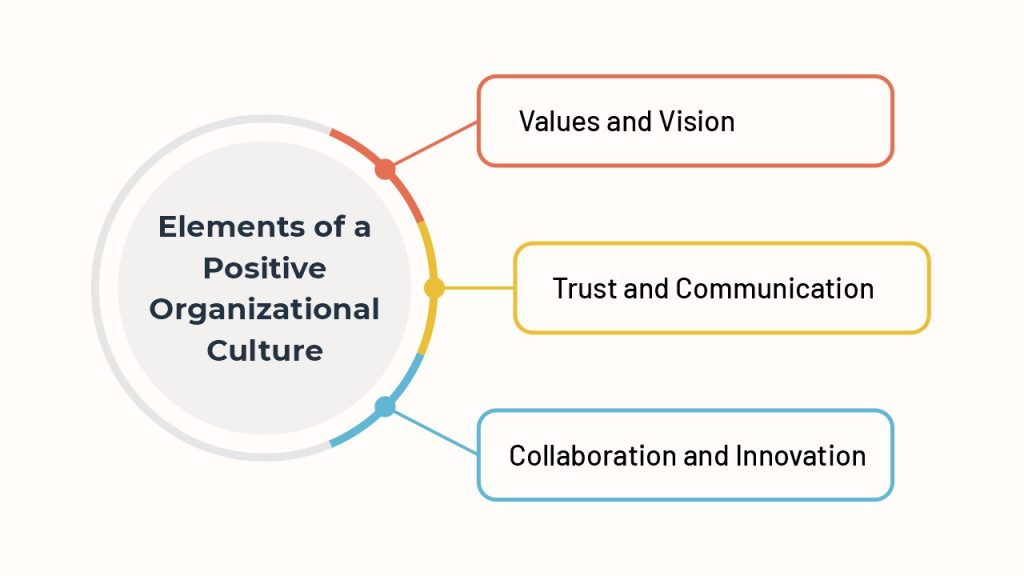
- Values and Vision: A clear purpose guides decisions.
- Trust and Communication: Open dialogue creates a safe environment.
- Collaboration and Innovation: Working together sparks fresh ideas.
The Impact of Culture on Organizational Management
Culture influences how decisions are made within an organization. In a transparent culture, organizational management processes are clear and inclusive, allowing employees to understand the rationale behind decisions. This transparency fosters trust, helping the organization run smoothly.
Case Study: Apple’s Culture of Excellence
Apple is a masterclass in the power of organizational culture. Known for its pursuit of perfection, Apple’s culture has been integral to its brand. The company’s focus on high standards is mirrored in its organizational management practices, creating a seamless balance between creativity and structure.
Challenges in Shaping Organizational Culture
Building an organizational culture is no easy task. It’s a journey of aligning values, fostering relationships, and, above all, adapting to a constantly evolving world. Every organization has its unique DNA, and creating a cohesive organizational culture requires a thoughtful approach. Here are some key challenges organizations face in shaping a positive and effective culture.
Firstly, resistance to change is a major hurdle. People are naturally inclined to stick to familiar ways of working, especially if they’ve been part of the organization for a long time. Employees may resist new cultural initiatives, viewing them as disruptive or even unnecessary. This resistance can slow down the integration of new values, making it challenging for organizational management to drive the desired culture forward.
Another challenge is managing diversity within a culture. As companies become more global, teams often include individuals from different cultural backgrounds, each bringing unique perspectives and working styles. While diversity is a strength, it also requires sensitivity and adaptability. Leaders must create an organizational culture that respects these differences while promoting unity—a delicate balancing act.
Additionally, achieving cultural alignment across departments and teams is tough. In large organizations, each department may develop its subculture, which may or may not align with the company’s broader values. For instance, a tech team focused on innovation might struggle to align with a finance team that values precision and risk-aversion. Creating an organizational culture that bridges these departmental gaps requires consistent communication and a shared vision.
Leadership commitment is also crucial in shaping culture. Leaders who don’t embody the values they preach can create dissonance, leading to distrust and disengagement among employees. Effective cultural change starts at the top; if leaders aren’t fully invested, cultural initiatives can fall flat.
Finally, measuring culture is a challenge. Organizational Culture is intangible, and understanding its impact requires regular feedback, observation, and adaptation. Without concrete metrics, it’s difficult to know if cultural initiatives are working or if adjustments are needed.
Shaping organizational culture is a complex but rewarding process. The challenges are significant, but with commitment, adaptability, and empathy, organizations can build cultures that support growth, innovation, and resilience.
The Role of Leaders in Shaping Culture
Leaders play a crucial role in fostering culture. Microsoft’s Satya Nadella transformed the company’s culture from one of internal competition to collaboration, showing how leadership can shift an entire organization’s outlook.
Aligning Culture with Organizational Goals
Organizational goals should reflect cultural values. Clear communication of objectives ensures everyone is aligned. For instance, if collaboration is a core value, goals should encourage teamwork.
Measuring Organizational Culture
Understanding culture requires regular feedback. Surveys, feedback loops, and observation provide insights into the health of an organization’s culture. Measuring culture helps identify areas for improvement, ensuring it aligns with the organization’s mission.
Adapting Culture in a Changing World
As global markets evolve, so must organizational culture. Embracing diversity and inclusion is essential in today’s workforce, allowing organizations to harness a wider range of perspectives. Adapting to these changes enriches an organization’s culture, making it more resilient.
Case Study: Netflix’s Flexible Culture of Freedom and Responsibility
Netflix’s organisational culture is known for its “freedom and responsibility” philosophy, which places immense trust in employees to make decisions and manage their own schedules. Unlike many traditional companies that enforce rigid policies and structured workflows, Netflix’s approach empowers employees with a level of autonomy that’s rare in large organisations. This cultural value acknowledges that skilled, motivated professionals thrive when given the freedom to choose how and when they work, as long as they meet their goals and uphold the company’s standards. It promotes innovation, as employees feel encouraged to experiment, take risks, and approach problems creatively without the constraint of micromanagement.
This adaptability has allowed Netflix to scale rapidly, especially as it has expanded into international markets with varying consumer needs. Employees are trusted to tailor strategies that best serve local audiences, using their own insights and expertise. However, such freedom also introduces challenges, primarily in terms of maintaining consistency. With so much autonomy, the risk is that teams or departments could diverge in their interpretations of company values and objectives. To counterbalance this, Netflix has worked to cultivate a shared understanding of its core principles, ensuring that while methods may vary, the overarching mission remains consistent. This unique culture fosters both innovation and accountability, making Netflix a compelling case study in modern organisational management.
FAQs
Conclusion
Organizational culture and organizational management are an ongoing dance—a delicate balance that, when achieved, allows a company to thrive. An adaptable culture coupled with strong organizational management is crucial to navigating the ever-evolving landscape of business. By fostering a positive culture and aligning it with organizational goals, companies can build resilient structures that stand the test of time.