Table of Contents
ToggleThe Tale of Modern Perfection- Managing Performance while Enhancing Colleague Engagement
In the bustling rhythm of modern workplaces, the essence of productivity often intertwines with harmony. Managing performance isn’t merely about achieving targets; it’s about nurturing a thriving ecosystem where every individual flourishes. At the heart of this lies colleague engagement, the invisible thread that connects purpose, passion, and performance. Together, they form the backbone of organizational success, breathing life into strategies and driving sustainable growth.
Understanding the Art of Managing Performance
Why Does It Matter? When performance is managed effectively, teams are empowered to achieve their best. It fosters accountability, motivates excellence, and builds a culture of continuous improvement.
The Connection Between Managing Performance and Colleague Engagement
In the intricate dance of workplace dynamics, two forces emerge as pivotal: managing performance and fostering colleague engagement. These elements are not separate acts but harmonious parts of a well-orchestrated symphony that determines the success of teams and organizations. Let’s explore the profound connection between these two concepts and their collective impact on workplace harmony and productivity.
The Role of Performance Management in Workplace Success
At its core, managing performance is about aligning individual and team contributions with organizational goals. It involves setting clear expectations, providing feedback, and ensuring accountability. But here’s the twist—this process doesn’t occur in isolation.
Why Colleague Engagement Matters
Engaged colleagues bring their hearts to work, not just their hands. They are motivated, enthusiastic, and committed to their roles. But what sparks such engagement? A work environment that values contribution, nurtures growth, and recognizes achievements.
The Interdependence of Performance and Engagement
One cannot thrive without the other. Effective performance management lays the groundwork for colleague engagement by fostering clarity, fairness, and growth opportunities. Conversely, engaged colleagues are more likely to embrace feedback and strive for excellence, creating a virtuous cycle.
Key Practices to Enhance Both Dimensions
When managing performance, goals should inspire. A meaningful objective not only steers performance but also fuels a colleague’s passion. Imagine setting a goal as planting a seed—well-defined goals grow into trees of achievement. Then it helps to remember that timely, constructive feedback fosters trust and drives improvement. When colleagues feel heard and supported, their engagement skyrockets. Think of feedback as the compass guiding a ship—it prevents aimless wandering. To enhance colleague engagement it is important to understand that recognition isn’t just a pat on the back; it’s the spark that ignites enthusiasm. Celebrating achievements, big or small, reinforces the value of hard work and keeps the engagement flame alive. Growth is a fundamental human need. By linking performance to learning opportunities, organizations not only manage but also empower. Colleagues who see a clear path for advancement remain engaged and motivated.
Challenges in Connecting Performance Management and Engagement
Every colleague is unique, and applying a one-size-fits-all approach can alienate some. Managing performance effectively requires balancing fairness with flexibility to address individual motivations. Feedback is often dreaded, but it’s crucial for growth. Training managers to deliver feedback empathetically bridges the gap between constructive criticism and positive engagement. Micromanagement suffocates engagement. A managing performance approach is an approach that empowers rather than controls fosters trust and autonomy.
The Benefits of Alignment
When performance and engagement align, collaboration thrives. Engaged colleagues communicate openly and support one another, driving team success. A motivated and engaged team outperforms a disengaged one. By managing performance strategically, organizations unlock their team’s full potential. Moreover, engaged employees stay. By intertwining the art of managing performance with colleague engagement strategies, organizations build loyalty and reduce turnover.
The bond between managing performance and colleague engagement is undeniable. When performance is managed with care and engagement is nurtured with intent, the workplace transforms into a thriving ecosystem. This synergy not only benefits the organization but also empowers individuals to grow and excel.
Elements of Effectively Managing Performance
In the symphony of workplace excellence, managing performance serves as the conductor, orchestrating harmony between individual effort and organizational goals. But what are the essential elements of this intricate art? Let’s delve into the components that make managing performance not only effective but transformational.
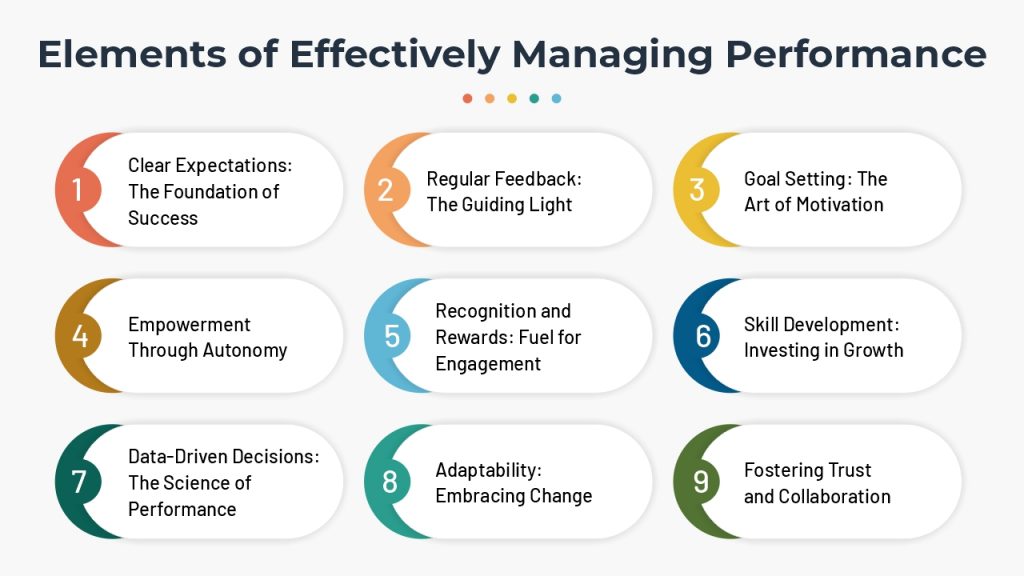
Clear Expectations: The Foundation of Success
Imagine embarking on a journey without a map—chaos is inevitable. Similarly, managing performance begins with setting crystal-clear expectations. Colleagues thrive when they understand their roles, responsibilities, and the standards against which their contributions are measured. Transparent objectives form the cornerstone of a productive workforce.
Regular Feedback: The Guiding Light
Feedback acts as the compass that keeps performance on track. Timely and constructive insights provide employees with a sense of direction, enabling them to adjust and grow. A combination of formal reviews and informal check-ins ensures a balance between evaluation and encouragement, creating an environment where colleagues feel supported.
Goal Setting: The Art of Motivation
A goal is more than a destination; it’s a source of inspiration. Effective performance management links individual ambitions with broader organizational objectives. By using frameworks like SMART goals, managers can provide colleagues with tangible, measurable, and achievable targets that keep their motivation alive.
Empowerment Through Autonomy
Micromanagement drains morale, while autonomy breathes life into performance. Giving employees the freedom to make decisions within their scope fosters trust and accountability. Autonomy is the fertile ground where creativity flourishes and ownership thrives.
Recognition and Rewards: Fuel for Engagement
Recognition isn’t just an occasional applause; it’s a continuous melody that reinforces good performance. Whether through public acknowledgment, promotions, or simple words of appreciation, celebrating achievements creates a ripple effect of positivity across the workplace.
Skill Development: Investing in Growth
Performance management isn’t just about evaluating past efforts; it’s about preparing for future challenges. Offering opportunities for professional development—training, workshops, or mentorship—enables colleagues to enhance their skills and take on greater responsibilities. Growth-oriented performance systems nurture a workforce that is resilient and adaptive.
Data-Driven Decisions: The Science of Performance
Metrics and analytics provide an unbiased lens to assess performance. By analyzing data such as productivity rates and customer feedback, managers gain insights that help refine strategies. However, numbers must always be complemented by the human touch, ensuring that individual stories and efforts are never overshadowed.
Adaptability: Embracing Change
The workplace is a dynamic arena where priorities shift and challenges evolve. Effective performance management involves staying agile, revisiting goals, and adjusting strategies to reflect changing circumstances. This adaptability ensures that both employees and organizations remain aligned with their objectives.
Fostering Trust and Collaboration
At its heart, managing performance is a relational endeavor. Building trust between managers and colleagues creates a foundation where open communication and mutual respect thrive. Collaboration, in turn, transforms isolated efforts into collective success.
Managing performance is a blend of strategy and empathy, metrics and motivation. By focusing on clear expectations, constructive feedback, skill development, and recognition, organizations can elevate individual contributions and achieve collective excellence. In this delicate dance, each element plays a vital role in creating a workplace where talent shines and goals are realized.
The Role of Leadership
Leadership is the cornerstone of performance and engagement. A leader’s vision inspires action, while their empathy fosters trust. Great leaders don’t just manage tasks; they cultivate relationships, creating environments where colleagues feel seen, heard, and motivated.
Strategies to Foster Colleague Engagement
A workplace thrives when its people do. Colleague engagement is the lifeblood of organizational success, inspiring passion, productivity, and loyalty. But how can leaders cultivate this elusive yet essential quality? Here are strategies to foster colleague engagement and create a culture where individuals feel valued and empowered.
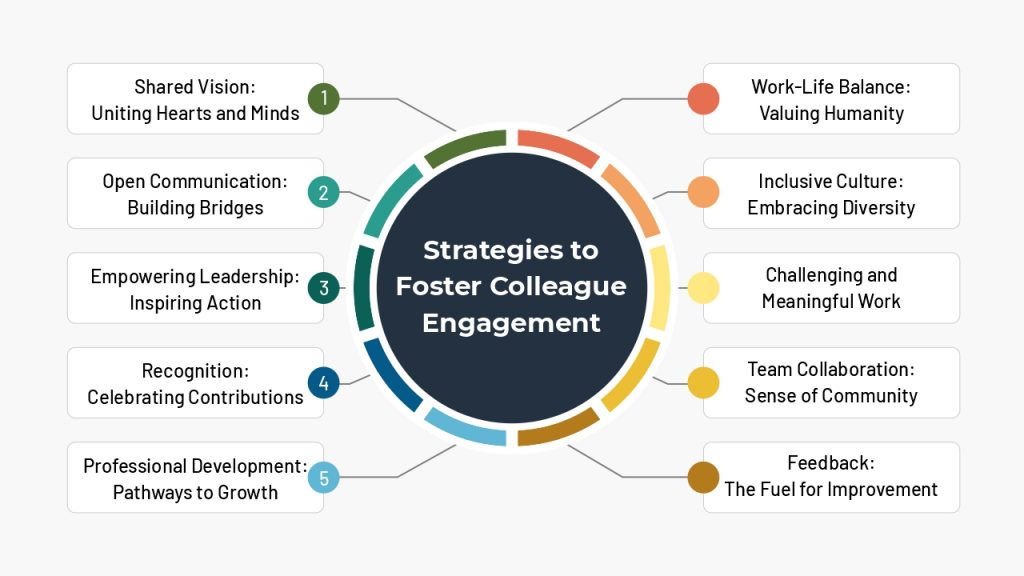
Shared Vision: Uniting Hearts and Minds
Engagement begins with purpose. When colleagues understand and connect with the organization’s mission, they align their efforts with a greater cause. Sharing the “why” behind goals transforms routine tasks into meaningful contributions, sparking a sense of belonging.Open Communication: Building Bridges
Engaged colleagues are those who feel heard. Encouraging open dialogues—through team meetings, surveys, or one-on-one conversations—ensures that employees can voice their ideas and concerns. Listening is an act of validation that strengthens trust and inclusion.Empowering Leadership: Inspiring Action
Leadership isn’t about commands; it’s about inspiration. Empowering managers who lead with empathy and provide guidance rather than control creates a culture where colleagues feel supported. A great leader is a gardener, nurturing seeds of potential into flourishing talent.Recognition: Celebrating Contributions
Recognition is the currency of engagement. Acknowledging efforts, whether through formal awards or simple gestures, boosts morale and motivation. Genuine appreciation sends a powerful message: “Your work matters.”Professional Development: Pathways to Growth
Engagement soars when employees see a future in their roles. By investing in development programs, mentorship opportunities, and upskilling initiatives, organizations provide colleagues with the tools to advance. Growth is not a privilege but a right in an engaged workplace.Work-Life Balance: Valuing Humanity
An overworked employee is a disengaged one. Flexible policies, wellness programs, and respect for personal boundaries show colleagues that their well-being matters. Balance is the foundation of sustained engagement.Inclusive Culture: Embracing Diversity
Diversity isn’t just about representation; it’s about inclusion. Creating a workplace where every voice is valued fosters engagement by ensuring that everyone feels they belong. Initiatives that celebrate diverse perspectives make colleagues proud of their workplace.Challenging and Meaningful Work
Engagement flourishes when work feels meaningful. Assigning challenging yet achievable projects that align with colleagues’ strengths keeps them motivated and intellectually stimulated. A bored employee is a disengaged one.Team Collaboration: A Sense of Community
Engagement isn’t an individual affair; it’s a team effort. Encouraging collaboration and fostering camaraderie transforms the workplace into a community. Colleagues who support one another create an environment where engagement becomes contagious.Feedback: The Fuel for Improvement
Feedback isn’t just for performance management; it’s also a tool for engagement. Providing constructive and timely feedback helps colleagues grow and shows them that their development is valued. Fostering colleague engagement is about creating a workplace that cares, inspires, and uplifts. By emphasizing purpose, recognition, development, and inclusion, organizations can transform their teams into passionate advocates. Engagement isn’t a fleeting moment; it’s an ongoing journey—a journey worth investing in for lasting success.Leveraging Technology while Managing Performance
Streamlining Performance Tracking
Modern performance management tools provide real-time data, making it easier to monitor progress and identify trends. Platforms such as performance dashboards offer managers an eagle-eye view of achievements, bottlenecks, and opportunities for improvement. By integrating technology, performance tracking becomes seamless and precise.Enhancing Communication
Technology bridges the gap between managers and colleagues. Collaborative platforms like Slack and Microsoft Teams facilitate open communication, encouraging continuous feedback. This transparency not only improves performance but also deepens colleague engagement, ensuring everyone feels connected and informed.Personalized Development Plans
AI-driven analytics enable personalized development plans tailored to individual strengths and goals. Employees gain clarity on their growth paths, while managers use insights to allocate resources effectively. This blend of human empathy and technological precision enhances overall performance.Automation: The Silent Partner
Automation reduces administrative burdens, freeing up managers to focus on coaching and strategy. From automated performance reviews to AI-based skill assessments, technology handles the mundane, allowing human effort to shine where it matters most.Virtual Training and Development
Technology revolutionizes skill-building with e-learning platforms, virtual workshops, and simulation-based training. Such tools ensure employees stay relevant in rapidly changing environments, aligning individual growth with organizational objectives. Leveraging technology in managing performance is not just an option; it’s a necessity for organizations aiming to thrive in a competitive world. By combining data-driven insights with human intuition, technology transforms performance management into a harmonious symphony of efficiency, engagement, and growth.The Psychological Impact of Colleague Engagement
When colleagues feel truly engaged, it doesn’t just uplift productivity; it transforms their psychological well-being. Colleague engagement is the unseen force that nurtures creativity, reduces stress, and fosters a sense of belonging, making the workplace a sanctuary rather than a battlefield.
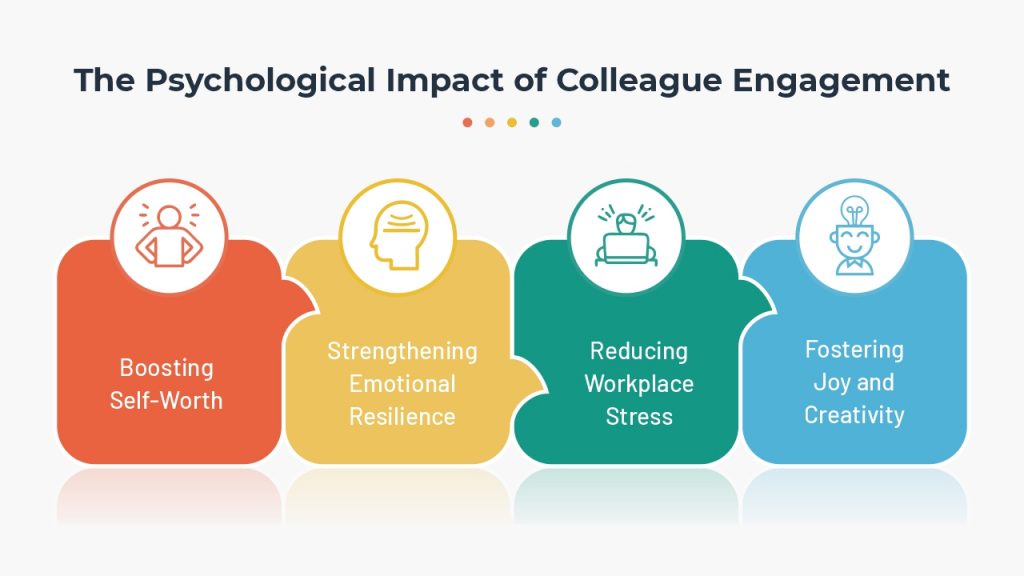
Boosting Self-Worth
Engaged employees feel valued. Regular recognition and meaningful interactions reinforce their sense of self-worth. When colleagues know their contributions matter, they experience heightened motivation and a more positive outlook on their roles.
Strengthening Emotional Resilience
A workplace driven by colleague engagement becomes a safe space for collaboration and support. This emotional safety fosters resilience, allowing employees to navigate challenges without succumbing to burnout. Engaged teams are emotionally stronger, weathering storms with collective confidence.
Reducing Workplace Stress
Engagement creates clarity and reduces ambiguity. Employees with clear roles, open communication channels, and supportive peers are less likely to feel overwhelmed. The result? Lower stress levels and better mental health.
Fostering Joy and Creativity
An engaged mind is a joyful mind. When colleagues are deeply involved in their work and feel connected to their team, they unlock creativity, turning mundane tasks into opportunities for innovation. Joy and engagement feed into one another, creating a cycle of growth and satisfaction.
The psychological impact of colleague engagement is profound. It’s the thread that weaves mental well-being, emotional resilience, and professional satisfaction into a cohesive fabric of workplace harmony. When engagement thrives, so does the human spirit.
Linking Performance to Organizational Goals
Clarifying Objectives
The first step in this alignment is clear communication of organizational goals. Managers must break down these high-level aims into actionable targets for employees, ensuring every individual understands their role in the larger picture.Creating Measurable Metrics
Metrics bridge the gap between aspiration and achievement. By establishing measurable performance indicators, organizations can track progress while keeping individuals focused. This clarity ensures that day-to-day efforts contribute directly to overarching objectives.Encouraging Collaboration
Linking performance to goals is not a solo act; it requires teamwork. Collaborative efforts ensure that departments and individuals work in harmony, achieving milestones together. This collective focus also enhances colleague engagement, as employees see their contributions woven into the organization’s success.Continuous Feedback and Adjustment
The path to success is rarely linear. Regular performance reviews and feedback sessions allow for recalibration, ensuring alignment remains intact. This process turns challenges into opportunities for growth, strengthening the bond between individual and organizational aspirations.Linking performance to organizational goals is the art of transforming individual actions into collective triumphs. By fostering clarity, collaboration, and adaptability, managing performance becomes a driving force for long-term success.
Future Trends in the Art of Managing Performance
The art of managing performance is evolving, shaped by technological advancements, shifting workplace dynamics, and changing employee expectations. Looking ahead, a future of innovation and inclusivity awaits.
AI and Predictive Analytics
Artificial intelligence will revolutionize performance management. Predictive analytics will enable managers to foresee challenges, identify growth opportunities, and craft tailored strategies. AI will become a partner in decision-making, making performance management more proactive than ever.
Focus on Well-Being
The future will prioritize holistic approaches, integrating mental health and well-being into performance management. Organizations will focus on creating balanced work environments that promote both productivity and personal happiness.
Hyper-Personalization
One-size-fits-all strategies will be replaced by hyper-personalized approaches. From tailored career paths to individualized feedback, future performance management will cater to the unique aspirations of every employee.
Remote and Hybrid Adaptations
With remote and hybrid models becoming the norm, performance management tools will adapt to virtual settings. Advanced collaboration platforms and digital tracking systems will redefine how managers connect with dispersed teams.
The future of managing performance is bright, blending technological innovation with human-centric values. By embracing these trends, organizations can create systems that inspire, engage, and evolve with the changing times.
FAQs
Conclusion
Managing performance and enhancing colleague engagement are two sides of the same coin. Together, they create a synergy that drives success, fosters innovation, and builds lasting relationships. By embracing these principles, organizations pave the way for a brighter, more harmonious future.