Table of Contents
ToggleThe Transformative Power of Coaching Leadership
In today’s dynamic and evolving workplace, leadership styles need to adapt to meet the complexities of modern challenges. Enter coaching leadership, a transformative approach that emphasises empowerment, growth, and collaboration over command and control. Unlike traditional leadership, coaching leadership redefines the role of a leader from a figure of authority to a facilitator of development. Let’s delve into what coaching leadership entails and explore how it differs from traditional leadership models.
What is Coaching Leadership?
At its core, coaching leadership is about nurturing potential. It focuses on guiding individuals to discover their strengths, overcome obstacles, and reach their goals. Think of a coach in sports—not there to play the game, but to equip the team with the tools, strategies, and motivation needed to succeed. Similarly, coaching leaders empower their teams to think independently, solve problems creatively, and take ownership of their growth.
This style prioritises active listening, empathy, and open-ended questions, creating an environment where employees feel valued and supported. Instead of dictating tasks or micromanaging, coaching leaders encourage self-discovery and foster a sense of shared purpose.
The Shift from Traditional Leadership
To understand coaching leadership better, it’s essential to see how it contrasts with traditional leadership. Traditional leadership often hinges on hierarchy and authority. Leaders are seen as decision-makers who direct their teams toward organisational goals. While this approach provides structure and clarity, it can stifle creativity and limit individual growth.
Coaching leadership, on the other hand, is built on collaboration. It values the journey as much as the destination, ensuring employees are not just contributors but also active participants in their development. Here are some key differences:
- Focus on Growth
- Traditional leadership centres on achieving outcomes and adhering to processes.
- Coaching leadership emphasises personal and professional growth alongside results, creating a balance between performance and development.
- Authority vs. Partnership
- Traditional leaders often rely on positional authority to guide teams.
- Coaching leaders act as partners, building trust and inspiring teams to take ownership of their roles.
- Directive vs. Facilitative Approach
- Traditional leadership uses a directive approach—telling employees what to do and how to do it.
- Coaching leadership adopts a facilitative approach—asking questions, providing guidance, and encouraging employees to find solutions.
Why Coaching Leadership Matters
Coaching leadership isn’t just a shift in style; it’s a response to the demands of the modern workplace. As employees seek more meaningful roles, they expect leaders to be mentors rather than managers. This approach improves job satisfaction, fosters innovation, and builds resilient teams capable of adapting to change.
Moreover, coaching leadership cultivates a culture of trust and psychological safety. Employees feel confident to voice ideas, make mistakes, and learn without fear of judgement. This not only enhances individual performance but also strengthens the organisation’s ability to thrive in a competitive landscape.
Coaching leadership is more than a management technique—it’s a philosophy that empowers leaders to inspire, support, and guide their teams toward holistic success. By shifting the focus from control to collaboration, organisations can create environments where both employees and leaders flourish. It’s time to embrace this evolution, blending strategy with empathy, and paving the way for a more engaged and innovative workforce.
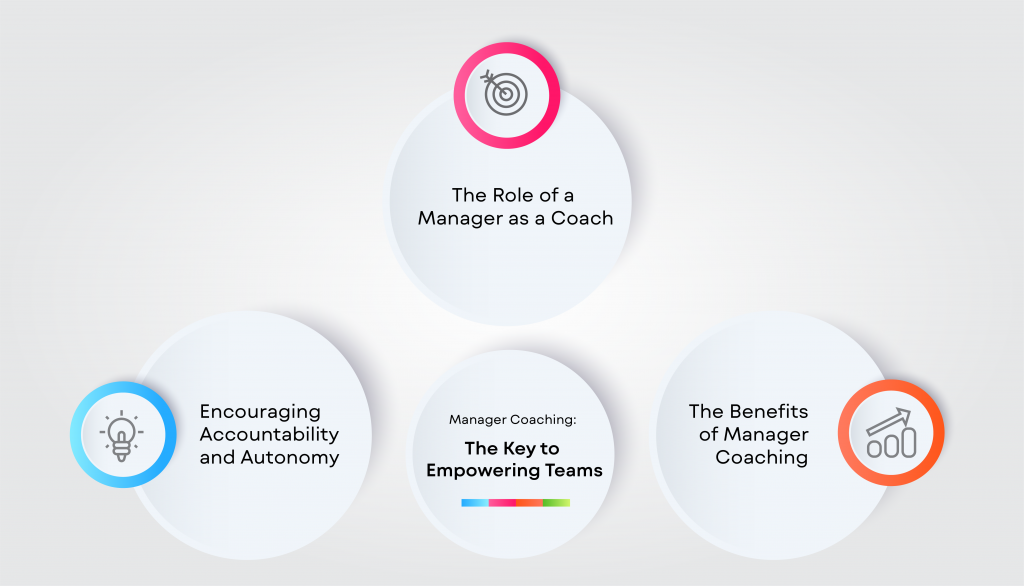
Manager Coaching: The Key to Empowering Teams
The modern workplace is not merely a hive of activity; it is a canvas where potential seeks to be painted into masterpiece form. At the heart of this transformation lies manager coaching, a leadership approach that reimagines managers as mentors, guiding their teams to discover their strengths, overcome challenges, and achieve remarkable outcomes. With a blend of strategy and empathy, manager coaching creates an environment where collaboration, accountability, and autonomy flourish.
The Role of a Manager as a Coach
Gone are the days when managers were merely taskmasters, enforcing deadlines and ensuring adherence to processes. Today, the role of a manager transcends operational oversight, evolving into that of a coach—a catalyst for growth and inspiration.
A manager as a coach doesn’t simply assign tasks; they invest in understanding the unique talents and aspirations of their team members. They listen actively, ask meaningful questions, and provide constructive feedback that fosters self-discovery and confidence.
Imagine a gardener tending to a vibrant array of plants. Each requires different care—some thrive in the sun, others in the shade. Similarly, a coaching manager tailors their approach, nurturing individuality while aligning efforts toward shared goals. By fostering open communication and offering consistent encouragement, they empower employees to take ownership of their development.
Encouraging Accountability and Autonomy
Manager coaching thrives on the delicate balance of guidance and independence. Rather than dictating every move, coaching managers inspire accountability by instilling a sense of ownership in their team members.
When individuals are entrusted with responsibility, they rise to the occasion, driven by an intrinsic desire to succeed. Accountability becomes not a burden but a badge of trust, one that inspires employees to take initiative and deliver excellence.
Autonomy, the sister of accountability, is equally essential. Coaching managers understand that micromanagement stifles creativity and innovation. Instead, they provide the tools, resources, and confidence employees need to navigate challenges independently. This freedom allows team members to experiment, learn from mistakes, and grow stronger in their roles.
The poetic beauty of this approach lies in its reciprocity: as employees flourish, so too does the team, creating a ripple effect that benefits the organisation as a whole.
The Benefits of Manager Coaching
Manager coaching is a symphony of trust, collaboration, and shared purpose. When managers adopt this style, the results are profound:
- Improved Performance: Teams coached by managers are more aligned, productive, and innovative.
- Stronger Engagement: Employees feel valued, motivated, and invested in their work.
- Resilient Teams: Coaching fosters adaptability and prepares teams to thrive amidst change.
Manager coaching is more than a skill—it’s an art. By stepping into the role of a coach, managers transform their teams into empowered, self-reliant contributors. Accountability and autonomy become the cornerstones of a thriving workplace, where trust fuels ambition, and every individual has the space to grow. Like a melody that harmonises diverse notes, manager coaching unites unique talents into a cohesive symphony of success.
It’s time to embrace this transformative approach, where managers don’t just lead—they inspire, empower, and elevate. For in the dance of coaching, both leaders and their teams rise together.
The Connect Between Coaching Leadership and Manager Coaching
In the grand tapestry of workplace dynamics, the threads of coaching leadership and manager coaching weave together to create an intricate pattern of empowerment, growth, and collaboration. These approaches, though distinct in their execution, share a harmonious vision—transforming traditional hierarchies into ecosystems of shared purpose and mutual development. As organisations evolve, the interplay between these two paradigms reveals the essence of modern leadership: guiding with empathy and leading through inspiration.
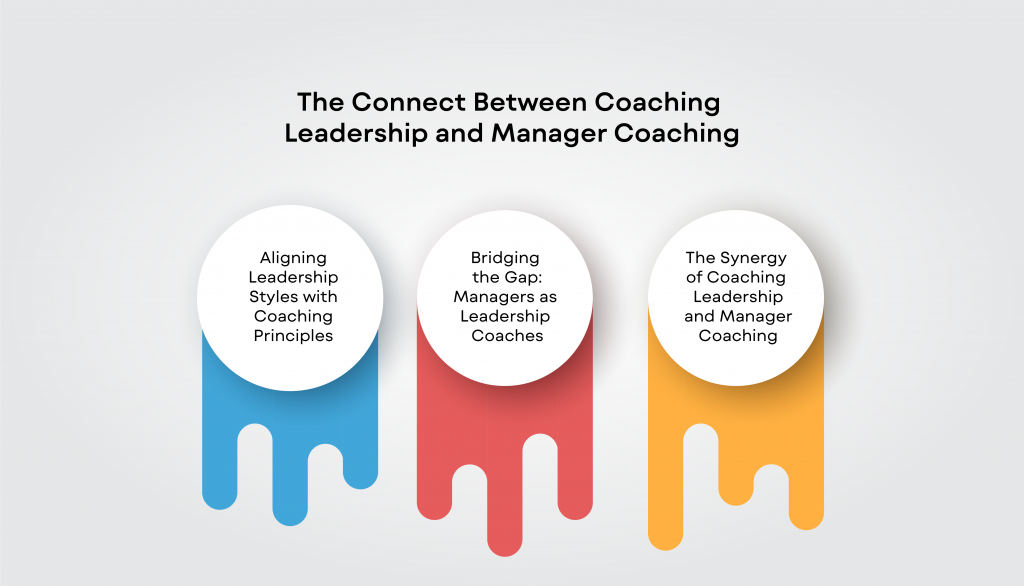
Aligning Leadership Styles with Coaching Principles
At the heart of coaching leadership lies a philosophy that transcends conventional leadership styles. It is a shift from commanding to collaborating, from directing to developing. Coaching leadership embraces the idea that every individual has untapped potential waiting to be realised. Leaders who adopt this style prioritise listening, questioning, and nurturing over issuing orders or providing rigid instructions.
The principles of coaching leadership—empathy, adaptability, and empowerment—serve as a beacon for managers who wish to infuse their roles with purpose. Aligning leadership styles with these principles requires a mindset of partnership rather than power. Instead of focusing solely on immediate tasks, leaders look at the long-term growth of their teams, fostering not just productivity but also resilience, creativity, and engagement.
Imagine a conductor leading an orchestra. The conductor’s role isn’t to play every instrument but to bring out the best in each musician, ensuring a symphony that’s greater than the sum of its parts. Coaching leadership follows the same rhythm, ensuring that every team member contributes meaningfully while feeling valued and supported.
Bridging the Gap: Managers as Leadership Coaches
While coaching leadership sets the vision, manager coaching brings it to life in daily practice. Managers are the vital bridge between strategic leadership and frontline execution, and when they embrace the role of leadership coaches, they become architects of transformation.
The manager as a coach doesn’t just delegate tasks—they inspire ownership, encourage problem-solving, and mentor their team members toward success. They blend the broader aspirations of coaching leadership with the specificity of individual development. Through consistent feedback, personalised guidance, and unwavering support, they transform routine managerial interactions into moments of profound impact.
Yet, bridging this gap requires intentional effort. Managers must shift their focus from controlling outcomes to fostering capabilities. This means moving away from rigid KPIs and instead celebrating milestones of growth, learning, and innovation. They must also foster psychological safety, creating a workplace where mistakes are seen not as failures but as stepping stones toward mastery.
The Synergy of Coaching Leadership and Manager Coaching
The beauty of these approaches lies in their complementarity. Coaching leadership sets the tone for an organisation-wide culture of development, while manager coaching ensures its daily practice. Together, they create a ripple effect: leaders inspire managers, who, in turn, empower their teams.
This synergy drives results beyond performance metrics. It builds trust, cultivates loyalty, and fosters a sense of belonging. Employees no longer see themselves as cogs in a machine but as integral contributors to a shared vision.
The interplay between coaching leadership and manager coaching is the lifeblood of modern organisations. By aligning leadership styles with coaching principles and embracing the role of managers as leadership coaches, organisations can bridge the gap between vision and execution.
In this dance of empowerment, leaders and managers don’t merely oversee—they uplift. And as they do, they transform workplaces into havens of growth, innovation, and shared success. The result? Teams that don’t just perform but thrive, creating a legacy of leadership that resonates far beyond the boardroom walls.
Implementing Coaching Leadership and Manager Coaching in Organisations
In the evolving narrative of organisational success, coaching leadership and manager coaching have emerged as the twin beacons guiding teams toward growth and excellence. Implementing these approaches requires more than just policy changes—it demands a cultural shift where leaders inspire, managers mentor, and employees thrive.
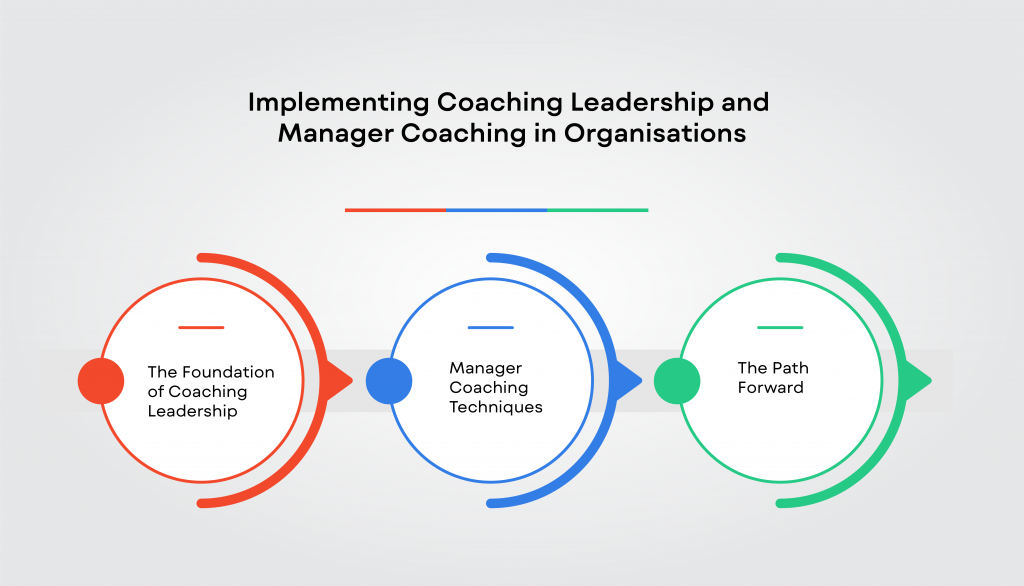
The Foundation of Coaching Leadership
Coaching leadership begins with a mindset that prioritises development over direction. Leaders adopting this style focus on empowering teams, fostering creativity, and encouraging resilience. They see their role not as taskmasters but as architects of potential, guiding individuals to uncover their strengths and navigate challenges. To implement coaching leadership effectively, organisations must invest in training programs that cultivate empathy, active listening, and a growth-oriented perspective. Regular feedback sessions, collaborative goal-setting, and open channels of communication become the pillars of this leadership style.Manager Coaching Techniques
For managers, the role of a coach blends leadership vision with practical execution. Manager coaching techniques are the tools that bring this harmony to life:- Active Listening: Managers who truly listen not only understand their team’s concerns but also inspire trust and confidence.
- Open-Ended Questions: Asking “How can we approach this differently?” encourages employees to think critically and take ownership of their solutions.
- Constructive Feedback: Delivered with kindness and clarity, feedback transforms mistakes into opportunities for growth.
- Celebrating Progress: Recognising milestones fosters motivation and reinforces positive behaviours.
The Path Forward
Implementing coaching leadership and manager coaching transforms organisations into ecosystems of innovation and collaboration. Leaders and managers, like skilled gardeners, nurture a culture where every individual blossoms. With trust as the soil, growth as the goal, and empowerment as the guiding principle, the journey toward collective success begins. We say, let coaching be the wind beneath the wings of your organisation, lifting everyone to new heights of possibility.The Future of Coaching Leadership and Manager Coaching
As the world of work transforms, so too does the art of leadership. The future belongs to those who lead not with commands but with compassion, not by controlling outcomes but by cultivating potential. Coaching leadership and manager coaching stand as the cornerstones of this evolving paradigm, promising a workplace rich with collaboration, innovation, and purpose.
The Vision for Tomorrow
Coaching leadership is poised to redefine how organisations operate. Leaders of the future will be mentors and visionaries, guiding their teams with empathy and fostering environments where creativity and resilience thrive. They will prioritise human connections over rigid hierarchies, enabling every individual to contribute meaningfully to shared goals.
Similarly, manager coaching will become an indispensable skill. Managers will evolve from overseers into catalysts for growth, blending strategic oversight with personalised mentorship. This shift will ensure that teams remain adaptable, engaged, and motivated in the face of constant change.
Sustaining a Coaching Culture
But how do organisations ensure that coaching leadership and manager coaching endure beyond fleeting trends? The answer lies in sustaining a coaching culture.
A coaching culture is more than just a leadership style; it’s a shared mindset that values learning, trust, and collaboration. To sustain it, organisations must embed coaching principles into their DNA. This means:
- Investing in Training: Equip leaders and managers with the tools to coach effectively.
- Celebrating Growth: Recognise not just results but the effort and progress behind them.
- Fostering Openness: Encourage conversations that inspire and uplift, breaking down silos and building trust.
The future of coaching leadership and manager coaching is a symphony of empowerment, where every voice matters and every effort is celebrated. As organisations embrace this transformative approach, they pave the way for workplaces that don’t just succeed—they soar.
FAQs
Conclusion
Coaching leadership and manager coaching are not just management strategies—they are transformative journeys. By embracing these approaches, organisations unlock potential, inspire innovation, and foster growth that resonates beyond boardrooms. It’s time to lead with heart, empathy, and vision.