
Table of Contents
ToggleUnderstanding the Spectrum of Leadership: Exploring Types of Leadership and Different Leadership Styles
Leadership, a word that resonates across generations, is more than just directing people—it’s a symphony of vision, influence, and trust. Some say it’s an art; others, a science. In truth, it’s both. This blog explores the types of leadership and dives deep into the different leadership styles that shape our world today.
The Core of Leadership
Leadership is not just a title; it’s a tapestry woven with threads of vision, influence, and character. At its core, leadership is about guiding others toward a shared goal, igniting inspiration, and fostering trust. But what truly defines the essence of leadership? Let us explore this profound concept, layer by intricate layer.
What Is Leadership?
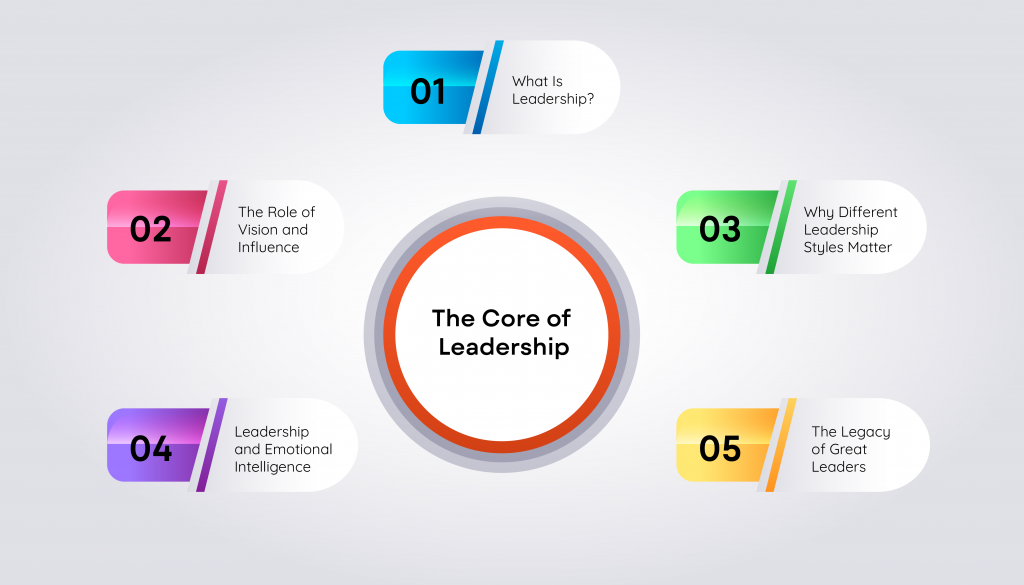
At its simplest, leadership is the ability to inspire and mobilise others. Yet, the reality is far more nuanced. Leadership is both an art and a science. It requires the finesse of understanding human behaviour and the precision of strategic thinking. Leaders serve as architects of ambition, building pathways to progress while ensuring those they lead feel valued and empowered.
A great leader is a beacon—a light that guides in times of uncertainty and motivates teams to press forward when the road seems impossible. Unlike managers, who focus on processes, leaders focus on people. They embody vision, resilience, and adaptability.
The Role of Vision and Influence
Central to leadership is the power of vision. A leader’s ability to craft a compelling future is what separates them from the ordinary. Vision provides direction, a purpose larger than individual aspirations. Yet, vision alone isn’t enough. Leaders must possess the influence to rally others behind that vision, igniting passion and commitment.
Influence isn’t about wielding authority; it’s about earning trust and respect. True influence flows from authenticity, integrity, and the ability to connect with people on a human level. Through empathy and understanding, leaders foster loyalty and inspire action.
Why Different Leadership Styles Matter
Every leader’s approach is shaped by their personality, experiences, and the environment they navigate. Different leadership styles, whether transformational, transactional, or servant, determine how leaders interact with their teams and drive results.
For instance, transformational leaders thrive on inspiring innovation, encouraging their teams to exceed expectations. On the other hand, transactional leaders bring order and efficiency, focusing on structure and accountability. Servant leaders prioritise their team’s well-being, creating environments rooted in trust and collaboration.
Leadership and Emotional Intelligence
Leadership is deeply intertwined with emotional intelligence (EI). EI encompasses self-awareness, empathy, and the ability to manage relationships effectively. Leaders with high EI can navigate challenges with grace, understanding the emotions of others while maintaining control of their own.
Empathy, a cornerstone of EI, enables leaders to relate to their team’s experiences. It’s not about solving every problem but acknowledging the human element in every situation. This builds trust—the currency of leadership.
The Legacy of Great Leaders
History is replete with examples of extraordinary leaders—from Mahatma Gandhi’s relentless pursuit of peace to Martin Luther King Jr.’s call for equality. Professionally, people like the late Ratan Tata, Dhirubai Ambani, and Bill Gates have transformed the definition of leadership and have added to the types of leadership around the globe. These leaders transcended their circumstances by embodying the core principles of leadership: vision, courage, and unwavering purpose.
The core of leadership is more than directing tasks or achieving milestones. It is about inspiring others, crafting a shared vision, and nurturing human potential. The different leadership styles are all a journey—a lifelong commitment to growth, service, and transformation. At its heart lies the simple yet profound truth: leadership is not about commanding; it’s about connecting, uplifting, and empowering.
Exploring the Types of Leadership
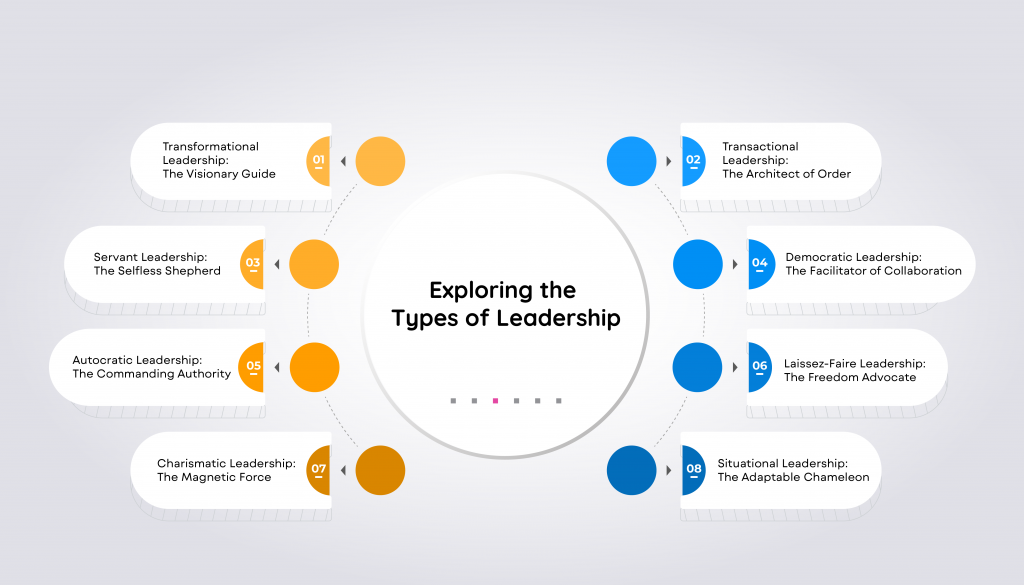
Leadership exists on a spectrum, from directive approaches that command authority to collaborative styles that foster inclusion. Truth is, there are too many different leadership styles for this blog to write about! The types of leadership have their unique flavour, strengths, and limitations, making it crucial to match the style to the needs of the moment.
1. Transformational Leadership: The Visionary Guide
Transformational leaders are the dreamers who dare to disrupt the status quo. They inspire their teams with a compelling vision of the future, igniting passion and creativity. Think of figures like Martin Luther King Jr. or Elon Musk—leaders who challenge norms and empower others to achieve extraordinary results.
Among the various types of leadership, transformational leadership thrives in environments requiring innovation, as it encourages individuals to transcend their perceived limits. However, it demands emotional intelligence and a clear strategy to channel inspiration into tangible outcomes.
2. Transactional Leadership: The Architect of Order
Where transformational leaders thrive on inspiration, transactional leaders focus on structure. This is one of the types of leadership that emphasises clear roles, responsibilities, and rewards. It is particularly effective in organisations that rely on consistency and performance metrics.
Though transactional leadership might lack the poetic appeal of visionary styles, it provides stability, ensuring systems function efficiently and objectives are met.
3. Servant Leadership: The Selfless Shepherd
At the heart of servant leadership lies a simple yet profound belief: the leader exists to serve the team. By prioritising the needs of others, servant leaders foster trust, loyalty, and collaboration.
DIfferent from the other types of leadership, this style is deeply relational, making it ideal for community-oriented environments or organisations where empathy and connection drive success. However, servant leaders must balance service with assertiveness to maintain direction.
4. Democratic Leadership: The Facilitator of Collaboration
Democratic leadership champions the power of collective wisdom. Decisions are made through consultation, giving everyone a voice. This inclusive approach fosters engagement and ensures diverse perspectives shape the path forward.
While democratic leadership thrives in creative and knowledge-driven settings, it can be time-intensive and may struggle in high-stakes or crisis situations requiring swift decisions, as compared to the other types of leadership.
5. Autocratic Leadership: The Commanding Authority
Autocratic leadership is characterised by control and decisiveness. In this style, the leader holds primary decision-making power, often bypassing collaborative processes. Back in the 80s, this was one of the types of leadership that was all the rage then.
Though it may seem rigid, autocratic leadership is invaluable in emergencies or environments requiring strict compliance. However, over-reliance on this style can stifle creativity and breed discontent.
6. Laissez-Faire Leadership: The Freedom Advocate
Next on the list for different types of leadership is the Laissez-Faire style. French for “let do,” laissez-faire leadership emphasises autonomy. Leaders trust their teams to self-manage, intervening only when necessary.
This style shines in environments with highly skilled, motivated individuals but risks chaos if team members lack direction or accountability.
7. Charismatic Leadership: The Magnetic Force
One of the most visually appealing types of leadership; charismatic leaders captivate and inspire through their personality and charm. They draw people in, rallying them around a shared vision.
While charisma can ignite passion and loyalty, it must be paired with substance. Without a solid foundation, the allure of charisma can fade, leaving teams adrift.
8. Situational Leadership: The Adaptable Chameleon
Situational leadership recognises that no single style fits all scenarios. Leaders using this approach assess the needs of the moment, adjusting their strategy to suit the team’s capabilities and the task at hand. Perhaps this is a motley of all the various types of leadership.
This flexibility makes situational leadership highly effective, though it requires self-awareness and a deep understanding of various leadership styles.
The Harmony of Different Leadership Styles
Each of the many types of leadership brings unique strengths to the table, much like instruments in an orchestra. When harmonised, they create a symphony of success. A skilled leader understands when to be a visionary, a guide, a collaborator, or a director.
Embracing the Right Leadership Style
The best leaders are not defined by a single style but by their ability to adapt. They draw from a repertoire of approaches, tailoring their leadership to the people, purpose, and moment. In this fluidity lies the essence of leadership: an evolving dance between the needs of the team and the challenges of the world.
Leadership, in all its forms, is a journey—a reflection of who we are and who we aspire to become. As we explore its many facets, we discover not only the potential to lead but also the power to inspire, connect, and transform.
The Intersection of Leadership Styles
Leadership, much like a kaleidoscope, thrives in its diversity. The art of guiding others has no single, perfect blueprint; instead, it draws strength from a myriad of styles that merge and adapt to different needs and environments. The intersection of leadership styles is where innovation meets practicality, and where adaptability reigns supreme.
What Are the Different Leadership Styles?
Different leadership styles are frameworks that define how leaders interact with their teams and guide their actions. Each style offers unique approaches to decision-making, communication, and motivation. They are not rigid rules but dynamic patterns that reflect a leader’s personality, values, and the demands of their situation.
From the authoritative confidence of a visionary leader to the nurturing guidance of a coaching one, different leadership styles can complement or challenge each other. Understanding their intersections opens pathways to more effective and inclusive leadership.
Where Different Leadership Styles Meet
Leadership isn’t about choosing one style over another; it’s about integrating elements from various approaches to fit the moment. For instance:
- The Visionary Servant: A leader who blends transformational goals with servant leadership principles creates a balance of inspiration and support. They challenge their teams to think big while ensuring they have the resources to succeed.
- The Democratic Strategist: Combining democratic collaboration with strategic direction allows leaders to foster input while keeping the organisation aligned with its objectives.
- The Adaptive Hybrid: Leaders who seamlessly shift between autocratic and laissez-faire approaches adapt to the spectrum of challenges, from high-stakes decisions to moments requiring team autonomy.
The Power of Intersectionality
The beauty of intersecting and different leadership styles is their ability to address the complexity of modern challenges. Today’s leaders face diverse teams, rapid technological advancements, and shifting global landscapes. An adaptive leader—one who understands and leverages various styles—can meet these demands with grace and foresight.
Think of it like blending colours on a canvas. Each leadership style adds a distinct hue, but together, they form a masterpiece of collaboration, trust, and progress.
Challenges at the Crossroads
While intersections offer opportunities, they also present challenges. Leaders must balance contrasting approaches, ensure consistency, and prevent confusion within their teams. For example, blending autocratic and democratic elements may confuse employees about the expected level of participation in decision-making.
The key lies in clear communication and a consistent vision. When leaders articulate why they are adopting a particular approach, they build trust and understanding.
Why the Intersection Matters
No two teams, projects, or challenges are alike. A one-size-fits-all leadership style risks alienating team members or missing the mark in addressing a situation. By embracing intersectionality, leaders can create environments where individuals feel seen, valued, and empowered.
Leading for Tomorrow
The future of leadership is fluid. As organisations evolve, so will the expectations of leaders. Those who master the art of weaving different leadership styles together—understanding when to guide with authority, when to listen, and when to inspire—will thrive in an ever-changing world.
All of these different leadership styles aren’t silos; they are threads in the fabric of influence. By learning to intersect them thoughtfully, leaders can craft a tapestry that supports, challenges, and elevates their teams to extraordinary heights.
The Human Side of Leadership
All these different leadership styles; they are not just about strategies, metrics, or bottom-line achievements. At its heart, leadership is profoundly human. It is a delicate interplay of emotions, relationships, and values that breathe life into organisational goals and personal dreams. The human side of the many types of leadership transforms mere management into meaningful connection, inspiring individuals to reach beyond their limits.
Leadership as a Human Endeavour
What makes a leader truly memorable? It’s not just their ability to execute plans or solve problems—it’s their capacity to empathise, to connect, and to care. A leader who understands the human side of leadership doesn’t see people as resources but as individuals with aspirations, fears, and potential.
This perspective fosters trust, loyalty, and mutual respect. Leaders who genuinely care about their team members create environments where people feel safe to take risks, voice opinions, and strive for greatness.
The Pillars of Human-Centric Leadership
- Empathy:
Empathy is the cornerstone of humanised leadership. It’s about stepping into another’s shoes and understanding their experiences. Empathetic leaders listen actively, recognising unspoken struggles and celebrating unseen triumphs. - Authenticity:
People follow leaders who are real. Authentic leaders embrace their strengths and weaknesses, demonstrating vulnerability without losing confidence. This honesty inspires their teams to do the same. - Emotional Intelligence:
Emotional intelligence—the ability to navigate one’s emotions and understand others’—is essential. It allows leaders to manage conflicts, build rapport, and maintain balance in stressful situations. - Compassionate Communication:
Words matter. Leaders who communicate with compassion foster trust and understanding. They encourage open dialogue and ensure that every voice is heard, creating a culture of inclusion.
Balancing Humanity with Authority
Some argue that focusing on the human side of leadership risks undermining authority or decisiveness. But this is a false dichotomy. True leadership balances human connection with the ability to make tough decisions. Leaders can be both firm and empathetic—providing guidance while respecting the individuality of their team members.
Consider the metaphor of a gardener. A gardener tends to plants with care and patience, knowing when to prune and when to nourish. Similarly, leaders cultivate their teams, striking a balance between nurturing and challenging them.
The Role of Vulnerability in Leadership
Vulnerability is often perceived as weakness, but in leadership, it is a strength. Leaders who admit mistakes, share struggles, and show humanity create environments of trust. Vulnerability fosters authenticity, encouraging teams to connect on a deeper level.
Human Leadership in Action
Human-centric leadership can be seen in moments of crisis. When employees face personal challenges or external pressures, a leader’s response can define the culture of the organisation. A leader who prioritises people over profits during difficult times strengthens bonds and builds long-term loyalty.
Challenges in Embracing Humanity
Leading with humanity comes with its challenges. Balancing empathy with organisational demands can be difficult. Leaders may face resistance from traditionalist views that prioritise results over relationships. Additionally, maintaining emotional resilience while addressing others’ struggles requires self-awareness and support.
The Ripple Effect of Human Leadership
When leaders embrace their humanity, the effects extend far beyond their immediate team. They inspire a culture of care, where employees emulate the values they witness. This ripple effect enhances collaboration, innovation, and overall well-being.
A Vision for the Future
The world is shifting toward values-driven leadership, where the human side takes centre stage. As automation and technology become more prominent, the need for human connection within leadership will only grow. Leaders who prioritise people—recognising their stories, aspirations, and complexities—will stand out in this evolving landscape.
Why Humanity Matters in Leadership
At the end of the day, leadership is not about wielding power; it’s about empowering others. The human side of leadership reminds us that great leaders are not just skilled strategists but also compassionate guides. They touch lives, inspire change, and leave a legacy not of accomplishments but of transformed individuals.
Leadership Across Different Spheres
Leadership in the Corporate World
Corporate leadership is perhaps the most visible and studied sphere of influence. In the boardroom, effective leaders drive growth, shape culture, and ensure strategic goals align with organisational missions. Here, different leadership styles like transformational leadership and democratic leadership are prized for their ability to foster innovation and collaboration.
However, corporate leadership is not just about profits. It’s about creating workplaces where employees thrive. Leaders who prioritise inclusion, mental well-being, and professional development cultivate environments where individuals are motivated to excel.
Leadership in Education
Educational leadership carries a profound responsibility: shaping the minds and futures of the next generation. Whether it’s a principal steering a school or a teacher guiding a classroom, leadership in education demands empathy, vision, and resilience.
Educational leaders inspire not only through instruction but also through example. They instil curiosity, resilience, and a love for learning in their students, ensuring that the torch of knowledge continues to burn brightly.
Leadership in Communities
Community leadership thrives on connection and grassroots efforts. These leaders are often the unsung heroes who rally people around shared causes, addressing local challenges and fostering unity.
Unlike corporate settings, where hierarchies are often clear, community leadership is more organic. It thrives on relational influence rather than formal authority. Leaders in this sphere often embody servant leadership, prioritising the needs of their community over personal gain.
Leadership in Politics
Political leadership is one of the most scrutinised forms, as its impact extends across nations and generations. Effective political leaders must balance competing interests, navigate complex systems, and inspire trust among diverse populations.
The intersection of charismatic leadership and strategic leadership often defines successful political figures. While charisma draws people in, strategic thinking ensures sustainable progress.
Leadership in Families
Leadership within families is deeply personal yet universally impactful. Parents, guardians, and even elder siblings often assume leadership roles, guiding younger members through life’s challenges.
In this sphere, leadership is less about authority and more about modelling values. Patience, adaptability, and unconditional support define familial leadership, fostering environments of love and growth.
Leadership in the Arts and Creativity
Artistic leadership may not always fit traditional moulds, but its influence is undeniable. Directors, choreographers, writers, and other creative visionaries inspire through storytelling and innovation. They lead by sparking imagination, challenging norms, and inviting audiences into new worlds.
Here, visionary leadership shines brightest. These leaders dare to see what others cannot, transforming abstract ideas into tangible masterpieces.
Leadership in Sports
On the field or court, leadership is as much about teamwork as it is about individual excellence. Sports leaders—be they coaches or team captains—must inspire, strategize, and maintain morale, even in the face of defeat.
In this sphere, transactional leadership often blends with transformational leadership. Clear roles and expectations are balanced with motivational drives to achieve shared victories.
Common Threads Across Spheres
While leadership adapts to its context, certain principles remain universal:
- Vision: Leaders in all spheres provide direction and purpose.
- Empathy: Understanding and connecting with others is essential.
- Resilience: Challenges are inevitable, and leaders must navigate them with determination.
- Integrity: Trust is the foundation of all leadership.
The Challenges of Multi-Sphere Leadership
Leaders who navigate multiple spheres—such as community organisers with political aspirations or educators pursuing artistic endeavours—face unique challenges. Balancing priorities, managing diverse expectations, and adapting to varying leadership dynamics require extraordinary adaptability.
Why Leadership Across Spheres Matters
Leadership is not confined to titles or positions; it is a way of being. By understanding how different leadership styles operate across different contexts, we can develop a holistic view of its potential. Leaders who draw lessons from diverse spheres enrich their approach, making them more effective and empathetic.
Towards a Unified Vision of Leadership
Leadership across spheres reflects humanity’s interconnectedness. Whether guiding a multinational corporation or a small neighbourhood group, leaders shape the world we inhabit. By embracing the diversity of leadership and learning from its varied forms, we unlock the potential to create a more inspired and inclusive future.
FAQs
Conclusion
Leadership is a journey, not a destination. Whether transformational or transactional, the types of leadership have their place. Understanding the types of leadership and different leadership styles equips us to lead with purpose and adaptability. Leadership isn’t about perfection; it’s about progression—about being the guiding light that illuminates the path for others.
