Table of Contents
ToggleElevating Leadership Through Coaching: Insights from the International Federation of Coaches and Erickson International Coaching
Introduction
In today’s ever-evolving business world operating at a breakneck speed, leadership development is more crucial than it was before. Leaders must adapt, inspire, and drive their teams toward success, which often requires continuous personal and professional growth. This is where leadership coaching plays a pivotal role. By providing tailored guidance and support, leadership coaching helps individuals enhance their skills, overcome challenges, and achieve their full potential. The transformative power of leadership coaching will be evident in the team’s newfound cohesion and productivity.
In this blog, we’ll explore the transformative power of leadership coaching, the standards and ethics upheld by the International Federation of Coaches (ICF), and the innovative approaches of Erickson International Coaching. Whether you’re an aspiring leader, a seasoned executive, or a coach looking to deepen your understanding, this comprehensive guide will offer valuable insights into the world of leadership coaching.
Tracing the History of Leadership Coaching
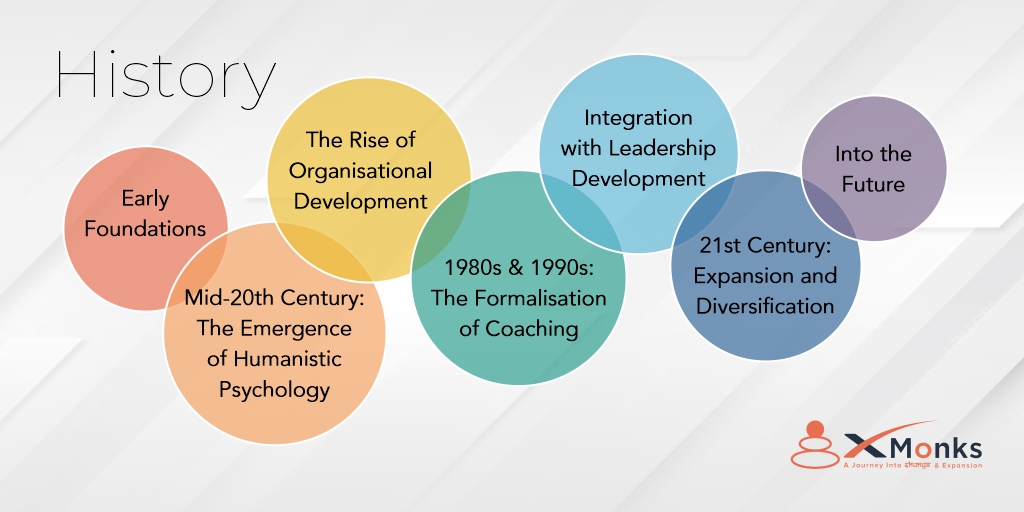
The history of leadership coaching is a rich tapestry woven with various influences from psychology, management theory, and human potential movements. This evolution reflects a growing recognition of the importance of personal development and effective leadership in organisational success.
Early Foundations
Leadership coaching, as we know it today, has roots that stretch back to the early 20th century. The industrial era brought about a focus on efficiency and productivity, with early management theories such as Frederick Taylor’s Scientific Management and Henri Fayol’s Administrative Theory emphasising structured leadership and organisational control. While these theories laid the groundwork for understanding organisational behaviour, they did not explicitly address the personal development of leaders.
Mid-20th Century: The Emergence of Humanistic Psychology
The mid-20th century saw a shift towards humanistic psychology, which emphasised personal growth and self-actualisation. Figures like Carl Rogers and Abraham Maslow introduced concepts that underscored the importance of understanding and fulfilling individual potential. This period marked the beginning of a more person-centred approach to leadership and development.
The Rise of Organisational Development
In the 1960s and 1970s, the field of Organisational Development (OD) emerged, integrating psychological principles with business management. This period saw the introduction of concepts such as systems thinking and team dynamics, which highlighted the importance of leadership in fostering healthy and productive organisational cultures. OD practitioners often acted as informal coaches, helping leaders navigate change and improve their effectiveness.
1980s and 1990s: The Formalisation of Coaching
The 1980s and 1990s marked the formalisation of coaching as a distinct profession. This era saw the founding of key coaching organisations, including the International Federation of Coaches (ICF) in 1995. The ICF established standards and ethical guidelines, bringing greater legitimacy and professionalism to the field. Influential books such as Timothy Gallwey’s “The Inner Game of Tennis” and Thomas Leonard’s “The Portable Coach” popularised coaching principles and practices.
Integration with Leadership Development
As the coaching profession grew, its integration with leadership development became more pronounced. Companies began to recognise the value of coaching in enhancing the skills and capabilities of their leaders. Leadership coaching programs were developed to address specific needs, such as executive presence, strategic thinking, and emotional intelligence. The focus shifted from simply managing teams to inspiring and leading them.
21st Century: Expansion and Diversification
The 21st century has seen an expansion and diversification of leadership coaching. Advances in neuroscience and positive psychology have influenced coaching practices, emphasising the role of mindset and well-being in effective leadership. Technology has also played a significant role, with virtual coaching platforms making coaching accessible to leaders around the world.
Leadership coaching has also become more inclusive, addressing the unique challenges faced by diverse groups of leaders. Topics such as diversity, equity, and inclusion have become integral to coaching conversations, reflecting a broader understanding of leadership in a globalised world.
The Future of Leadership Coaching
Looking ahead, leadership coaching is poised to continue evolving in response to the changing demands of the workplace. The rise of remote work, the increasing importance of digital transformation, and the focus on sustainable and ethical leadership are likely to shape the future of coaching. Coaches will need to stay adaptable, continuously updating their skills and knowledge to support leaders in navigating complex and dynamic environments. Simultaneously, the International Federation of Coaches will also evolve and adapt to the demands made by changing times.
The history of leadership coaching is a testament to the enduring importance of personal and professional development. From its early roots in management theory and humanistic psychology to its current integration with cutting-edge research and technology, leadership coaching has evolved to meet the needs of leaders and organisations. As the field continues to grow, its focus on fostering effective, ethical, and inclusive leadership will remain a cornerstone of organisational success.
The Importance of Leadership Coaching
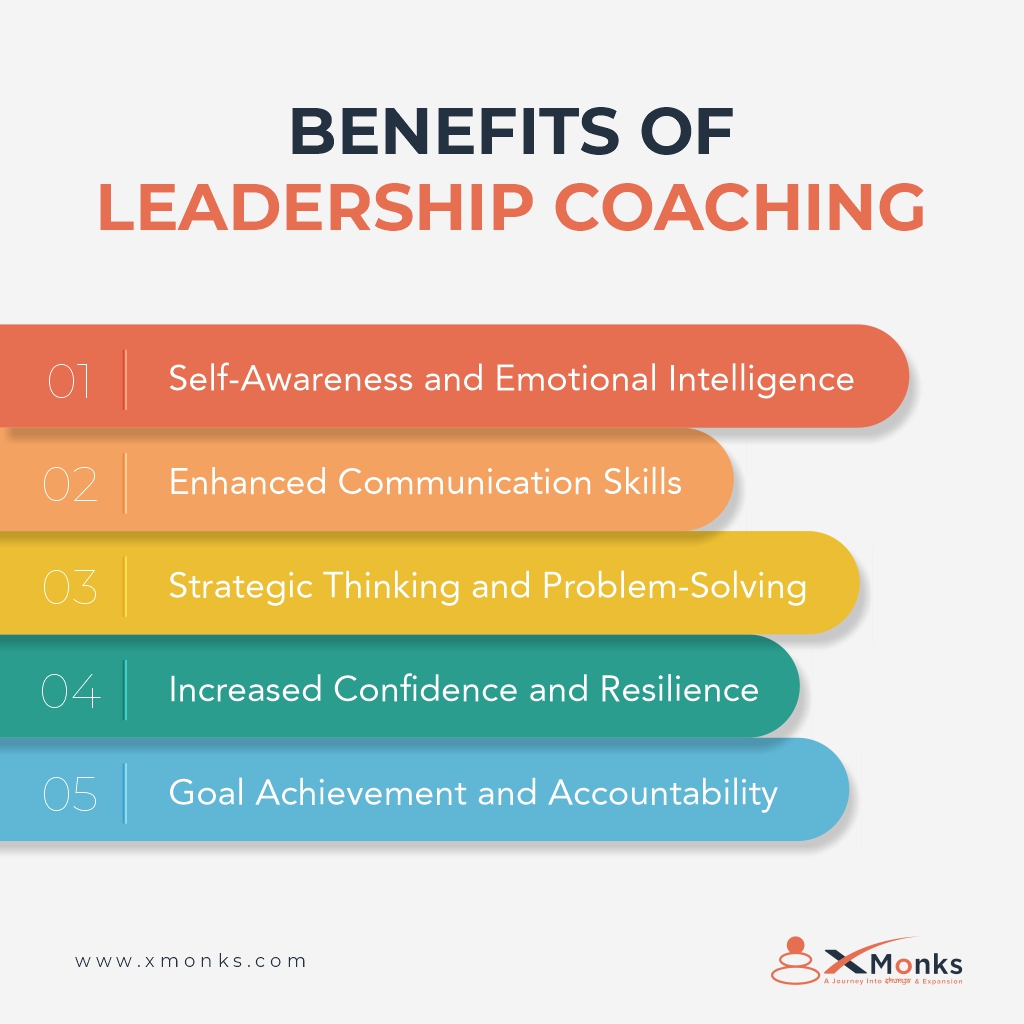
Leadership coaching is a personalised development process that aims to enhance an individual’s leadership capabilities. The multifaceted approach of leadership coaching helps teams and leaders not only to refine their communication skills and strategic thinking but also to develop a deeper understanding of their own values and purpose, which in turn allows them to lead with greater authenticity and impact. Unlike traditional training programs, coaching is highly customised to address the unique needs, strengths, and goals of each leader. Here are some key benefits of leadership coaching:
1. Self-Awareness and Emotional Intelligence
Effective leadership begins with self-awareness. Leadership Coaching helps leaders gain a deeper understanding of their strengths, weaknesses, values, and impact on others. This self-awareness fosters emotional intelligence, enabling leaders to manage their emotions, build strong relationships, and make better decisions.
2. Enhanced Communication Skills
Clear and empathetic communication is essential for successful leadership. Leadership Coaching helps leaders refine their communication skills, ensuring they can convey their vision, provide constructive feedback, and engage their teams effectively; something that the International Federation of Coaches places a lot of emphasis on.
3. Strategic Thinking and Problem-Solving
Leaders often face complex challenges that require strategic thinking and problem-solving abilities. Leadership Coaching provides a safe space for leaders to explore different perspectives, brainstorm solutions, and develop innovative strategies.
4. Increased Confidence and Resilience
Leadership can be demanding and stressful. Leadership Coaching boosts leaders’ confidence by helping them recognise their achievements and capabilities. Additionally, coaches equip leaders with resilience-building techniques to navigate setbacks and maintain their composure under pressure.
5. Goal Achievement and Accountability
Leadership Coaching helps leaders set clear, achievable goals aligned with their personal and organisational objectives. Through regular check-ins and accountability measures, coaches ensure leaders stay on track and make consistent progress.
The Role of the International Federation of Coaches (ICF)
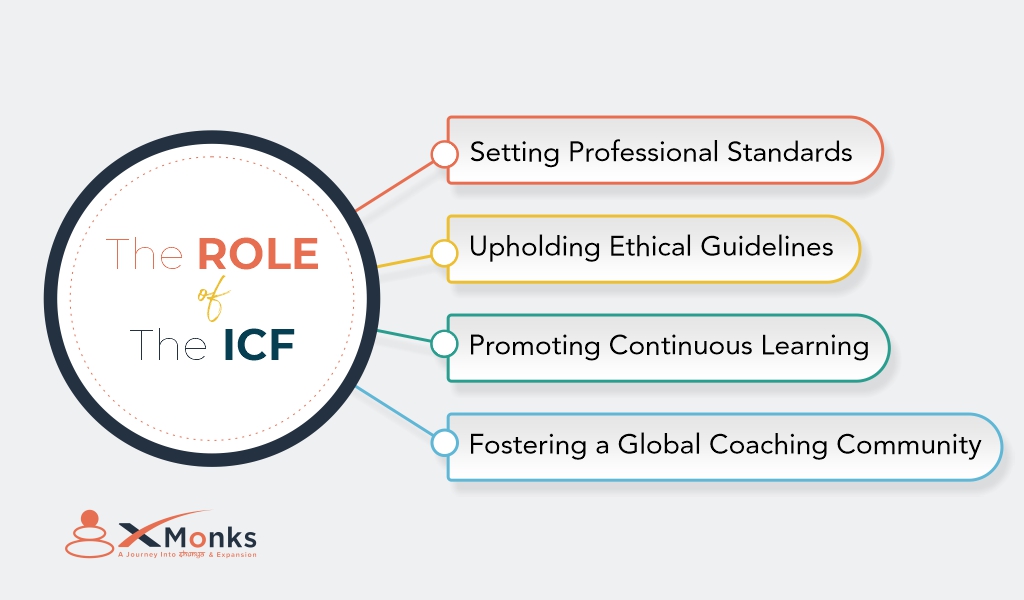
The International Federation of Coaches (ICF) is the leading global organisation dedicated to advancing the coaching profession. Established in 1995, the International Federation of Coaches sets high standards for coaching practice, promotes ethical guidelines, and provides a framework for professional development. Here are some key aspects of the ICF’s role in leadership coaching:
1. Setting Professional Standards
The International Federation of Coaches (ICF) establishes rigorous standards for coaching competence and ethics. Coaches who earn credentials from the International Federation of Coaches must demonstrate their skills through extensive training, practice hours, and assessments. These standards ensure that clients receive high-quality coaching from qualified professionals.
2. Upholding Ethical Guidelines
Ethics are fundamental to the coaching profession. The International Federation of Coaches Code of Ethics outlines the principles and standards that guide coaches in their practice. This code emphasises confidentiality, integrity, and respect, ensuring a safe and trustworthy coaching environment.
3. Promoting Continuous Learning
The International Federation of Coaches encourages coaches to engage in continuous learning and professional development. Through workshops, webinars, conferences, and resources, coaches stay updated on the latest coaching techniques, research, and industry trends. This commitment to lifelong learning enhances the effectiveness of leadership coaching.
4. Fostering a Global Coaching Community
The International Federation of Coaches connects coaches worldwide, creating a vibrant and supportive community. This global network provides opportunities for collaboration, knowledge sharing, and mutual support. Coaches can join local chapters of the International Federation of Coaches, participate in forums, and attend global events to expand their horizons and build meaningful connections.
Erickson International Coaching: A Transformative Approach
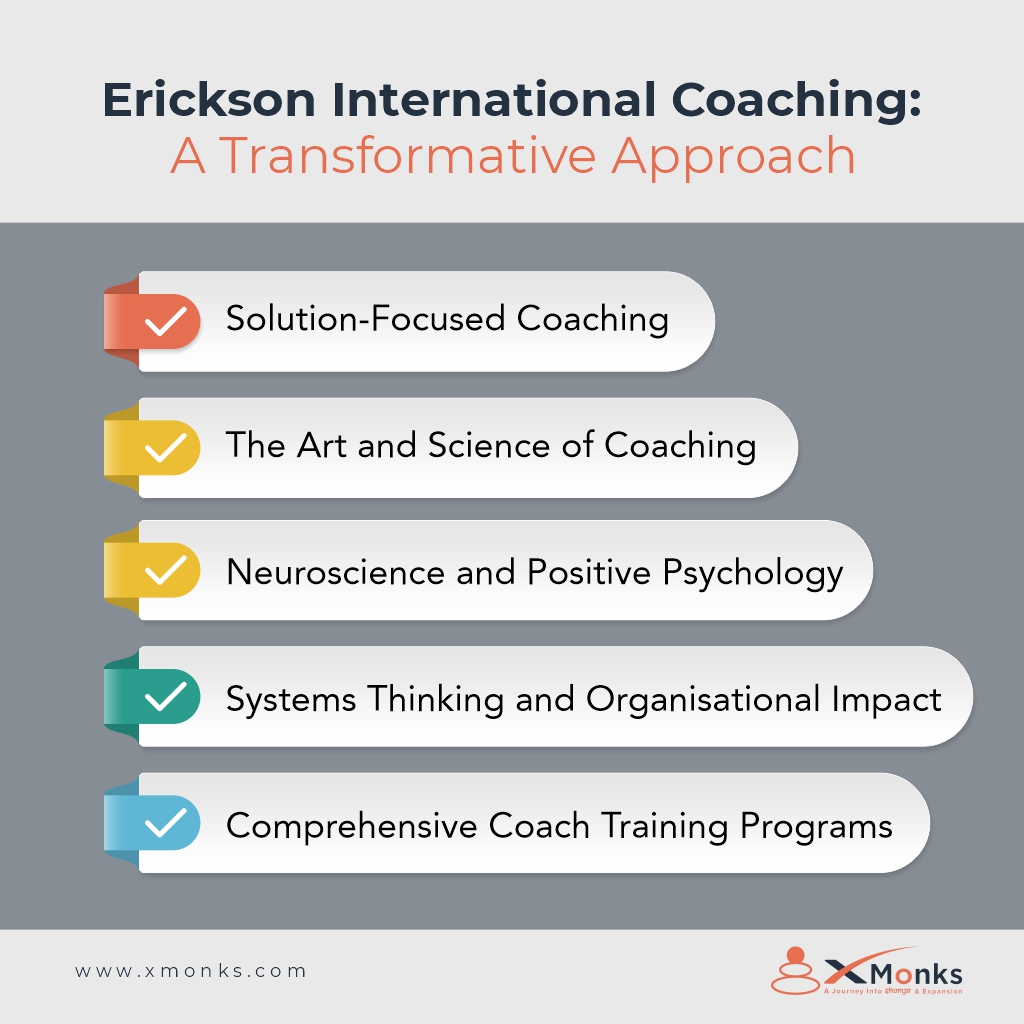
Erickson International Coaching is renowned for its innovative and solution-focused approach to coaching. Founded by Dr. Marilyn Atkinson, Erickson International Coaching combines neuroscience, positive psychology, and systems thinking to create powerful coaching methodologies. Let’s take a look at what goes into the making of Erickson International Coaching:
1. Solution-Focused Coaching
At the heart of the approach of Erickson International Coaching lies solution-focused coaching. This methodology emphasises identifying and leveraging clients’ strengths and resources to achieve their desired outcomes. Instead of dwelling on problems, coaches guide clients toward actionable solutions and future possibilities.
2. The Art and Science of Coaching
Erickson International Coaching integrates the art and science of coaching, combining intuitive insights with evidence-based techniques. Coaches are trained to use powerful questioning, active listening, and reflective practices to facilitate deep and meaningful conversations. This holistic approach ensures clients gain clarity, motivation, and sustainable results.
3. Neuroscience and Positive Psychology
The coaching methodologies of Erickson International Coaching are grounded in neuroscience and positive psychology. Coaches understand how the brain processes information, emotions, and behaviours, allowing them to design interventions that promote positive change. By focusing on strengths, optimism, and well-being, coaches help clients build resilience and achieve peak performance.
4. Systems Thinking and Organisational Impact
Leadership coaching often extends beyond individual development to organisational impact. Coaches associated with Erickson International Coaching apply systems thinking to understand the interconnectedness of people, processes, and structures within an organisation. This perspective enables coaches to design interventions that drive systemic change and foster a positive organisational culture.
5. Comprehensive Coach Training Programs
Erickson International Coaching offers comprehensive coach training programs that equip individuals with the skills and knowledge to become effective coaches. These programs include foundational courses, advanced certifications, and specialised modules in leadership, team coaching, and more. Graduates of Erickson International’s programs are well-prepared to make a meaningful impact in the coaching field.
Integrating Leadership Coaching
International Federation of Coaches’ Standards
&
Erickson International Coaching Approaches
For those seeking to elevate their leadership through coaching, integrating the principles of the International Federation of Coaches and the methodologies of Erickson International can be a game-changer. Here are some practical steps to achieve this integration:
1. Choose an ICF-Credentialed Coach
When selecting a leadership coach, prioritise those who are credentialed with the International Federation of Coaches. ICF-certified coaches have undergone rigorous training and adhere to ethical standards, ensuring a high-quality coaching experience. You can find ICF-credentialed coaches through the ICF’s online directory.
2. Embrace Solution-Focused Coaching
Adopt a solution-focused mindset in your coaching journey. Work with your coach to identify your strengths, set clear goals, and explore actionable solutions. By focusing on possibilities and future outcomes, you’ll maximise the impact of your coaching sessions.
3. Leverage Neuroscience and Positive Psychology
Incorporate insights from neuroscience and positive psychology into your coaching practice. Understand how your brain works, harness the power of positive emotions, and cultivate a growth mindset. These principles will enhance your self-awareness, resilience, and overall well-being.
4. Apply Systems Thinking
Consider the broader context of your leadership role. Reflect on how your actions and decisions impact your team and organisation. Use systems thinking to identify patterns, leverage interconnectedness, and drive positive change within your workplace.
5. Commit to Continuous Learning
Leadership development is an ongoing journey. Engage in continuous learning and professional development to stay ahead of industry trends and refine your skills. Attend workshops, read books, join coaching communities, and seek feedback to continuously improve.
Holding an ICF certification opens up numerous career opportunities in various sectors, including corporate coaching, life coaching, executive coaching, and more. The job market for ICF certified coaches is robust, with many organisations seeking qualified professionals to support their employees’ development. Additionally, ICF certified coaches often command higher fees and enjoy greater job security, simply because they live the ICF coaching definition daily, through their clients.
FAQs
Conclusion
Leadership coaching, guided by the standards of the International Federation of Coaches and the innovative approaches of Erickson International Coaching, is a powerful tool for personal and professional growth. By fostering self-awareness, enhancing communication skills, promoting strategic thinking, and building resilience, coaching empowers leaders to navigate challenges and achieve their goals.
Integrating solution-focused methodologies, neuroscience, positive psychology, and systems thinking into your coaching journey will amplify its impact and drive transformative results. Whether you’re a leader seeking to elevate your performance or a coach aspiring to make a difference, embracing these principles will unlock new possibilities and create a lasting legacy of effective leadership.