
Table of Contents
ToggleThe Interplay Between Leadership, Management, and Communication: Keys to Success

Effective leadership and management have, are, and will continue to be crucial for the success of any organisation. Whether leading a small team or managing an entire company, how one communicates and handles both leadership and management responsibilities can significantly impact performance and morale. While many believe leadership and management to be synonymous, they involve different skill sets and approaches. A true leader must be a skilled communicator, but communication also plays a pivotal role in management. This blog will explore the relationship between the leader and management and the indispensable role of the leader and communication in driving organisational success.
The Distinction Between Leadership and Management
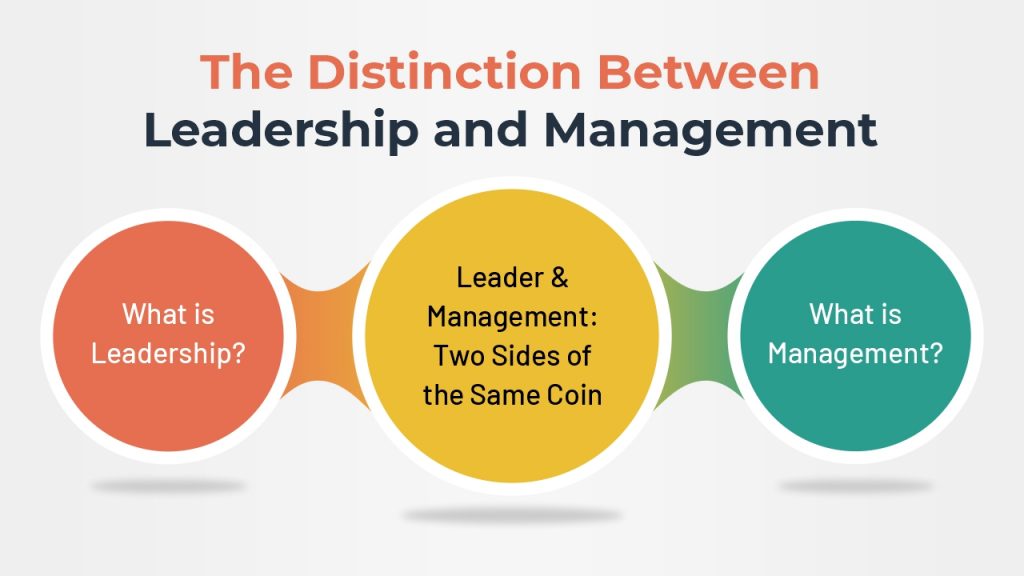
Before diving into the role of communication, it’s essential to understand the distinction between leadership and management. While both roles are critical in an organisation, they serve different purposes and require different skill sets.
What is Leadership?
Leadership focuses on influencing, inspiring, and guiding people toward a shared vision or goal. A leader is someone who motivates others, not through authority or control, but through inspiration and example. The qualities of a leader include empathy, vision, resilience, and the ability to inspire trust and loyalty in others.
Leaders often operate in uncertain environments, encouraging their teams to innovate, take risks, and grow. They challenge the status quo and are constantly looking for new ways to improve and drive progress. Importantly, leaders are visionaries—they focus on where the organisation needs to go in the long term and inspire others to follow that path.
What is Management?
On the other hand, management is concerned with the day-to-day operations of an organisation. Managers are responsible for ensuring that resources are used efficiently, and that teams or departments meet their objectives. A manager’s duties typically include planning, organising, staffing, directing, and controlling.
While leaders focus on where the organisation is going, managers focus on how to get there. They ensure that processes are in place, timelines are met, and that the organisation operates smoothly. Management requires a more structured approach, including problem-solving, performance monitoring, and strategic thinking.
Leader and Management: Two Sides of the Same Coin
Although leadership and management involve different roles, they are complementary. A successful leader must possess management skills to implement their vision effectively, while a good manager should have leadership qualities to motivate and engage their team. In today’s organisations, these roles are increasingly intertwined, with many professionals required to blend leadership and management seamlessly.
The Critical Role of Communication in Leadership and Management
Both leadership and management require strong communication skills to be successful. A leader and communication go hand in hand—leaders must articulate their vision clearly to inspire others, while managers must ensure that tasks and objectives are communicated effectively to drive performance.
Leader and Communication: Building Trust and Inspiring Action
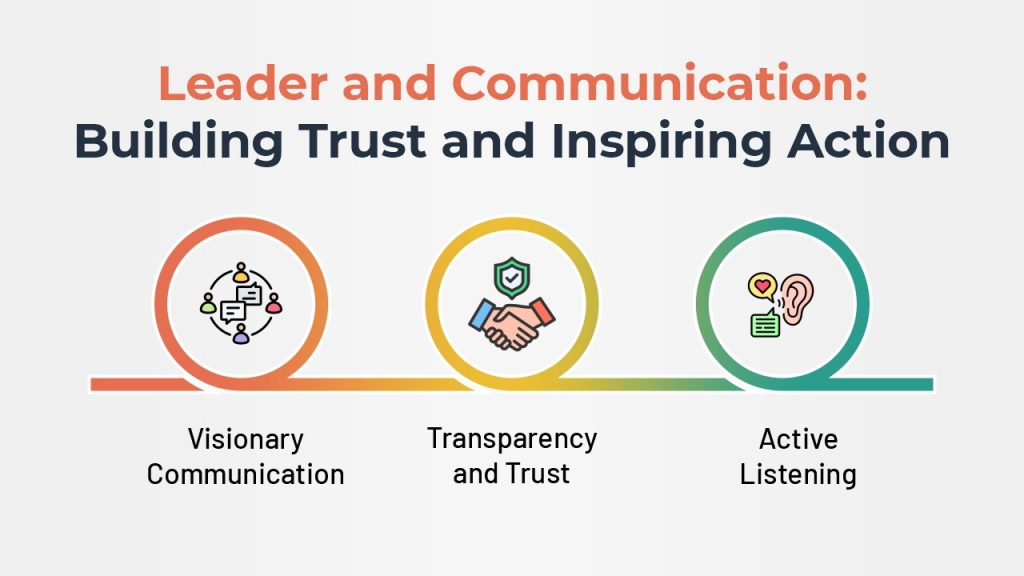
A leader’s primary function is to inspire others to follow them toward a shared goal or vision. For this to happen, communication is essential. A leader must not only convey their vision but also build trust, foster collaboration, and create an environment where people feel empowered to share their ideas and concerns.
1. Visionary Communication
A leader’s ability to communicate a compelling vision is one of the most critical aspects of leadership. Effective leaders are storytellers—they can paint a vivid picture of the future, which motivates their teams to work toward that goal. Through clear and persuasive communication, leaders can help others understand the broader mission of the organisation, and how their individual efforts contribute to that mission.
2. Transparency and Trust
Trust is the cornerstone of any leadership relationship, and transparent communication builds that trust. Leaders who are open and honest with their teams—especially during times of uncertainty—create a culture of trust. When team members trust their leader, they are more likely to be engaged, motivated, and willing to go the extra mile.
For example, during periods of organisational change, a leader’s ability to communicate transparently about the reasons for the change, the expected outcomes, and how it will impact the team can make a significant difference in how the change is received.
3. Active Listening
Communication isn’t just about speaking—effective leaders are also good listeners. Active listening allows leaders to understand the needs, concerns, and ideas of their team members. It helps foster a sense of belonging and ensures that everyone feels heard and valued. This open dialogue can also provide leaders with important insights that help shape their decision-making.
Management and Communication: Efficiency and Clarity
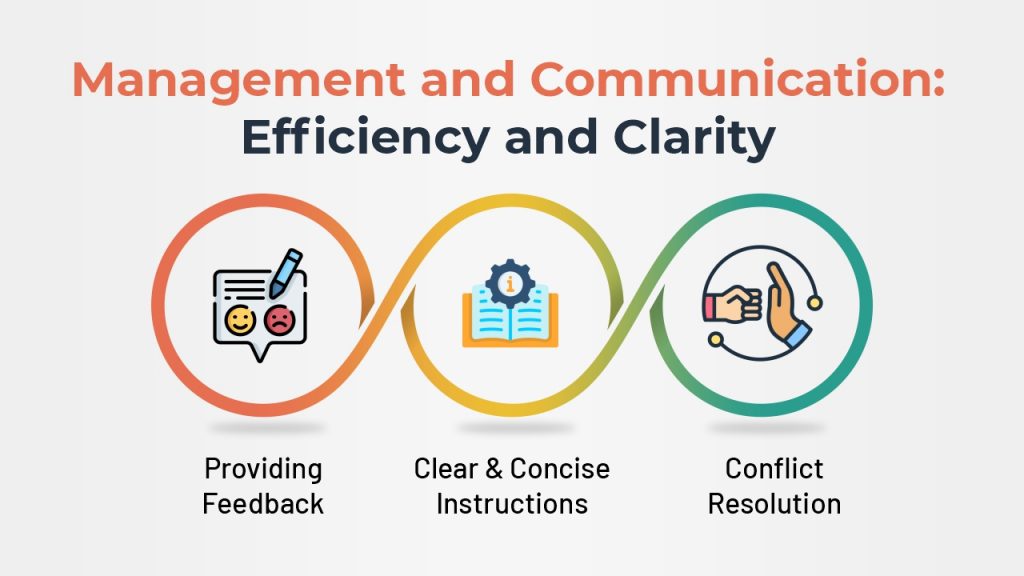
While leaders use communication to inspire, managers use it to ensure that tasks are completed efficiently and effectively. In management, communication is all about clarity—ensuring that team members understand their roles, responsibilities, and the expectations placed upon them.
1. Clear and Concise Instructions
One of the most important aspects of management communication is the ability to provide clear and concise instructions. Managers must ensure that tasks and projects are clearly outlined so that team members understand exactly what is expected of them. This clarity helps reduce confusion, increase productivity, and ensure that objectives are met on time.
For example, when delegating tasks, managers must clearly communicate not only what needs to be done but also how it should be done, when it is due, and what the desired outcome looks like.
2. Providing Feedback
Effective communication in management also involves giving feedback. Managers must provide regular, constructive feedback to team members to help them improve their performance. Feedback should be specific, actionable, and delivered in a way that is supportive and encourages growth.
Positive feedback is equally important—it recognises the contributions of team members and boosts morale. Managers who communicate appreciation for their team’s hard work foster a positive and motivating work environment.
3. Conflict Resolution
In any team or organisation, conflicts are inevitable. A manager’s ability to communicate effectively during conflicts is critical to resolving issues quickly and maintaining harmony within the team. Conflict resolution often requires active listening, empathy, and clear communication to ensure that all parties feel heard and that a fair solution is reached.
Leadership, Management, and Communication in Different Settings
Now that we’ve explored the roles of leadership, management, and communication, it’s important to examine how these principles apply across different settings, including political, corporate, societal, and developmental contexts.
Leadership and Communication in Politics
In the political sphere, leadership and communication are inseparable. Political leaders must be adept communicators, able to articulate their vision, policies, and values to the public. Strong communication can inspire confidence, foster unity, and rally support for critical initiatives.
For example, during times of national crisis, political leaders who communicate clearly and empathetically can help instil a sense of calm and resilience among the population. On the other hand, poor communication can lead to mistrust, confusion, and a loss of support.
In politics, leadership is not just about holding power—it’s about building consensus, navigating diverse viewpoints, and working collaboratively toward the common good. This requires effective communication not only with constituents but also with fellow policymakers and stakeholders.
Corporate Leadership and Management
In the corporate world, the balance between leadership and management is often most evident. Corporate leaders must communicate their vision for the company’s future while managers ensure that the day-to-day operations align with that vision. Both roles require effective communication with employees, stakeholders, and customers.
Corporate leaders must also be skilled at communicating during times of change, such as mergers, acquisitions, or restructuring. Clear and transparent communication during these periods helps to maintain employee morale and ensure that everyone understands their role in the transition.
Managers, on the other hand, play a crucial role in communicating operational goals, addressing concerns, and providing feedback to employees to ensure smooth functioning within departments.
Leadership and Management in Societal Development
Leaders in societal development, such as community organisers, activists, and non-profit leaders, rely heavily on communication to mobilise people and resources. In this setting, leadership is often about inspiring individuals to work toward a common goal, whether it’s social justice, environmental sustainability, or poverty alleviation.
Effective communication in this context is about building trust within communities, creating awareness, and rallying support for initiatives that improve society. Leaders in societal development must be able to connect with diverse groups of people, understanding their unique needs and perspectives, and communicating in a way that resonates with them.
Managers in non-profit or societal development settings also play a key role in ensuring that resources are allocated effectively and that initiatives are implemented efficiently. They must communicate with donors, volunteers, and beneficiaries to ensure that programs run smoothly and meet their objectives.
The Future of Leadership and Communication
As the world continues to evolve, the interplay between leadership, management, and communication will become even more critical. Emerging trends, such as remote work, digital communication tools, and increased diversity in the workplace, will require leaders and managers to adapt their communication styles to meet new challenges. The future of leadership and communication is set to be deeply shaped by technological advancements, cultural shifts, and the evolving nature of the workplace. As the business landscape becomes more interconnected and complex, leaders will need to adapt their communication strategies to meet new challenges.
Technology’s Role in Leadership and Communication
The rise of artificial intelligence, machine learning, and big data is fundamentally altering how leaders communicate. In the near future, leaders will be expected to leverage these technologies to make data-driven decisions and communicate insights effectively. AI-powered tools will help leaders analyse employee sentiments, monitor performance, and predict trends, all while requiring leaders to communicate with clarity and precision. The integration of virtual reality (VR) and augmented reality (AR) may also redefine how leaders engage with remote teams. Virtual meetings that simulate in-person interactions could become the norm, making virtual leadership just as impactful as face-to-face interactions. Additionally, the rise of artificial intelligence (AI) and automation in the workplace will present new challenges for leaders and managers. While AI can streamline operations and improve efficiency, it also requires leaders to communicate effectively about its role in the organisation and how it will impact employees. Leaders will need to strike a balance between embracing technological advancements and ensuring that their teams feel valued and secure in their roles.
Remote and Hybrid Work Environments
As remote and hybrid work models become increasingly common, leaders will need to master communication across digital platforms. In a remote setting, communication has to be not only more frequent but also more intentional. The lack of physical presence can often lead to misinterpretation, so leaders will need to ensure that their messages are clear and concise. Virtual communication also presents challenges in establishing personal connections, which are critical for team cohesion. Leaders will need to prioritise transparency and foster a sense of inclusiveness, despite the geographical distances between team members.
Cross-Cultural Communication
In a globalised world, cross-cultural leadership is becoming more important. Leaders will need to navigate the intricacies of leading teams from diverse cultural backgrounds. This requires a deep understanding of cultural nuances, communication styles, and sensitivities. Leaders who can bridge cultural gaps and communicate in a way that resonates across different cultures will have a distinct advantage. This will also require leaders to be flexible and adaptable in their communication styles, shifting their approach depending on the context and audience.
Empathy and Emotional Intelligence
As workplaces evolve, so do the expectations around emotional intelligence (EQ). Leaders of the future will need to demonstrate a high level of empathy in their communication. This means being attuned to the emotional needs of their teams, actively listening, and providing support when needed. In a world where mental health and well-being are increasingly prioritised, empathetic communication will be key to building trust and ensuring team members feel valued and heard. Leaders will need to balance authority with compassion, ensuring that their communication fosters a healthy work environment while also driving results.
Adaptability and Lifelong Learning
With the fast pace of change in technology and workplace dynamics, leaders will need to be lifelong learners. The ability to adapt their communication strategies to new tools, platforms, and environments will be crucial. Leaders who can quickly learn and apply new communication technologies, such as AI-driven analytics or collaborative platforms, will be better equipped to navigate future challenges. Similarly, the continuous learning of soft skills, like active listening and emotional intelligence, will remain central to their ability to lead effectively.
Decentralised Leadership
The future of leadership may also see a shift toward more decentralised structures. As companies adopt flatter organisational hierarchies, leadership roles may become more distributed across teams. In this environment, communication will be key in ensuring alignment and coordination across the organisation. Leaders will need to be comfortable with a more collaborative, less top-down approach to communication. Transparency and openness will become essential in maintaining a unified vision and direction across decentralised teams.
Ethical Communication
In an era where social responsibility and ethics are paramount, leaders will also need to prioritise ethical communication. This means being transparent, honest, and accountable in all forms of communication, both internally and externally. Leaders who can navigate the ethical complexities of communication—whether it’s managing corporate social responsibility (CSR) efforts or responding to crises—will be the ones who build long-term trust with their teams, stakeholders, and customers.
The future of leadership and communication will be characterised by a blend of technological proficiency, emotional intelligence, and adaptability. Leaders who can effectively harness new technologies, communicate across cultures, and demonstrate empathy in their interactions will be well-positioned to succeed in this evolving landscape. As communication becomes more digital and remote, its importance in leadership will only grow, making it the cornerstone of successful leadership in the 21st century.
FAQs
Conclusion
In conclusion, leader and management are distinct yet complementary roles within an organisation, each requiring its own set of skills. While leaders inspire and guide, managers ensure that day-to-day operations run smoothly. However, the key to success in both leadership and management lies in communication. A leader and communication go hand in hand, as effective communication is the foundation upon which trust, collaboration, and success are built.
As we look toward the future,the importance of leadership, management, and communication will continue to grow. A successful leader must not only have a vision but also be able to convey it clearly and inspire their team to follow. Likewise, a manager must ensure that all resources are utilised efficiently and goals are met through clear and concise communication.
In the future, organisations will rely even more heavily on leaders who can communicate across borders, cultures, and new technological landscapes. The leader of tomorrow will need to navigate remote work environments, artificial intelligence, and cross-cultural teams with the same ease as they currently handle in-person meetings and traditional corporate structures.
Ultimately, the essence of effective leadership and management boils down to one critical skill: communication. Whether motivating a team, managing resources, or leading an organisation through times of change, the ability to communicate effectively will remain at the core of what makes a leader successful. A leader without communication is like a ship without a rudder—destined to drift without direction. As the world continues to evolve, the fusion of leadership, management, and communication will become the driving force behind innovation, growth, and success.
In a world where complexity and uncertainty reign, one truth remains constant: leaders and managers who communicate well will always be in demand, for they are the ones who can bridge gaps, build trust, and turn visions into reality.
